Digital storefronts sell frictionless installs and one-click gratification, and nobody’s arguing with how convenient that is from a couch. But cracking the shrink wrap on a case, sliding a disc into a tray, and watching a shelf fill up over time still delivers something no download replicates: a physical claim on something you actually own. This guide breaks down why Sony PlayStation physical games remain more relevant than ever in 2026, how they quietly save real money across a console generation, and where the format sits inside Sony’s current hardware strategy. Expect a detailed look at resale value and the real economics behind choosing to buy physical PS5 games, the preservation risks baked into every digital license, a direct PS5 digital vs physical comparison, and the practical realities of disc drives on the current PlayStation 5 lineup.
The Tangible Benefits of Sony PlayStation Physical Games
Nothing about this is nostalgia for its own sake. Sony PlayStation physical games carry real financial and practical advantages that a purely digital library simply cannot match, and the reasons hold up whether the buyer is a lifelong collector or someone just trying to stretch a gaming budget further. Whatever the motivation, the case for Sony PlayStation physical games gets stronger, not weaker, the longer a player intends to keep playing.
The Used Games Ecosystem: Buy Low, Complete, Resell
Every physical copy of a game carries a second life that a digital license can never have. A disc bought used at a fraction of launch price still runs the exact same game, and once it’s finished, it can be traded in, resold, or handed off to a friend. That single mechanic is the backbone of the entire PlayStation used games market — a network of trade-in counters, independent shops, and online resellers where the price of last year’s releases keeps falling while the disc itself keeps working exactly as intended.
Reputation matters as much as price in that market. A breakdown like this look at whether buying from DKOldies is worth it or this honest review of Retro Jake’s for collectors is worth reading before hunting for older titles, since not every reseller grades condition or pricing the same way. Anyone who plans to regularly buy physical PS5 games secondhand should treat that reputation check as a first step, not an afterthought.
- No non-refundable regret purchases — a disc that doesn’t land can be resold instead of sitting unplayed in a digital library forever.
- Built-in trade-in credit that lowers the effective cost of the next release, something no digital storefront offers.
- Price competition between sellers, rather than a single fixed storefront price set by one company.
None of that works without a healthy supply of copies changing hands, which is exactly why the PlayStation used games market stays active generation after generation — every completed playthrough puts another disc back into circulation for the next budget-conscious buyer. A healthy PlayStation used games market also keeps prices honest, since a storefront charging too much for an older title simply loses buyers to a cheaper used copy down the street.
Chasing Deep Cuts Across PlayStation History
The used market isn’t only about recent releases. Because a disc keeps working independent of any server, entire back catalogs stay accessible for collectors willing to dig — the kind of hunt covered in this rundown of the greatest PlayStation 2 games ever made and this list of underrated PS2 hidden gems. Those libraries have long since vanished from any storefront, yet they remain fully playable purely because the data lives on physical media rather than a license tied to an account that could be discontinued at any time.
True Ownership and Video Game Preservation
When a License Expires, the Game Disappears
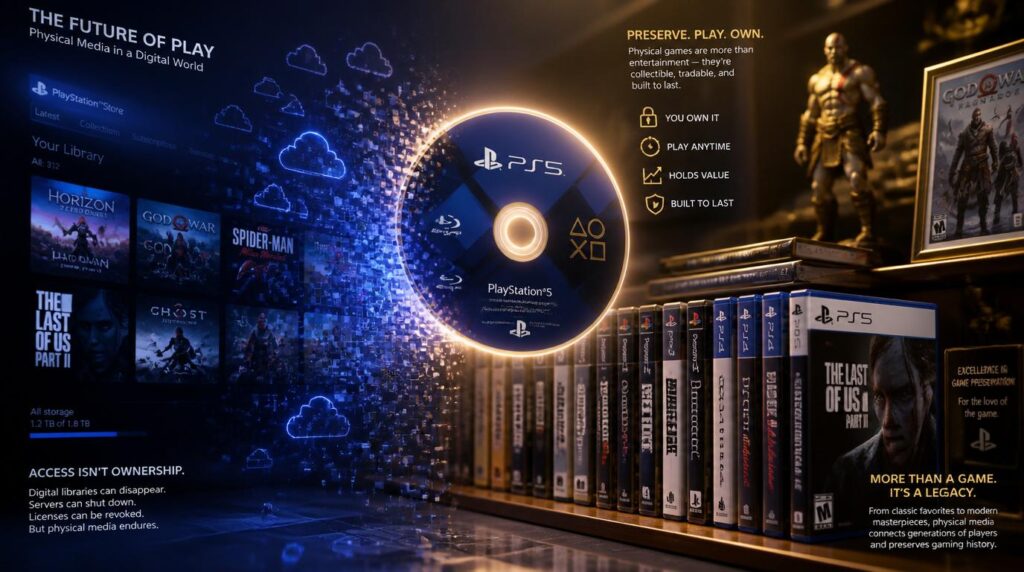
Digital ownership has always been conditional. Storefront terms of service can change, publisher licensing agreements can lapse, and games can be delisted or pulled from accounts entirely — a risk that has already played out across PlayStation’s own store history. This is the central concern behind video game preservation PlayStation advocates keep raising: a digital purchase is really a revocable license, not a deed of ownership.
Subscription catalogs make the same trade-off more explicit. Services like the one covered in this breakdown of how Xbox Game Pass actually works only grant access for as long as the subscription is active — cancel it, and the entire library disappears overnight, regardless of how many hours were sunk into it.
A disc doesn’t carry that risk. The data etched onto a PlayStation 5 disc game belongs to whoever holds it, permanently, with no server handshake required to keep playing it years or decades later. That’s the practical core of video game preservation PlayStation researchers and archivists keep pointing to when they argue for keeping physical formats alive alongside digital ones.
The Physical Archive: PS2 as Proof of Concept
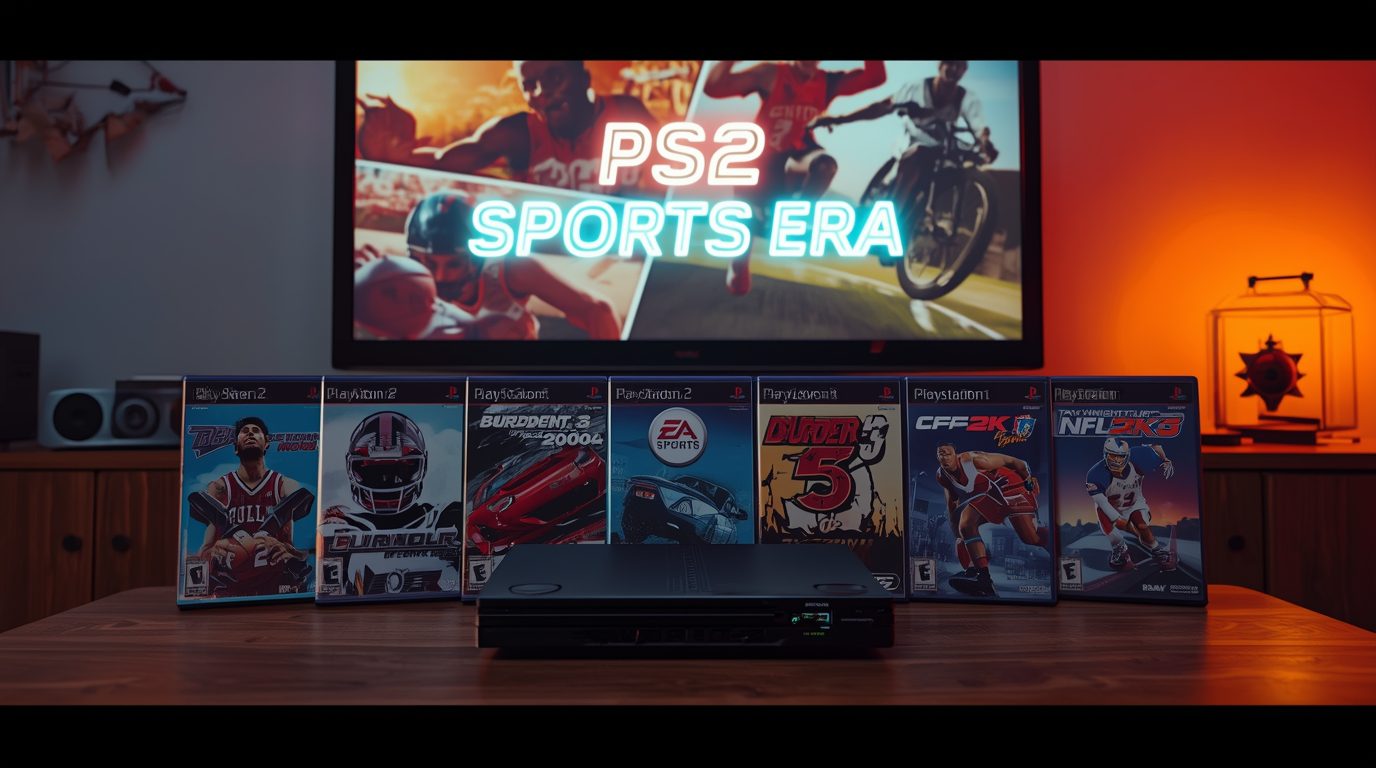
The clearest evidence for physical preservation isn’t theoretical — it’s sitting on shelves right now. Titles cataloged in guides like this collection of PS2 shooters and stealth games, this list of the best PS2 sports games, and this roundup of the best PS2 racing games still boot and run today on original hardware, with zero dependency on a storefront, an account login, or a company staying in business. That’s exactly the outcome video game preservation PlayStation discussions are trying to secure for the current generation, and it’s the strongest argument in favor of Sony PlayStation physical games as a long-term archive rather than just a purchase format.
Every generation adds another layer of proof. Twenty years from now, today’s PlayStation 5 disc games will likely be the ones demonstrating the same point all over again — a disc doesn’t care whether the company that published it still exists.
Physical vs. Digital: The Ultimate Comparison
Laid side by side, the trade-offs in this PS5 digital vs physical comparison aren’t close on every axis — digital wins on speed, physical wins on flexibility and permanence. Anyone still undecided after reading a PS5 digital vs physical comparison like this one should weigh how long they actually intend to keep a title before deciding which format fits their habits.
| Feature | Physical Discs | Digital Downloads |
|---|---|---|
| Price flexibility | Full control — used copies, resellers, price-matching between stores | Fixed to storefront pricing and scheduled sales windows only |
| Resale value | Retains value; tradeable and sellable at any time | None — permanently locked to the purchasing account |
| Storage & install | Needs shelf space; still installs data to the internal drive | No disc swapping, but consumes the full game size in SSD space |
| Convenience | Swap discs manually; occasional day-one patch still required | One-click install; library follows the account across systems |
| Long-term ownership | Belongs to the buyer indefinitely, immune to store shutdowns | Dependent on the platform and license remaining active |
Hardware Realities: Navigating the Disc Drive Era
Sony’s Split Hardware Strategy
Sony hedged its bet on formats rather than picking one outright. The PS5 launched in parallel Disc and Digital Editions, and the PS5 Slim redesign brought back an add-on Ultra HD Blu-ray drive that clips onto the digital model after purchase — a detail worth knowing before ordering online, since detachable Blu-ray drive compatibility varies by exact console revision and isn’t universal across every SKU. The PS5 Pro ships digital-only out of the box but supports the same clip-on drive, so anyone planning to run PlayStation 5 disc games on it needs to budget for the accessory separately. It’s a small but telling detail: Sony could have gone fully digital with the Pro and didn’t, which keeps a real path open for PlayStation 5 disc games on its most powerful hardware yet.
That decision to keep a physical path alive at all, rather than following the fully digital route some competitors have taken, is itself a signal — one worth reading alongside coverage of upcoming exclusives like the reporting on Halo reportedly coming to PS5, which shows first-party and cross-platform titles alike still expect a PlayStation 5 disc games option to exist.
What This Means for Buyers
For anyone building a serious library of PlayStation 5 disc games, the practical checklist is short: confirm the console revision has a drive attached or budget for the add-on, and treat the drive itself as a long-term hardware commitment rather than a launch-era formality. Skipping that check is the single most common mistake people make when they set out to buy physical PS5 games for the first time on a digital-edition console. Enthusiasts weighing the broader setup around a console are often also comparing displays — a companion consideration covered in this guide to choosing a gaming monitor.
Hardware direction across the industry is still unsettled elsewhere too. Reporting like this piece on whether GTA 6 is heading to Nintendo Switch 2 shows publishers are still actively deciding format strategy per platform, and a browse through this list of the best PC games of 2025 makes the contrast obvious — PC gaming has leaned almost entirely digital, while consoles, and Sony specifically, have kept a foot in both camps. On the nostalgia end of hardware design, pieces like this roundup of retro consoles with built-in games show how differently physical media has been packaged across generations, which makes Sony’s current detachable-drive approach look like a deliberate middle path rather than an afterthought.
Conclusion: The Verdict for Collectors
Discs still win on flexibility, resale, and permanence, and Sony’s continued support for a detachable drive confirms the format isn’t being phased out quietly. Collectible PlayStation editions value — steelbooks, numbered box art, bundled physical extras — tends to hold or climb over time in a way a digital pre-order bonus never can, since that bonus disappears the moment a storefront delists it. Studios chasing prestige releases still print discs first; a scan through this overview of triple-A games makes clear that top-tier titles are exactly where physical editions carry the most long-term weight. For collectors, budget-conscious players, and anyone thinking in decades rather than platform generations, choosing to buy physical PS5 games whenever the option exists remains the more defensible bet — and for a growing number of shoppers, it’s simply the default way to buy physical PS5 games rather than the exception. At its core, betting on Sony PlayStation physical games is a bet on outlasting whatever happens to a server, a storefront, or a subscription tier down the line — and that’s a bet discs have already proven they can win.