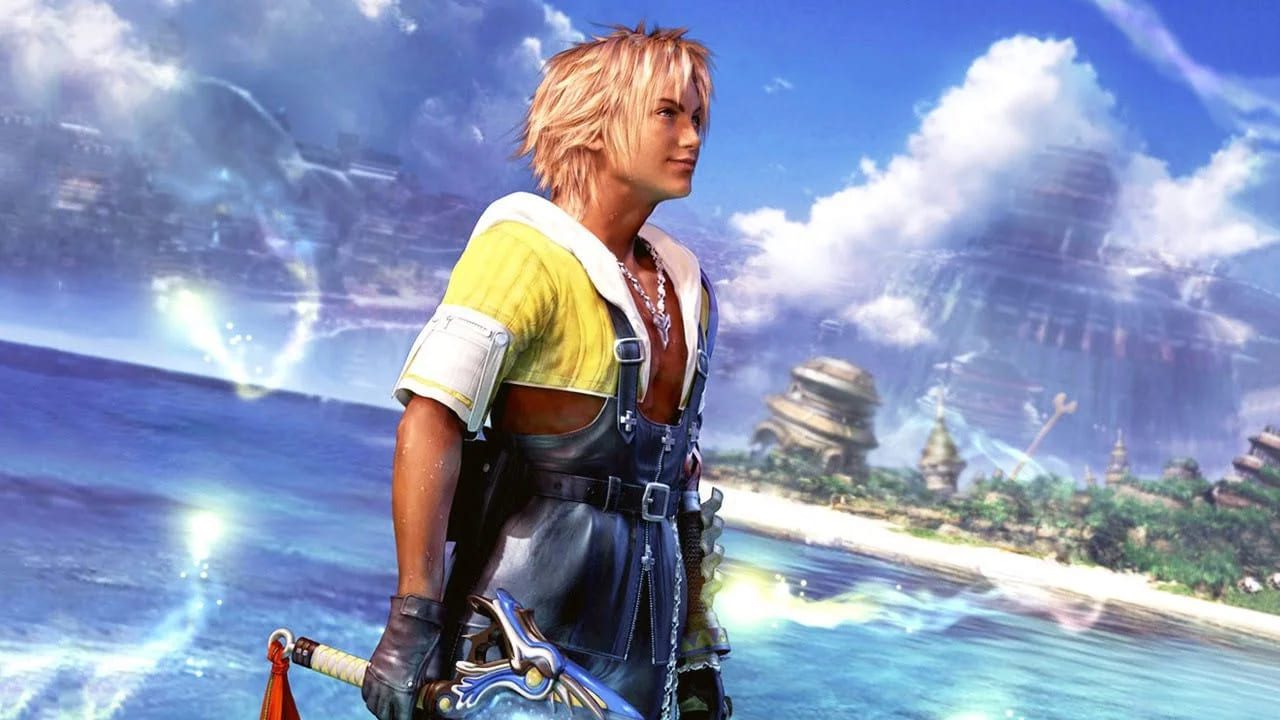

The PlayStation 2 shipped over 3,000 games across its 13-year lifespan. In that ocean of software, even genuinely brilliant titles disappeared beneath the wake of giants like Grand Theft Auto: San Andreas, Final Fantasy X, and Metal Gear Solid 3. This list is not about the games everyone already knows. It is about the 10 best PS2 hidden gems — the cult classics, commercial underperformers, and late-generation experiments that deserved far more attention than they received. Every entry has been selected for creative ambition, lasting quality, and a genuine reason to still play it in 2026.
Quick Reference
| Rank | Game | Developer | Genre | Year | Metacritic |
|---|---|---|---|---|---|
| 1 | Okami | Clover Studio | Action-Adventure | 2006 | 93 |
| 2 | Psychonauts | Double Fine | Platformer | 2005 | 88 |
| 3 | Beyond Good & Evil | Ubisoft Montpellier | Action-Adventure | 2003 | 87 |
| 4 | Katamari Damacy | Namco | Puzzle / Action | 2004 | 86 |
| 5 | The Mark of Kri | SCE San Diego | Action | 2002 | 81 |
| 6 | Ghosthunter | SCE Cambridge | Horror / TPS | 2003 | 74 |
| 7 | Gitaroo Man | Koei / iNiS | Rhythm | 2001 | 85 |
| 8 | Primal | SCE Cambridge | Action-Adventure | 2003 | 72 |
| 9 | Steambot Chronicles | Irem | Open-World Mech RPG | 2005 | 80 |
| 10 | Drakengard | Cavia | Action RPG | 2003 | 71 |
Drakengard (2003) · Cavia / Square Enix
Before Nier and Nier: Automata made Yoko Taro a household name, there was Drakengard — a deliberately ugly, morally bankrupt action RPG about a tortured prince, a dragon, and a world that absolutely deserves to end. The ground combat is repetitive and the aerial dragon sections are simplistic, but the narrative is unlike anything else on the PS2. Multiple endings spiral into increasingly unhinged territory, and the final rhythm boss battle is legendary for how aggressively it breaks genre conventions. Drakengard is not a polished game. It is an experience, and an essential one for anyone interested in the DNA of modern auteur Japanese game design.
Why it is underrated: Brutal difficulty, bleak tone, and repetitive combat scared away mainstream audiences. The Metacritic 71 does not reflect its historical importance.
Steambot Chronicles (2005) · Irem
Imagine a game where you can customize your bipedal mech (called a Trotmobile), play multiple instruments in a band, choose whether to be a hero or a villain, and explore a fully realized steampunk open world — all on the PS2. Steambot Chronicles is that game, and it is astonishing that it is not discussed in the same breath as Skies of Arcadia or Dark Cloud. The Trotmobile combat has a satisfying weight to it, the story branches based on your moral choices, and the music system is genuinely deep. The only reason this game is not a legend is its limited North American print run and zero marketing push from Irem.
Why it is underrated: Extremely limited distribution and no marketing. It has since become one of the most expensive PS2 games on the secondary market.
Primal (2003) · SCE Cambridge Studio
Primal follows Jennifer Tate, a tough young woman who journeys through four demon realms to rescue her boyfriend. What sounds like standard fare is elevated by one of the most distinctively gothic art directions on the PS2, a fully 3D camera system that was ahead of its time, and a surprisingly nuanced dual-character mechanic where Jen transforms between human and demon forms to solve puzzles and fight. The realms — Solum, Aquis, Aetha, and Volca — each have their own visual identity and soundtrack, and the game is scored by 16Volt and Code 64, giving it an industrial-gothic audio texture that no other PS2 game matches. Combat is simple, but the atmosphere is unforgettable.
Why it is underrated: Released early in the PS2 lifecycle before the audience was ready for slower, atmospheric action-adventures. Reviews criticized the combat depth.
Gitaroo Man (2001) · Koei / iNiS
Gitaroo Man is the best rhythm game you have probably never played. Developed by iNiS (the same team behind the Osu! Tatakae! Ouendan series), it tells the story of U-1, a shy boy who transforms into a guitar-wielding superhero to save the universe from the evil Zowie and his demon guitar army. The gameplay is a unique blend of analog stick tracing and button-timed attacks, set to an incredible J-rock and electronic soundtrack composed by COIL and Yasuharu. The art style is wildly expressive, the difficulty curve is perfectly tuned, and the entire package has a creative energy that modern rhythm games rarely match. It is short, but every second is unforgettable.
Why it is underrated: Koei gave it almost no marketing outside Japan. The anime art style and bizarre premise made it a hard sell to Western audiences in 2001.
Ghosthunter (2003) · SCE Cambridge Studio
Ghosthunter is a third-person horror shooter starring Lazarus Jones, a Detroit cop who accidentally releases a swarm of ghosts and must hunt them down across haunted mansions, abandoned prisons, and ghostly bayous. What elevates it is the astonishing visual presentation for a 2003 PS2 title — real-time lighting, ghostly particle effects, and facial animation that rivals early PS3 games. The ghost-catching mechanic (using a tether to weaken spirits before trapping them) is satisfying, and the game balances genuine scares with a surprisingly lighthearted script. It was added to PlayStation Plus in 2024, giving a new generation a chance to discover it.
Why it is underrated: Released with minimal marketing and overshadowed by Sony’s bigger first-party franchises. The 74 Metacritic reflects uneven pacing, not the game’s many strengths.
The Mark of Kri (2002) · SCE San Diego Studio
The Mark of Kri is one of the most visually distinctive action games on the PS2. It combines a Polynesian-inspired aesthetic with a unique combat system where different face buttons are mapped to different enemies via floating lock-on indicators. Rau, the protagonist, is a powerful warrior guided by Kuzo, his spirit bird who serves as a scout. The game blends stealth and combat seamlessly — you can silently eliminate guards with Kuzo’s help or charge into open battle. The animated cutscenes look like living woodblock prints, and the violence, while brutal, is stylized in a way that feels mythic rather than gratuitous. Its sequel, Rise of the Kasai (2005), is also worth tracking down.
Why it is underrated: Released early in the PS2 lifecycle with minimal marketing. The Polynesian aesthetic was unfamiliar to Western audiences, and the lock-on combat system took time to appreciate.
Katamari Damacy (2004) · Namco
Katamari Damacy is pure joy in video game form. You play as the Prince of All Cosmos, rolling a sticky ball (the katamari) around Earth to collect objects and grow large enough to rebuild the stars your father, the King of All Cosmos, accidentally destroyed. The premise is absurd. The execution is flawless. The jazz-funk soundtrack is one of the best in gaming history. The visual design — blocky, colorful, and utterly unique — has aged beautifully. What makes Katamari a hidden gem rather than a mainstream classic is that it was released at budget price with almost no marketing, becoming a word-of-mouth phenomenon rather than a commercial blockbuster. It has since been remade and re-released multiple times, but the original PS2 version remains the definitive experience.
Why it is underrated: Released at a budget price point with no advertising. Its bizarre premise and Japanese quirkiness made it a hard sell to mainstream retailers.
Beyond Good & Evil (2003) · Ubisoft Montpellier
Beyond Good & Evil is the definition of a cult classic. You play as Jade, a photojournalist on the alien planet Hillys who uncovers a government conspiracy involving alien abductions and a military propaganda machine. The game blends stealth, combat, photography, and vehicle exploration into a seamless whole that feels like a playable Pixar film. Jade is one of the most likable protagonists in gaming history — smart, compassionate, and never sexualized. The supporting cast, including the pig mechanic Pey’j and the secret agent Double H, are equally memorable. The photography mechanic (snapping evidence of the conspiracy) is woven into the narrative rather than feeling tacked on. Commercially, it was a disaster — released in a crowded holiday window against Ubisoft’s own Prince of Persia: The Sands of Time. But its reputation has only grown with time.
Why it is underrated: Released against Prince of Persia in the same holiday season. Ubisoft’s marketing focused on the bigger franchise, and BG&E sold under 500,000 copies.
Psychonauts (2005) · Double Fine
Psychonauts is Tim Schafer’s masterpiece — a platformer set in a summer camp for psychic children where every level takes place inside a character’s mind. And those mental worlds are genuinely inventive: a paranoid suburbia where spy cameras hide in every hedge, a twisted milkman conspiracy rendered in noir black-and-white, a Napoleonic battlefield fought by board game pieces. The writing is razor-sharp, the voice cast is phenomenal, and the art direction is unlike anything else on the PS2. Razputin, the protagonist, is a young circus runaway who sneaks into Whispering Rock Psychic Summer Camp to become a Psychonaut. The platforming is occasionally rough, but the level design and narrative more than compensate. The game sold poorly at launch but has since become one of the most celebrated cult classics in gaming history.
Why it is underrated: Majesco’s marketing budget was tiny, the box art was unappealing, and the game launched at a time when gritty realism was dominating the market.
Okami (2006) · Clover Studio / Capcom
Okami is the greatest game on this list and one of the finest titles ever released for the PlayStation 2. You play as Amaterasu, the sun goddess reincarnated as a white wolf, on a quest to restore life to a world corrupted by darkness. The celestial brush mechanic — pausing the game to paint symbols that alter reality — is one of the most elegant control systems ever devised. Need a bridge? Draw one. Need wind? Paint a swirl. The entire world responds to your brush, and the game teaches this system so naturally that by the 10-hour mark it feels like second nature. The Japanese sumi-e ink-wash art style is breathtaking, the soundtrack by Rei Kondoh is a masterpiece of traditional Japanese instrumentation, and the 40–60 hour journey is paced with the confidence of a Zelda game at its peak. It sold fewer than 700,000 copies worldwide. That is a crime against gaming.
Why it is underrated: Released late in the PS2 lifecycle (September 2006), just months before the PS3 launch. The wolf protagonist and Japanese art style made it a hard sell to mainstream Western audiences. It has since been re-released on virtually every platform.
Honorable Mentions
Ten is not enough. These five almost made the cut and are absolutely worth your time.
Rogue Galaxy · Level-5 · Action RPG · 2005 · Metacritic 83
A gorgeous space pirate JRPG with real-time combat, a deep weapon crafting system, and a charming cast. Released late in the PS2 lifecycle and overshadowed by Final Fantasy XII.
Radiata Stories · tri-Ace · JRPG · 2005 · Metacritic 80
A charming fairy-tale JRPG with over 175 recruitable characters, a living world with NPC schedules, and a branching story that splits halfway through based on your choices.
Killer7 · Grasshopper Manufacture · Action-Adventure · 2005 · Metacritic 74
Suda51’s on-rails shooter is a surreal political thriller with a visual style that looks like a moving graphic novel. Divisive, unforgettable, and utterly unique.
Gregory Horror Show · Capcom · Horror Adventure · 2003 · Import/Region
Based on the CGI anime, this is a stealth-horror adventure where you collect souls in a haunted hotel while avoiding the bizarre guests. Weird, wonderful, and genuinely unsettling.
Rise of the Kasai · SCE San Diego · Action · 2005 · Metacritic 74
The prequel to The Mark of Kri, featuring four playable characters and the same unique lock-on combat system. Better pacing and more varied environments than the original.
Frequently Asked Questions
What are the best underrated PS2 games? +
The best underrated PS2 hidden gems include Okami, Psychonauts, Beyond Good & Evil, Katamari Damacy, The Mark of Kri, Ghosthunter, Gitaroo Man, Primal, Steambot Chronicles, and Drakengard. These games were either commercial underperformers, released late in the console’s life, or simply overshadowed by bigger franchises like Grand Theft Auto, Final Fantasy, and Metal Gear Solid.
Is Okami worth playing on PS2 in 2026? +
Yes. Okami remains one of the most visually striking and mechanically inventive action-adventure games ever made. Its Japanese ink-wash art style, Zelda-inspired exploration, and celestial brush mechanics feel as fresh today as they did in 2006. While HD remasters exist on modern platforms, the original PS2 release has a unique visual texture that many purists prefer.
What is the rarest PS2 hidden gem? +
Among the games on this list, Steambot Chronicles and Rule of Rose are the rarest and most expensive PS2 hidden gems on the secondary market. Steambot Chronicles in particular commands high prices due to its limited North American print run, unique open-world mech RPG design, and strong word-of-mouth from the small community that played it at release.
Are PS2 hidden gems still worth playing today? +
Absolutely. The PS2 era was defined by creative risk-taking that modern AAA publishing rarely permits. Games like Beyond Good & Evil, Psychonauts, and Katamari Damacy experimented with genre, tone, and visual design in ways that still feel fresh. Many have been re-released on modern platforms, but the original PS2 versions remain the definitive way to experience them for purists.
Sources & Methodology
Rankings are based on a combination of Metacritic scores, historical sales data, retrospective critical consensus, and editorial judgment of each game’s creative ambition and lasting influence. Sales figures referenced are drawn from publicly available publisher reports and industry tracking data. Metacritic scores reflect the original PS2 release where applicable.
More Gaming Guides