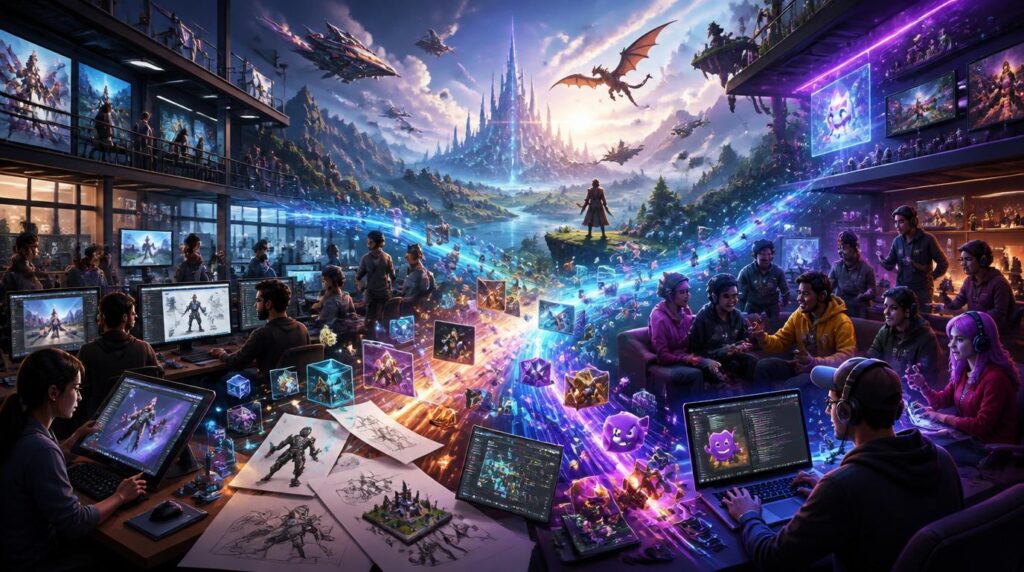
A modder tweaks a texture pack at 1am. A Discord poll decides next season’s map. A fan-written backstory gets quoted in an official trailer. None of that happened in a studio — and studios have stopped pretending it didn’t happen at all.
Game development no longer starts and ends with the official studio. Today, an explosion of online communities, modding circles, and co-creation spaces has flipped the creative pipeline. Players once waited passively for updates. Now, their imaginations feed the games themselves in ways few could have predicted five years ago. It’s the same energy you see anywhere fans get hands-on, from long-running mod scenes to communities rebuilding performance tools like a Sodium FPS boost setup from scratch.
Studios are paying attention, and so are digital sellers. One look at the popularity of online credits and currencies, like cheap Call of Duty points mobile, proves that fueling access to community-driven content and perks has become a priority. Digital marketplaces are central to this shift, giving players the tools, codes, or credits to shape and personalize their experiences faster than official channels could ever allow.
Buyers aiming to top up Robux cheaper often weigh direct purchases against the flexibility of gift cards or discounted digital codes from trusted marketplaces — a comparison that comes up just as often for players running the numbers through a Robux calculator before deciding how to spend. Eneba stands out as one option, where buyers can see clear region tags on listings, access support, and choose offers from verified merchants, all with quick code delivery. This provides peace of mind for anyone concerned about legitimacy or account compatibility, especially when every small saving counts over time.
Top 5 Ways Communities Are Changing the Creative Game
-
Collaborative Tools Fuel Custom Projects
Development platforms and open-source engines now come with built-in community pages and forums. Modders swap assets, share code snippets, and crowdsource bug fixes around the clock. It’s no surprise that the next big gameplay twist or visual upgrade often surfaces from these crowds before any official patch arrives — a pattern you can trace directly in a mod like Verity for Minecraft, built entirely outside the studio pipeline.
-
Seasonal Events Shaped by Fan Feedback
Major titles increasingly crowdsource event ideas straight from fan polls or Discord chat. Some communities now see their themed concepts, from maps to challenges, become headline features, rewarding the most active creators with shout-outs or free in-game perks.
-
Access to Digital Currencies and Content Packs
Quick access to virtual currencies isn’t just about topping up accounts. It’s about what players buy with those credits: creative skins, mod packs, and exclusive drops that started as fan art or user-driven creations. Digital marketplaces have tapped into this demand by offering verified codes across platforms, cutting wait times and helping new content circulate faster than before.
-
Lore and Storytelling Expansions From the Fans
Player-driven wikis and fan fiction forums now go far beyond summarizing established lore. Entire new backstories, character arcs, and plot diversions gain traction when enough community members buy in. Studios often scout these spaces for inspiration, carefully weaving the best homegrown stories into major releases or tie-ins.
-
Peer-to-Peer Tutorials and Mentoring
Rookie modders can find video walkthroughs and troubleshooting threads run by seasoned fans, sometimes more relevant than official documentation. This peer-driven support lowers the barrier for anyone interested in creating content, speeding up the cycle where today’s modder becomes tomorrow’s influencer or studio hire — the same on-ramp covered in guides like building your first Roblox game.
Direct Top-Up vs. Marketplace Codes
Once a community points you toward something worth buying, whether it’s a currency, a season pass, or a content pack, the next decision is where to actually spend. The two routes behave differently:
| Factor | Direct store top-up | Marketplace codes |
|---|---|---|
| Price | Fixed, rarely discounted | Often lower via merchant offers |
| Delivery speed | Instant | Typically instant to a few minutes |
| Region flexibility | Locked to your account region | Clear region tags let you compare markets |
| Merchant verification | Not applicable, sold by the platform itself | Matters, check for verified-seller status |
| Best for | One-off, no-fuss purchases | Frequent top-ups where savings add up |
Where Community-Driven Creativity Heads Next
Tech-savvy fans and developers know the ecosystem feeds on access and authenticity. Timely digital product deals, reliable creative tools, and trusted peer-run platforms form the backbone of this movement.
The future points to even more direct collaboration, as communities and studios realize the smartest and freshest ideas often start outside the boardroom. Digital marketplaces like Eneba offering deals on games, gaming top-up, and more are now the natural companion to this creative revolution, bridging players to the resources they need to create, customize, and elevate every session.
- 1Pick a scene with an active pipeline. Look for a Discord or forum where mods actually ship, not just get proposed. A guide like assembling a starter game kit is a good first stop.
- 2Start small and shippable. A texture tweak or a bug fix teaches you the workflow faster than an ambitious total conversion.
- 3Credit and get credited. Communities reward contributors who document their work and link back to the tools and assets they used.
- 4Watch official channels for scouting signals. Studios increasingly pull fan ideas straight into seasonal content, so visibility matters as much as skill.
The short version: the boardroom no longer has a monopoly on good ideas. Communities supply the creativity, marketplaces supply the access, and the games that grow fastest right now are the ones letting both in.
Quick Answers
Increasingly, yes. Seasonal events, cosmetic packs, and even lore beats regularly trace back to community polls, popular mods, or fan wikis that studios scout directly.
Often, yes, since third-party marketplaces source offers from multiple verified merchants, which can undercut the fixed pricing of a first-party store.
Look for active recent activity, a clear contribution process, and whether the team documents or credits outside work, since that signals a healthy, ongoing pipeline rather than an abandoned project.