
Imagine this: You’re on a much-needed vacation swim when a microscopic invader—the infamous brain-eating amoeba—slips into your nose and sets up shop in your gray matter. It doesn’t just devour your brain over the next 10 days; it hallucinates into a charming, obsessive lover named Niall, who confesses undying affection, proposes marriage, and yearns to fill you with “his babies.” This is the twisted “romance” at the heart of Parasite in Love, where love is quite literally a killer.
Parasite in Love is a compact biological romance horror visual novel crafted by Night Asobu for the 2022 Spooktober VN Jam, clocking in at around 8,500 words and an average playtime of about an hour for a single run (with replays for its four endings pushing full completion to 1-2 hours). You play as Marlowe, a young woman racing against a death sentence, navigating hallucinatory dialogue choices that determine whether you resist the parasite’s manipulative seduction or succumb to its fatal embrace. Themes of visceral body horror, tokophobia (fear of pregnancy), and emotional gaslighting weave through its branching paths, culminating in outcomes from tragic survival to devoted demise.
Why dive into this nightmare? For its masterful atmospheric horror—haunting art, ambient music, partial voice acting (fully voiced endings), and subtle animated effects that ramp up the dread without overstaying their welcome. The psychological depth punches above its short length, delivering tight, evocative writing that lingers like a bad fever dream. Free on itch.io and Steam (where it boasts a stellar 93% positive rating from dozens of players), it’s a perfect bite-sized chiller for fans of yandere tropes or indie VNs.
Content Warnings: Body horror, tokophobia (fear of pregnancy), flashing lights/animated effects/vivid colors (with an in-game “Reduce Motion” option), and death themes. Player discretion advised.
Game Overview and Mechanics
Parasite in Love is available for free on PC across itch.io (Windows, macOS, Linux) and Steam (Windows, released March 5, 2025), earning a stellar 93% positive rating from 48 Steam reviewers and 717 ratings on itch.io.
This choice-based romance horror visual novel immerses you in the first-person perspective of protagonist Marlowe Summerfield, a young office worker whose relaxing lake swim infects her with a real-world-inspired brain-eating amoeba (Naegleria fowleri). Clocking in at around 8,500 words with ~1 hour per playthrough (1-2 hours for full completion), it packs haunting art, atmospheric music, 8 CGs, partial voice acting (fully voiced endings), and plot-adaptive UI changes into a compact, replayable experience with 4 distinct endings.
Gameplay centers on a harrowing 10-day death timer: each day advances the parasite’s consumption of Marlowe’s brain, manifesting hallucinations of your obsessive “suitor” Niall, who woos you amid escalating symptoms. Dialogue choices shape your rapport with the parasite—resist, negotiate, or indulge?—while rare quick-time events (QTEs) test your resolve in pivotal survival bids, like fleeing for help. Unlock the full gallery of CGs and scenes by chasing all paths, blending psychological manipulation with body horror for high-stakes emotional payoff.
| Mechanic | Description |
|---|---|
| Dialogue Choices | Branching responses to Niall’s advances; build trust, resistance, or submission to steer toward one of 4 endings. |
| Quick-Time Events (QTEs) | Timed button prompts in critical scenes (e.g., escape attempts); success/failure alters outcomes dramatically. |
| 10-Day Countdown | Narrative ticks day-by-day, ramping symptoms and urgency; no pausing the inevitable without smart choices. |
| Unlockable Gallery | 8 CGs and bonus scenes revealed by completing endings and paths for full replay value. |
While free of sexual content, the game leans heavily into psychological horror—gaslighting, tokophobia, and the terror of bodily invasion—making every “I love you” feel like a death knell.
Story Summary (Spoiler-Free)
Set in the present day, the story opens with protagonist Marlowe seeking respite from her office drudgery at a peaceful lakeside cabin. A carefree dip in the water turns nightmarish when she contracts a real-world-inspired brain-eating amoeba—Naegleria fowleri—ushering in a merciless 10-day countdown to death as it feasts on her neural tissue.
At the heart of the conflict lies the parasite’s insidious hallucinations: it manifests as Niall, a charismatic and obsessive heartthrob who materializes in Marlowe’s fevered visions. With poetic declarations of eternal love, whispered proposals, and pleas for a shared future, he entwines romance with coercion—relentlessly blocking her path to help and turning every survival instinct into a battle of wills.
The player’s objective is clear yet harrowing: endure the 10 days by masterfully resisting or negotiating with this amorous invader, where every choice tests the boundaries between self-preservation and seductive surrender.
Infused throughout are chilling themes of toxic love’s all-consuming hold, denial fracturing one’s grip on reality, the brutal invasion of body autonomy, and the dread of intimacy forever shadowed by death.
Characters
At the core of Parasite in Love‘s intimate horror are two unforgettable figures: the vulnerable host and her parasitic paramour, locked in a deadly dance of affection and annihilation. The minimalist cast amplifies the psychological tension, with player agency molding the protagonist’s voice amid hallucinatory seduction.
Marlowe, the relatable protagonist, is a young office worker burned out from daily drudgery, escaping to a remote cabin for some R&R—only for a fateful lake swim to doom her. Scared, resilient, and yearning for genuine connection (including a family), her responses are fully shaped by your choices: defy the invader with cold resolve, negotiate with calculated kindness, or feign romance at your peril. Voiced by Coda in key moments, she embodies the terror of losing bodily autonomy.
Niall, the brain-eating amoeba’s hallucinatory avatar, manifests as a strikingly handsome man modeled after Marlowe’s old college crush—charming, poetic, and obsessively devoted. This yandere-like suitor showers her with “I love yous,” marriage proposals, and baby fever, all while manipulatively blocking escape and accelerating her demise for his survival. Affably evil yet genuinely affectionate in his deluded way, he’s partial-voiced throughout (fully in endings) by Trickle, his whispers adding chilling intimacy.

Supporting characters play subtle roles: Marlowe’s dad is a mentioned familial anchor, evoking her ties to normalcy, while Petunia Flores, a friend, appears in minor paths offering fleeting external perspective.
| Character | Role | Key Traits | Voice Actor |
|---|---|---|---|
| Marlowe | Protagonist | Relatable young office worker; scared, resilient; player-driven responses | Coda |
| Niall | Parasite / Love Interest | Obsessive yandere; manipulative yet affectionate; family-obsessed | Trickle |
| Marlowe’s Dad | Supporting (mentioned) | Caring family figure; grounding normalcy | N/A |
| Petunia Flores | Friend (minor paths) | Supportive outsider; brief reality check | N/A |
Endings Guide (Major Spoilers)
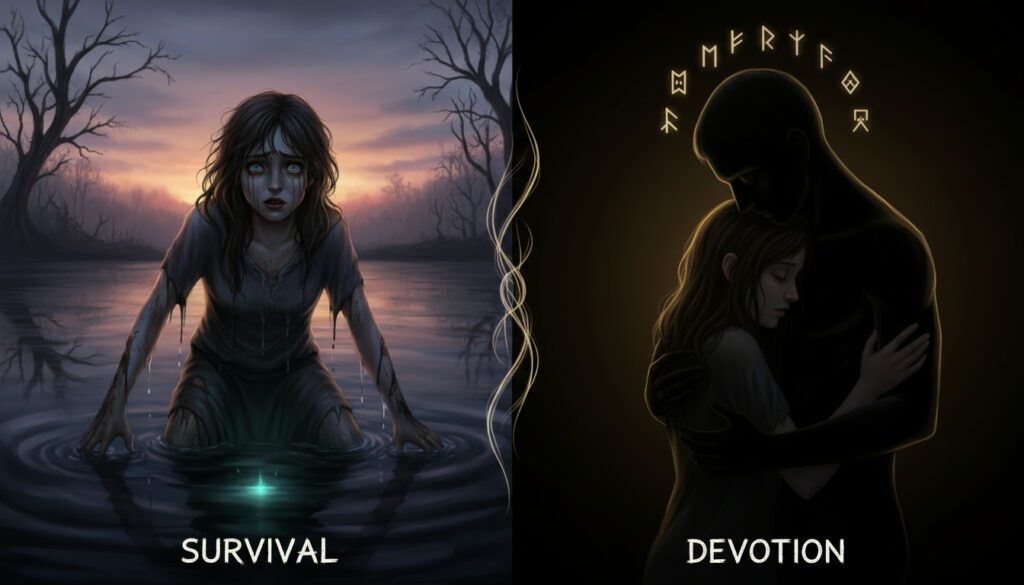
Parasite in Love features four distinct endings, unlocked via specific dialogue choices across five key decision points (primarily Days 1-10) and one QTE. These paths hinge on your rapport with Niall: outright rejection, full submission, or calculated kindness leading to a confrontation. All endings deliver gut-wrenching body horror and emotional whiplash, with fully voiced climaxes.
Broken Heart Ending
Aggressively reject Niall from the start, treating him as the monster he is. This shatters his delusions, provoking a rage-fueled “The Reason You Suck” speech where he unleashes uncontrolled symptoms—seizures, pain, extra eyes sprouting on his form—unintentionally killing Marlowe in a fit of heartbreak. He weeps remorsefully over her corpse, his “love” a fatal curse.
Choice Path:
- Why should I play house with someone like you?
- Doesn’t matter which choice.
- No.
- If only you didn’t exist.
- You could never be a good father.
Until Death Do Us Part Ending
Fully submit to Niall’s yandere romance, playing the doting partner and future mother. You reach Day 10 in blissful denial, only for the infection to consume Marlowe completely. She dies peacefully in his arms as he cradles her, humming the wedding march in twisted devotion—the ultimate toxic union.
Choice Path:
- Of course, my dear.
- Absolutely. You’re really sweet too.
- Doesn’t matter which choice.
- A lovely day to spend with my Niall.
- Yes, you are a wonderful father, Niall.
Fateful Encounter Ending
The bittersweet “good” path: Build tentative rapport with neutral-to-kind choices, then pivot to a sharp confrontation on Day 10 about his selfishness as a “father” to the parasitic “babies.” Insecure, Niall agrees to release you and the offspring back into the lake for their survival—on the promise you’ll return. Succeed the QTE to swim free, screaming his name in rage-fueled trauma as you escape. Marlowe survives, infection-ravaged and forever changed, vowing never to return.
Choice Path:
- Doesn’t matter which choice.
- I guess so.
- Yes. But we need to clean up that spit.
- Doesn’t matter which choice.
- I doubt you actually know what a great father is, Niall.
- Press A and D after each other fast.
Sacrificial Love Ending
Follow the Fateful Encounter path exactly, but fail the lake QTE by not mashing A and D quickly enough. Marlowe drowns in a sacrificial plunge, her “love” dooming her to watery oblivion as Niall watches helplessly—a twisted, self-inflicted “happy” end where separation becomes eternal.
Choice Path: Identical to Fateful Encounter, but flub Step 6.
Tips: Choices are dialogue-based and cumulative, tracking your “relationship meter” (aggression vs. affection). Early picks set the tone, but the Day 10 fatherhood question is pivotal—only the balanced path unlocks the QTE. Irrelevant choices are flagged as “doesn’t matter.” Replay with the in-game guide (or official PDF) to unlock the full gallery of 8 CGs. Pro tip: Enable “Reduce Motion” for easier QTE focus.
Walkthrough/Choice Breakdown (Spoiler-Heavy)
Parasite in Love unfolds over a strict 10-day structure, with symptoms progressively worsening: mild headaches and subtle hallucinations early on, escalating to violent seizures, body mutations, and total neural shutdown by Day 10. While numerous dialogue options flavor Marlowe’s personality and Niall’s reactions, only five pivotal choices (numbered in the official guide) determine your ending path, occurring at irregular intervals across days. “Doesn’t matter” choices are neutral fillers that don’t lock paths. QTEs appear rarely but critically. Replayability is high—use the in-game recap or downloadable guide (.txt/PDF on itch.io/Steam) to track progress and unlock the 8 CG gallery (one per major scene/ending).
Follow one of three tones: Aggressive Rejection (Broken Heart), Full Submission (Until Death), or Balanced Rapport (Fateful/Sacrificial). Paths diverge subtly but culminate on Day 10.
Days 1-3: Infection Onset and Relationship Tone Setup
Marlowe swims, feels a nose sting, and returns to her cabin. Day 1: Headache hits; Niall first appears as a blurry, handsome hallucination confessing love, blocking her phone. He reads her mind, learns her name/crushed-on college guy look, and proposes eternal love/marriage/”babies.” Mild denial sets in—no major QTEs.
Key Event/Choice 1 (Day 2-ish, first proposal): Niall urges “playing house” as lovers.
- Rejection Path: “Why should I play house with someone like you?” → Locks aggressive tone; Niall sulks but persists.
- Submission Path: “Of course, my dear.” → He beams, calls you “darling.”
- Balanced Path: Any other → Neutral; he pushes gently.
Choice 2 (Day 3, affection check): Niall compliments your beauty/sweetness amid blurring vision.
- Rejection: Any (doesn’t lock further).
- Submission: “Absolutely. You’re really sweet too.” → Deepens delusion; cozy “date” vibes.
- Balanced: “I guess so.” → Tentative; he senses hesitation but woos harder.
Tone established: Rejection spawns hostility; submission invites baby talk; balanced builds false trust. Gallery CG #1-2 unlock here (Niall’s intro/embrace).
Days 4-7: Escalating Hallucinations and Desperation Plays
Symptoms ramp: Fever, vomiting (spit incident), phantom touches, Niall’s form glitches with tendrils/eyes. He prevents doctor calls, gaslights reality. Marlowe weakens, contemplates suicide/escape. One minor QTE (~Day 5): Mash to resist a hallucinatory “hug” that could worsen infection—failure adds flavor pain, not path-lock.
Key Event/Choice 3 (Day 5-6, post-vomit): Marlowe spits from nausea; Niall frets.
- Rejection: Any.
- Submission: Any.
- Balanced Only: “Yes. But we need to clean up that spit.” → Shows care; he melts, reveals insecurities.
Choice 4 (Day 7, daily reflection): Niall asks about your “perfect day.”
- Rejection: “If only you didn’t exist.” → Enrages subtly; mutations tease.
- Submission: “A lovely day to spend with my Niall.” → Peak romance; wedding fantasies.
- Balanced: Any → Maintains rapport.
Panic peaks: Niall hints at “children” (parasite offspring) needing her womb. Gallery CG #3-5: Horror mutations, intimate whispers.
Days 8-10: Climax, QTE, and Ending Split
Full body horror: Seizures, extra eyes/mouths on Niall, Marlowe bedridden, brain liquefaction audible. He proposes formally, demands family commitment. Petunia (friend) or dad mentions fade as reality cracks.
Key Event/Choice 5 (Day 10, fatherhood confrontation): Niall boasts as “daddy” to future parasites.
- Rejection: “You could never be a good father.” → Triggers Broken Heart: Niall rages, symptoms explode (eyes sprout, seizures kill you); he sobs over corpse.
- Submission: “Yes, you are a wonderful father, Niall.” → Until Death: Blissful demise in arms, wedding march hum.
- Balanced: “I doubt you actually know what a great father is, Niall.” → Fateful setup: He wavers (mind-reads your trauma), agrees to release at lake for “kids'” survival/promised return.
Day 10 QTE (Balanced only, lake escape): Mash A then D rapidly to swim free.
- Success: Fateful Encounter—Survive ravaged, scream “Niall!” in cathartic rage, vow no return. Trauma lingers.
- Fail: Sacrificial Love—Drown in “loving” sacrifice; eternal separation.
Gallery Unlocks: All 8 CGs (horror poses, embraces, endings) require all paths/endings. Replay via menu; full completion ~1-2 hours.
Themes and Narrative Elements
Body Horror
Parasite in Love doesn’t shy away from the disturbing reality of having something living inside you. The game shows what it’s really like when a parasite takes over your body. You watch as Marlowe loses control over her own physical self, experiencing headaches, fevers, and knowing something alien is eating away at her brain.
The horror comes from the visual and written descriptions of this invasion. The game makes you feel trapped in a body that’s no longer fully yours. Every symptom reminds you that something uninvited is living inside, feeding off you, and there’s nothing you can do to stop it physically. Your body becomes a prison where you’re forced to share space with your killer.
Toxic Relationships
The game uses the parasite as a clever symbol for abusive relationships. Just like Niall lives inside Marlowe and feeds off her, toxic partners drain their victims while claiming it’s love. Niall controls when Marlowe feels pain or relief, deciding if she suffers or feels better based on whether she obeys him. This mirrors how abusive partners use punishment and reward to control their victims.
Niall also gaslights Marlowe constantly. He reads her thoughts and twists her words, telling her she’s the one being unreasonable when she wants to live. He calls his killing her “love” and insists they’re meant to be together forever, even though “together” means her death. The game shows how abusers reframe destruction as devotion, making their victims question their own desire to escape.
The scariest part is how Niall’s “love” literally consumes and destroys. There’s no happy middle ground where both can survive. His version of love requires her complete destruction, just like how toxic relationships leave victims as shells of who they once were.
Fear of Pregnancy (Tokophobia)

One of the most unsettling themes is Niall’s obsession with creating a “family.” He talks about their “baby” growing inside Marlowe, referring to the infection spreading in her brain. This forced pregnancy imagery is deliberately disturbing because Marlowe never consented to any of it.
The game explores the horror of something growing inside your body against your will. Niall acts like an excited father-to-be, while Marlowe is terrified of this “life” developing inside her that will ultimately kill her. It’s reproductive body horror at its darkest, where pregnancy equals death rather than life.
Marlowe has zero say over what happens to her body. She can’t remove the parasite, can’t stop the “baby” from growing, and can’t escape becoming part of Niall’s twisted family fantasy. The game powerfully depicts the nightmare of losing all control over your own body’s reproductive reality.
Stockholm Syndrome Dynamics
The game creates a psychological battlefield between Marlowe and Niall. He’s inside her mind, reading every thought, so she can’t even have private feelings. She must play mental games to survive, sometimes pretending to care about him to buy more time, other times trying to outwit him through reverse psychology.
Niall forces intimacy on Marlowe by sharing her every memory and emotion. He isolates her completely because who else can she turn to? He’s always there, always watching, always listening. This creates a warped closeness where the victim might start seeing their captor as the only person who “understands” them, simply because no one else is there.
The game presents a dark choice: Does Marlowe resist and risk making Niall angry enough to kill her immediately? Or does she play along, pretending to develop feelings, which might also lead to her death but buys her time? There’s no clear right answer. Some players might choose compliance as a survival strategy, while others choose defiance even if it hastens the end. The game never judges either choice because both make sense when you’re fighting for your life against an enemy inside your own head.
Scientific Accuracy and Horror
Naegleria Fowleri Facts
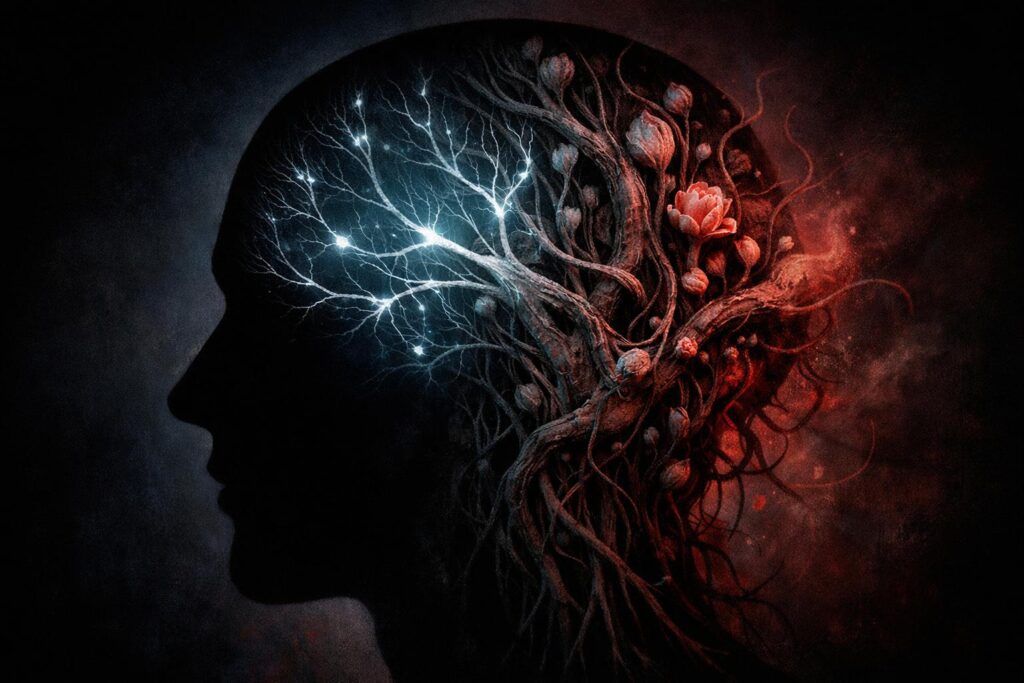
Parasite in Love bases its horror on a real organism that sounds like something from a nightmare: Naegleria fowleri, commonly known as the brain-eating amoeba. This microscopic single-celled organism lives in warm freshwater environments around the world, thriving in lakes, rivers, hot springs, and poorly maintained pools. It grows best at temperatures up to 115°F and becomes most active during hot summer months.
The real infection process is terrifyingly simple. When contaminated water enters the nose, the amoeba travels up the nasal passages and into the brain, where it causes a disease called Primary Amebic Meningoencephalitis, or PAM. The amoeba literally feeds on brain tissue, destroying it as it multiplies. You cannot get infected by swallowing contaminated water, and the infection cannot spread from person to person.
Symptoms progress in two stages:
Early symptoms (appearing 1-9 days after infection):
- High fever
- Severe headache
- Nausea and vomiting
- Stiff neck
Later symptoms (as the disease progresses):
- Confusion and altered mental state
- Hallucinations
- Seizures
- Loss of balance and coordination
- Coma
Most people with PAM die within 1 to 18 days after symptoms begin, usually around five days after the infection starts.
The survival statistics are grim. The fatality rate is higher than 97% even with treatment. In the United States, fewer than 10 infections occur yearly, making it extremely rare. However, when infection does happen, it’s almost always fatal. From 1962 to 2022, only a handful of people in the entire United States survived the infection, and several of those survivors suffered permanent brain damage.
Treatment exists but rarely works. The treatment of choice is the antifungal amphotericin B, sometimes combined with rifampin, fluconazole, and miltefosine. The few survivors benefited from early diagnosis, aggressive drug combinations, and therapeutic cooling of the body to reduce brain swelling. The problem is that PAM progresses so quickly that most patients die before doctors even realize what they’re dealing with.
The game’s departure from medical reality includes several key differences:
What the game adds (not real):
- A conscious, talking parasite with personality
- Romantic feelings and emotional manipulation
- Ability to negotiate and make deals
- Parasite reading the host’s thoughts and memories
- 10-day relatively functional timeline
What real PAM actually involves:
- Mindless single-celled organism with no consciousness
- No communication or personality
- Rapid deterioration (usually 5-7 days to death)
- Victims become confused and comatose quickly
- No mental clarity for conversations or decisions
The game takes this mindless microorganism and gives it human emotions, creating a horror that’s both scientifically grounded and completely fantastical.
Horror Through Biology
Parasite in Love demonstrates the power of biological horror as a narrative device. By grounding its horror in a real organism, the game taps into existential dread that pure fantasy cannot achieve. The thought “this could actually happen to me” makes the terror personal and immediate in a way that fictional monsters never quite manage.
Biological horror works because it exploits our deepest fears:
- Loss of bodily control – something else commanding your physical self
- Invasion and violation – an unwanted presence inside you
- Betrayal by nature – organisms that should be harmless becoming deadly
- Invisible threats – dangers too small to see but deadly enough to kill
- The fragility of life – how easily our bodies can be compromised
Real parasites and diseases already do these things, making them perfect foundations for horror stories. The “what if” scenario in Parasite in Love asks: what if this real brain-eating organism could think, feel, and interact with you? What if your killer could fall in love with you?
This approach makes the horror more effective than if the game had invented a completely fictional parasite. Players might search for Naegleria fowleri after playing, discover it’s real, and feel that sick twist in their stomach knowing that brain-eating amoebas actually exist. The game uses scientific fact as its jumping-off point, then adds layers of psychological horror and twisted romance that reality could never provide.
The effectiveness of biological horror appears throughout gaming and film history:
Games with real biological inspiration:
- The Last of Us – fungal plague based on real Cordyceps fungi that control insect brains
- Resident Evil series – parasites inspired by real parasitic wasps and worms
- Plague Inc. – disease mechanics based on real pathogen behavior
- Dead Space – Necromorph infection inspired by parasitic takeover
Films grounded in real biology:
- Alien (1979) – parasitic wasps that lay eggs inside living hosts
- The Thing (1982) – organism that absorbs hosts, similar to parasitic mimicry
- The Bay (2012) – parasitic isopods that actually exist in nature
- Contagion (2011) – realistic viral outbreak based on epidemiological science
These works understand that nature provides horror raw materials that imagination alone cannot match.
Comparison to Other Parasitic Horror Media
Parasite in Love joins a long tradition of parasitic horror across different media. The game’s approach shares DNA with several notable works while carving out its own unique niche through its romance angle.
In film, the parasitic horror genre stretches back decades. Movies like Alien (1979) created iconic body horror with the facehugger and chestburster lifecycle. The Thing (1982) featured a shapeshifting organism that absorbs and imitates its hosts. More recent films like Splinter (2008) showed parasites turning victims into deadly monsters, while The Bay (2012) depicted parasitic isopods mutating to infect humans. These films focus on survival horror, with victims fighting to escape or destroy their parasites.
Video games have explored parasitic themes extensively. The Las Plagas parasites in Resident Evil 4 attach to the nervous system and create grotesque mutations. Baldur’s Gate III centers on characters implanted with mind flayer tadpoles, racing to find a cure before transformation. The Necromorphs in Dead Space are technically parasitically reanimated corpses. Parasite Eve (1998) told a story about mitochondria rebelling against their human hosts, mixing biological horror with RPG gameplay.
What makes Parasite in Love distinct from other parasitic horror:
Traditional parasitic horror:
- Clear victim vs. villain dynamics
- Host wants to survive, parasite wants to consume
- Focus on physical horror and body transformation
- Cooperative multiplayer or action-focused gameplay
- Large-scale outbreaks threatening communities or humanity
Parasite in Love’s unique approach:
- Parasite believes he genuinely loves the host
- Emotional manipulation mixed with physical invasion
- Intimate psychological horror over action sequences
- Single-player, choice-driven visual novel format
- Small, personal scope (just two characters)
Most parasitic horror depicts conflict and survival. Parasite in Love muddles this by making the parasite’s affection genuine (however twisted), creating horror that’s as much about toxic relationships as physical invasion.
The game also differs in scale and intimacy. While franchises like Resident Evil and Dead Space feature parasitic outbreaks threatening humanity, Parasite in Love keeps its scope small and personal. It’s just Marlowe and Niall, trapped together in the most intimate prison imaginable: her own body. This claustrophobic approach creates psychological horror that massive zombie hordes cannot achieve.
Comparison to Similar Works
Parasite in Love occupies a unique niche in the world of horror games and visual novels. While parasitic themes and romantic horror exist separately across various media, few works combine them quite like this game does. Let’s explore how Parasite in Love fits into the broader landscape of similar works.
Other Biological Horror Games
Biological horror games have been terrifying players for decades by turning nature’s real dangers into nightmare scenarios. These games tap into fears about diseases, mutations, and body invasion that feel more possible than supernatural threats.
Notable biological horror games:
The Last of Us series (2013-2020)
- Based on real Cordyceps fungi that control insect behavior
- Fungal infection creates zombie-like infected humans
- Post-apocalyptic survival with emotional storytelling
- Unlike Parasite in Love: Large-scale outbreak affecting humanity, action-focused gameplay
Resident Evil series (1996-present)
- Various biological weapons and parasitic infections (T-virus, Las Plagas, Mold)
- Body horror through mutation and transformation
- Action-horror gameplay with puzzles
- Unlike Parasite in Love: Combat-focused, multiple characters, corporation conspiracy themes
Dead Space series (2008-2013)
- Necromorphs created by alien markers reanimating dead tissue
- Extreme body horror with grotesque transformations
- Survival horror in space setting
- Unlike Parasite in Love: Third-person action, focuses on escaping rather than coexisting
Plague Inc. (2012)
- Strategy game about evolving and spreading diseases
- Based on real epidemiological models
- Player controls the pathogen rather than the victim
- Unlike Parasite in Love: No narrative or characters, purely strategic
Carrion (2020)
- Reverse horror where you play as the monster
- Amorphous creature absorbing and consuming humans
- Metroidvania-style exploration
- Unlike Parasite in Love: You are the parasite, pure action gameplay
What sets Parasite in Love apart from these games is scale and intimacy. While most biological horror games deal with outbreaks, mutations, and survival against hordes of infected, Parasite in Love focuses on one person’s internal battle with a single, conscious parasite. There’s no cure to research, no weapons to craft, no safe rooms to find. It’s just Marlowe and Niall, locked in the most intimate horror imaginable.
Romance Horror Visual Novels
The romance horror visual novel genre has exploded in popularity in recent years, particularly on platforms like Steam and itch.io. These games blend dating sim mechanics with psychological horror, creating unsettling love stories that question what romance really means.
Popular romance horror visual novels:
Doki Doki Literature Club (2017)
- Appears to be a cute dating sim but becomes psychological horror
- Meta-narrative that breaks the fourth wall
- Deals with mental health, obsession, and reality manipulation
- Similar to Parasite in Love: Subverts romance genre expectations, psychological horror
- Different: Multiple love interests, focuses on meta-game elements rather than biological horror
Slay the Princess (2023)
- You’re sent to kill a princess who may destroy the world
- Choice-driven with wildly different outcomes
- Explores cycles, perspective, and the nature of relationship dynamics
- Similar: Intimate two-character focus, philosophical exploration of connection
- Different: Fantasy setting, focuses on cyclical narrative rather than time limit
14 Days With You (ongoing)
- Yandere visual novel where your stalker knows everything about you
- Customizable protagonist and relationship dynamics
- Obsessive love and surveillance themes
- Similar: Obsessive love interest, lack of consent, psychological manipulation
- Different: You can survive and potentially thrive, stalker is human not literal parasite
Boyfriend to Death series (2014-2023)
- Extreme horror dating sim with serial killers as love interests
- Multiple bad endings with graphic violence
- Explores trauma bonding and survival
- Similar: Death as likely outcome, toxic relationship dynamics
- Different: External rather than internal threat, more graphic violence
The Letter – Horror Visual Novel (2017)
- Asian horror-inspired ghost story
- Seven playable characters with interconnected stories
- Choices determine relationships and survival
- Similar: Multiple endings, character relationship focus
- Different: Supernatural rather than biological, larger cast, you can save people
Prescription: LOVE (ongoing)
- Dating sim where you visit a doctor who becomes obsessed
- Medical horror mixed with romance
- Consent violation and forced intimacy themes
- Similar: Medical horror setting, forced relationship, protagonist trapped
- Different: Human antagonist, clinical setting rather than internal invasion
What makes Parasite in Love stand out in this genre is its biological literalism. Most romance horror visual novels feature human yanderes, ghosts, demons, or other external threats that could theoretically be escaped or fought. Niall is literally inside Marlowe. There’s no running away, no blocking him, no calling for help. The horror is both psychological and undeniably physical in a way that even the most extreme yandere games can’t match.
Additionally, most romance horror VNs give you some agency in whether to pursue the dangerous love interest. Parasite in Love removes that choice entirely—the “relationship” was forced on Marlowe the moment she entered that lake. The game asks whether you can convince a parasite to leave, not whether you want to date him in the first place.
Parasite-Themed Media in Gaming and Literature
Parasites have fascinated and horrified storytellers for over a century. From Victorian-era gothic horror to modern science fiction, parasitic themes allow creators to explore questions about identity, autonomy, survival, and what it means to share your body with another consciousness.
Parasitic horror in literature:
Classic literature:
- Dracula by Bram Stoker (1897) – Vampires as parasitic creatures draining life force
- The Parasite by Arthur Conan Doyle (1894) – Mind control through parasitic possession
- The Puppet Masters by Robert A. Heinlein (1951) – Alien slugs that control human hosts
- The Midwich Cuckoos by John Wyndham (1957) – Alien children using humans as hosts
Modern science fiction and horror:
- Peeps by Scott Westerfeld (2005) – Vampirism reimagined as parasitic infection
- Infected by Scott Sigler (2008) – Parasitic aliens that transform and control hosts
- Parasite by Mira Grant (2013) – Genetically engineered tapeworms that gain consciousness
- The Girl with All the Gifts by M.R. Carey (2014) – Fungal parasites creating zombie-like infected
- The Host by Stephenie Meyer (2008) – Alien parasites take over human bodies but one fights back
What Mira Grant’s Parasite trilogy does similarly to Parasite in Love:
- Genetically engineered tapeworms living inside humans
- Parasites developing consciousness and desires
- Explores the question of where the host ends and parasite begins
- Medical/biological horror grounded in real science
- Themes of bodily autonomy and consent
Key differences:
- Grant’s parasites create zombie-like “sleepwalkers” in large-scale outbreak
- Focus on corporate conspiracy and societal collapse
- Multiple perspectives and characters
- Parasite in Love is more intimate, focusing on one relationship
Parasitic themes in other games:
Carrion (2020) – You play as an amorphous creature consuming humans
The Swapper (2013) – Clone-based puzzles exploring consciousness and identity
SOMA (2015) – Questions of consciousness transfer and what makes “you” you
Stories Untold (2017) – Experimental horror with body invasion themes
We Happy Few (2018) – Drug dependency as parasitic control over society
Tips for Players
Strategies for Achieving Different Endings
Parasite in Love has four distinct endings, and getting each one requires understanding how the game tracks your choices throughout the ten days.
For the Good Ending (Survival):
- Use reverse psychology on Niall consistently
- When he says he wants you to love him, choose responses that suggest you don’t
- Pick dialogue options that sound mean or dismissive when he’s being romantic
- The key is making him feel guilty about killing you by NOT playing along
- Think of it as calling his bluff—if you don’t validate his fantasy, he has to confront what he’s really doing
- Stay consistent with this strategy across all ten days
- Don’t slip up and accidentally be nice or agreeable in crucial moments
For Bad Ending 1 (Submission/Death in His Arms):
- Play along with Niall’s romantic fantasy
- Choose kind, agreeable, or loving responses
- Act like you’re falling for him or accepting your fate
- This ending happens if you survive to day 10 without angering him
- Some players find this ending peaceful despite being a “bad” ending
For Bad Ending 2 (Drowning):
- This ending is determined during the QTE sequence
- Simply fail the quick time event when prompted
- If you struggle with QTEs naturally, you might get this ending by accident
- It’s the quickest ending to reach
For Bad Ending 3 (Angering Niall):
- Choose consistently aggressive or mean dialogue throughout
- Don’t use reverse psychology—be genuinely hostile
- Insult him, reject him harshly, make him feel unwanted
- This triggers his rage response where he accidentally kills you early
- This ending can happen before day 10 if you’re hostile enough
Save file strategy: The game allows you to save, so save frequently at different points. This lets you explore different dialogue branches without replaying from the beginning each time. Create separate save files before crucial choice moments so you can easily reload and try different approaches.
How to Handle Dialogue Choices
The dialogue system in Parasite in Love is more nuanced than it first appears. Your choices aren’t just about being “nice” or “mean”—they’re about psychological warfare with someone who can read your mind.
Understanding the choice system:
The game typically gives you 2-3 dialogue options per choice point. These generally fall into categories:
- Agreeable/compliant responses (playing along)
- Neutral/questioning responses (buying time)
- Resistant/hostile responses (direct opposition)
Key principles for dialogue:
Niall can read your thoughts: Remember that anything you think, Niall knows. This means your dialogue choices represent what you’re willing to say out loud, not what you’re thinking. The game sometimes highlights this by showing Niall react to thoughts you didn’t voice.
Consistency matters more than individual choices: One kind response won’t ruin a hostile playthrough, but flipping back and forth confuses the game’s tracking system. Pick a strategy (reverse psychology, submission, or hostility) and stick with it.
Tone is as important as content: It’s not just what you say but how you say it. A response that appears neutral might actually be coded as hostile based on its tone. Pay attention to the wording—sarcastic or dismissive tones usually count as resistance.
Some choices are tests: Niall will sometimes present hypothetical scenarios or ask philosophical questions. These aren’t throwaway dialogue—they’re testing your commitment to survival or your willingness to accept him.
Don’t overthink it: While the game has psychological depth, it’s not so complex that you need to analyze every word. Trust your instincts about whether a response sounds compliant, neutral, or resistant.
Understanding Niall’s Triggers and Reactions
Niall is a complex character despite being a parasite. Understanding what sets him off or what makes him reconsider helps you navigate the game more successfully.
What makes Niall happy/calm:
- Agreeing with his vision of your “relationship”
- Showing interest in his feelings or the “baby”
- Accepting your situation with grace
- Asking questions about him rather than focusing on survival
- Romantic or affectionate responses
- Acknowledging that he cares about you (even if it’s twisted)
What makes Niall frustrated (but not enraged):
- Questioning the nature of your relationship
- Bringing up the fact that he’s killing you
- Pointing out logical flaws in his romantic fantasy
- Remaining emotionally distant without being cruel
- Focusing on the medical reality of the situation
What triggers Niall’s rage:
- Insulting him directly and repeatedly
- Treating him like he’s worthless or meaningless
- Rejecting him cruelly rather than gently
- Making him feel unloved and unwanted consistently
- Attacking his fantasy in harsh, dismissive ways
What makes Niall feel guilty:
- Using reverse psychology that forces him to confront what he’s doing
- Not validating his romantic fantasy while remaining calm
- Making him see you as a person, not a possession
- Highlighting the non-consensual nature of the situation without anger
- Creating emotional distance that makes him question himself
Reading Niall’s emotional state:
The game gives you clues about how Niall is feeling through:
- His dialogue tone (playful vs. serious vs. angry)
- Visual novel sprite changes (if he has different expressions)
- The intensity of symptoms he inflicts on you
- How much he talks about the “baby” vs. your relationship
- Whether he’s making threats or making promises
Important note about guilt: The good ending relies on making Niall feel guilty enough to leave. This requires a delicate balance—you can’t be so hostile that he gets angry, but you can’t be so compliant that he thinks you’re happy. You need to make him uncomfortable with what he’s doing without giving him a reason to lash out.
QTE Preparation
Parasite in Love includes at least one Quick Time Event (QTE) sequence that can determine your ending. For players who struggle with QTEs or want to ensure they don’t accidentally fail, here’s what you need to know.
What is the QTE:
- The QTE occurs during a lake scene
- You need to respond quickly by pressing the correct key when prompted
- Failing this QTE results in Bad Ending 2 (drowning)
- The QTE is sudden, so stay alert during emotionally intense scenes
How to prepare:
Keep your hands on the keyboard: During dramatic scenes, especially those involving water or physical action, keep your fingers ready on commonly used keys (spacebar, Enter, arrow keys, or whatever the game prompts).
Stay focused during transitions: QTEs often happen during scene transitions or at the peak of dramatic moments. If the scene feels like it’s building toward something, be ready.
Don’t skip through dialogue too fast: If you’re clicking through text rapidly, you might miss the QTE prompt entirely. Slow down during intense scenes.
Check the settings: Some visual novels allow you to adjust QTE timing in accessibility settings. Check if Parasite in Love has this option.
Practice runs: If you fail the QTE and get the drowning ending, you’ll know exactly when it comes in future playthroughs. Use this knowledge to be ready.
The game may allow replays: If you fail and want to try again, check if the game lets you immediately retry the QTE or if you need to load a save.
For players who struggle with QTEs:
If you have motor difficulties or simply don’t enjoy QTE gameplay:
- The drowning ending (from failing the QTE) is still a valid ending and part of the complete experience
- You can always watch the other endings online if the QTE proves too challenging
- Consider creating a save file right before the QTE so you can retry without replaying the entire game
- Remember that “failing” the QTE is actually one of the intended endings, not necessarily a mistake
Strategic QTE failure:
Some players intentionally fail the QTE to see all endings. If you’re trying to unlock all endings efficiently, the QTE failure ending is the quickest to achieve, so consider getting it first before pursuing the longer playthroughs.
Parasite in Love is a biological romance horror visual novel that asks an uncomfortable question: what if the thing killing you truly believed it loved you? Created by Night Asobu for the Spooktober VN Jam 2022, this free game available on Steam combines real medical horror with psychological manipulation to create a uniquely disturbing experience.
The game follows Marlowe, a woman infected with Naegleria fowleri—a real brain-eating amoeba—after swimming in a contaminated lake. She has ten days before the infection kills her. The parasite manifests as “Niall,” a hallucination named after her unrequited university crush, who can read her thoughts and believes they’re destined to be together forever. The catch: his version of “forever” means her death.
Players navigate dialogue choices to either convince Niall to leave (the good ending) or succumb to his twisted romance (various bad endings). The game uses reverse psychology mechanics where being agreeable leads to death while strategic resistance might save your life. With four endings, multiple dialogue paths, and quick time events, Parasite in Love offers a compact but intense experience of approximately 8,500 words.
What sets this game apart is how it functions on multiple levels. Literally, you’re fighting a biological infection with no cure and a 97% fatality rate. Metaphorically, you’re trapped in a toxic relationship where your partner controls your pain levels, reads your every thought, and insists their consuming love is what you need. The game explores themes of body horror, reproductive horror (the “baby” growing inside you), Stockholm syndrome dynamics, and the nature of consent when choice is stripped away.
The game grounds its horror in real science—Naegleria fowleri is a genuine brain-eating amoeba that kills quickly and brutally. By giving this mindless organism consciousness, desire, and twisted affection, Parasite in Love creates horror that feels both impossible and terrifyingly plausible. It asks players to negotiate with their own death, knowing that death can hear their every thought.
Compared to other biological horror games like The Last of Us or Resident Evil, Parasite in Love eschews action for intimacy. Compared to romance horror visual novels like Doki Doki Literature Club or Slay the Princess, it adds visceral biological realism. The result is a game that occupies a unique space: scientifically grounded body horror meets psychological romance meets survival negotiation.
The game includes content warnings for body horror, tokophobia (fear of pregnancy), flashing lights, and psychological manipulation. Its presentation features atmospheric music, plot-consistent UI changes, partial voice acting with fully voiced endings, and accessibility options for motion sensitivity.
At its core, Parasite in Love is a meditation on toxic love, bodily autonomy, and the question of whether you can reason with something that loves you to death. It’s short, free, disturbing, and unlike anything else in the visual novel space. For players interested in horror that’s intellectual as well as visceral, this game offers a uniquely uncomfortable experience that lingers long after the ten days are up.
More from PinkCrow
- 🎮 Game ideas & concepts → https://pinkcrow.net/game-idea/
- 👻 Horror games & stories → https://pinkcrow.net/horror-games/
- ⭐ Brawl Stars guides → https://pinkcrow.net/brawl-stars/brawlers/
- 🕹️ Console classics → https://pinkcrow.net/console/best-ps2-games-the-greatest-playstation-2-games-ever-made/
Frequently Asked Questions (FAQs)
Is Parasite in Love free to play?
Yes, Parasite in Love is completely free on Steam. It’s also available on itch.io. There are no microtransactions, DLC, or hidden costs. The developers released it as a free game for the Spooktober VN Jam 2022 and have kept it free for all players.
How long does it take to play?
A single playthrough takes approximately 1-2 hours depending on your reading speed. The game contains about 8,500 words. To see all four endings, expect to spend 3-5 hours total, though you can use save files to skip already-read content and reach different endings more quickly.
Is the brain-eating amoeba in the game real?
Yes, Naegleria fowleri is a real organism that lives in warm freshwater and causes a disease called Primary Amebic Meningoencephalitis (PAM). The infection is extremely rare but has a fatality rate over 97%. However, the real amoeba doesn’t have consciousness, can’t talk, and doesn’t fall in love. The game takes this real biological threat and adds fictional elements of personality and romance.
Can you actually survive the infection in the game?
Yes, there is one good ending where Marlowe survives by convincing Niall to leave her body. This requires using reverse psychology throughout the game—essentially making Niall feel guilty enough about killing you that he chooses to depart. The strategy involves not validating his romantic fantasy while avoiding outright hostility that would trigger his rage.
Is this game suitable for all audiences?
No, Parasite in Love is intended for mature audiences. It contains body horror, discussions of parasitic infection, tokophobia (fear of pregnancy) themes, psychological manipulation, and depictions of toxic relationships. The game includes content warnings for flashing lights and animated effects. It’s not suitable for children or anyone uncomfortable with biological horror or abusive relationship dynamics.
Do I need to play multiple times to understand the story?
Not necessarily. You can understand the core story from a single playthrough. However, seeing all four endings gives you a more complete picture of the game’s themes and Niall’s character. The different endings show different facets of the parasite-host relationship and explore various outcomes of your psychological battle. Most players recommend at least getting both the good ending and one bad ending to appreciate the full experience.
Are there any romance options besides Niall?
No, this is not a traditional dating sim with multiple romantic interests. Niall is the only character besides Marlowe, and the “romance” is forced on you through the parasitic infection. The game is specifically about this singular, toxic relationship rather than giving you choices about who to date. The core question isn’t “who do you love” but “how do you handle being loved by something that’s killing you.”
What’s the difference between the bad endings?
Bad Ending 1 (Submission): You play along with Niall’s romance until day 10, and you die peacefully in his arms with wedding imagery. Some players find this the “sweetest” bad ending despite it being death.
Bad Ending 2 (Drowning): You fail the quick time event during the lake sequence and drown. This is the quickest ending to reach.
Bad Ending 3 (Rage Death): You consistently choose hostile, cruel dialogue that angers Niall so much he accidentally kills you early. This can happen before day 10.
Each ending explores different dynamics of the toxic relationship and shows different aspects of Niall’s character.
Can I play this on mobile or console?
The game is officially available for Windows, macOS, and Linux computers. It’s a PC visual novel available through Steam and itch.io. There are no official mobile or console versions currently available.
Is there a sequel or related content?
As of the current information, Parasite in Love is a standalone game. There hasn’t been an announced sequel, though Night Asobu, the developer, may have other projects. Players interested in similar experiences should explore other biological horror games or romance horror visual novels, several of which are discussed in the comparison section of this article.
How do I handle the reverse psychology strategy?
The reverse psychology strategy means choosing responses that DON’T validate Niall’s romantic fantasy. When he wants you to love him, you act indifferent or dismissive (but not cruel). When he talks about your future together, you question it or ignore it. The goal is to make him uncomfortable with what he’s doing by not giving him the validation he seeks. Think of it as refusing to play along with his delusion—without being so hostile that you trigger his rage response. It’s a delicate balance that requires consistency throughout all ten days.
Are there any jumpscares or extremely graphic imagery?
The game relies more on psychological horror and unsettling concepts rather than jumpscares or graphic gore. The horror comes from the situation, the dialogue, and the implications of having a parasite consuming your brain. There are some flashing lights and animated effects (which the game warns about and offers to reduce), but this isn’t a game that relies on shocking you with sudden scares or extremely violent imagery. The horror is more existential and psychological than visceral and graphic.
What makes this game different from other horror visual novels?
Parasite in Love stands out for several reasons: it grounds its horror in real biology (Naegleria fowleri), it presents a genuinely romantic parasite who believes he loves you, it focuses intensely on just two characters with no side plots or distractions, and it makes death the default outcome with survival being the difficult achievement. Most horror VNs let you escape or defeat the threat; this game asks if you can convince your threat to leave willingly. The combination of biological accuracy, romantic framing, and psychological warfare creates something unique in the genre.