Today I want to talk about something very big in the game world. It is called AAA games. People also say triple-A games. When I first heard this name, I thought it meant “the best games ever.” And… in a way, that is almost true.
AAA games are the biggest and most expensive games in the industry. They look very real, they sound like movies, and they are made by very large teams. In this short school-style report, I will explain what AAA games really are, how much they cost, who makes them, what big games are coming, and why this model is both amazing and a little scary.
I will try to explain everything in very simple words.
What Are AAA Games? The Definition Explained
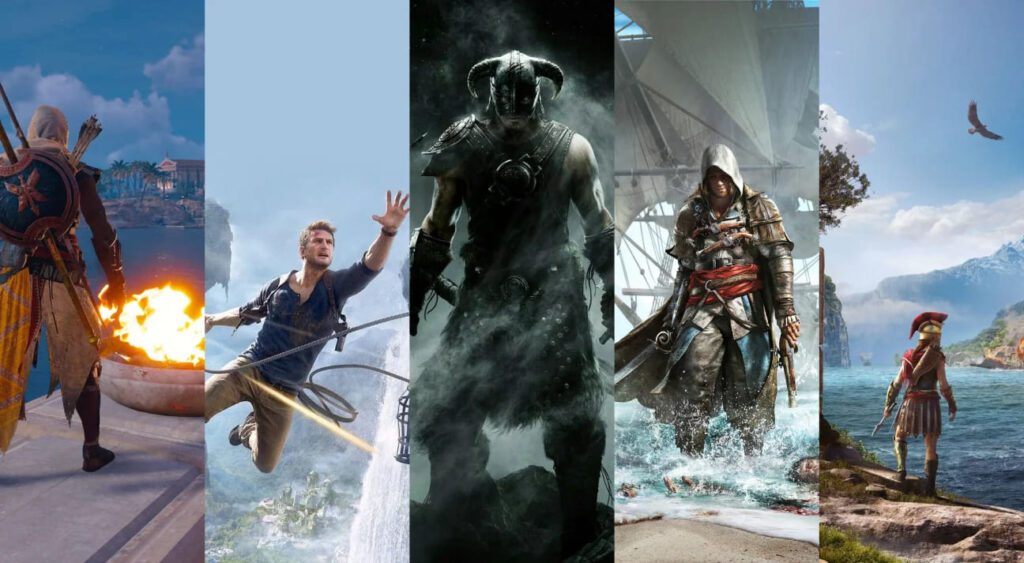
AAA (pronounced “Triple-A”) is a classification for video games produced or distributed by mid-sized or major publishers, typically featuring higher development and marketing budgets than other tiers of games. Think of AAA games as the Hollywood blockbusters of the gaming world.
Key characteristics that define AAA games:
Massive Development Budgets – We’re talking tens to hundreds of millions of dollars invested in production. Modern AAA games with development budgets approved for 2024-2025 typically cost $200 million or more, a dramatic increase from just five years ago.
Large Development Teams – AAA studios employ hundreds or even thousands of people. These teams include programmers, artists, designers, writers, sound engineers, quality assurance testers, and marketing professionals working together for years.
Major Publisher Backing – AAA games come from industry giants like Electronic Arts, Activision Blizzard, Ubisoft, Sony Interactive Entertainment, Microsoft, Nintendo, Take-Two Interactive, and other major publishers with deep pockets.
High Production Values – Cutting-edge graphics, motion capture technology, Hollywood voice actors, orchestral soundtracks, and cinematic presentation standards set these games apart.
Multi-Platform Releases – Most AAA games launch across multiple platforms (PlayStation, Xbox, PC, sometimes Nintendo Switch) to maximize their market reach and recoup massive investments.
Extensive Marketing Campaigns – AAA games get marketing budgets that can match or exceed their development costs, with television commercials, online advertising, influencer partnerships, and worldwide promotional tours.
The term emerged in the late 1990s and early 2000s as game production became increasingly expensive and sophisticated. Today, AAA games dominate sales charts and cultural conversations, setting the standard for what modern gaming can achieve.
For context on how game development has evolved, understanding the rising costs of AAA game development and exploring what AAA game development entails provides valuable background.
How Much Do AAA Games Actually Cost to Make?
The financial scale of AAA game development is staggering and continues to escalate. Let’s break down the real numbers:
A modern AAA game with a recently approved development budget and launch window of 2024-2025 typically costs $200 million or more, a significant increase from the $50-150 million average of just five years ago.
Where does all that money go?
Staff Salaries (40-50% of budget) – Large teams working for multiple years represent the biggest expense. Senior developers, artists, and designers command high salaries, especially in expensive cities like Los Angeles, San Francisco, or Seattle.
Technology and Tools (10-15%) – Game engines (even licensed ones like Unreal Engine), proprietary technology development, motion capture equipment, and software licenses add up quickly.
Voice Acting and Audio (5-10%) – Hollywood actors, orchestral scores, sound design, and localization for multiple languages cost millions. Games like The Last of Us or Cyberpunk 2077 feature A-list talent that commands premium rates.
Marketing and Promotion (30-50%) – Often matching or exceeding development costs, marketing includes TV commercials, digital advertising, influencer campaigns, press tours, and launch events.
Localization (3-5%) – Translating games into 10-20+ languages with culturally appropriate adaptations requires specialized teams.
Quality Assurance Testing (5-8%) – Hundreds of testers finding bugs across multiple platforms and configurations for months before release.
Licensing and Legal (2-5%) – Music rights, brand partnerships (sports games licensing real teams), legal compliance across markets.
The most expensive game ever made? That distinction likely belongs to a title with a total cost of approximately $265 million including development and marketing.
AAA vs AA vs Indie Games: What’s The Difference?
The gaming industry has multiple tiers, each with distinct characteristics:
| Feature | AAA (Triple-A) | AA (Double-A) | Indie (Independent) |
| Analogy | Hollywood Blockbusters | Mid-budget Cinema | Independent Films |
| Team Size | Hundreds to Thousands | 30 to 100+ | 1 to 30 (often solo) |
| Budget | $50M – $500M+ | $5M – $40M | $0 – $2M |
| Creative Risk | Low (Plays it safe) | Moderate (Experimental) | High (Wildly innovative) |
| Success Metric | Must sell 10M+ copies | Profitable at 1M–2M copies | Passion/Niche success |
| Marketing | Global, massive campaigns | Targeted, community-led | Grassroots, social media |
| Examples | GTA V, Call of Duty | Hellblade, GreedFall | Stardew Valley, Undertale |
Understanding these distinctions helps developers choose their path. While AAA games dominate headlines, indie and AA games often deliver more innovation and creative risks. The difference between game design and game development applies across all these tiers, though AAA projects require more specialization.
Top AAA Game Studios and Publishers in 2025
The AAA gaming landscape is dominated by several major players:
Rockstar Games (Take-Two Interactive)
Rockstar Games feels like the studio that never rushes. They take a very long time to make one game, but when it finally comes out, the whole world talks about it. They are best known for Grand Theft Auto and Red Dead Redemption, and both of these games are famous for huge open worlds that feel alive. When I walk through a city in a Rockstar game, it feels like people really live there, not like robots waiting for me. Small details matter a lot to this studio. You can hear random conversations, see tiny animations, and notice how the weather slowly changes. Rockstar is also known for spending many years on one project and not showing much until the game is almost ready. This makes players impatient, but it also makes the final result very strong. For many people, Rockstar is the example of what a true AAA studio looks like when quality comes first.
CD Projekt Red
CD Projekt Red is a studio from Poland, and it became famous all over the world because of The Witcher games and Cyberpunk 2077. What makes this studio special is how much they care about stories and characters. Their games are not only about fighting and quests. They are about choices, emotions, and the feeling that your actions really change something. When I play a CD Projekt Red game, I often feel like I am reading a big fantasy book, but I can walk inside it. The studio became even more popular after The Witcher 3, which many players still call one of the best RPGs ever made. Now the team is working on a new Witcher story, where Ciri becomes the main hero. This shows how the studio is ready to move forward, but still keep the heart of what people love.
Naughty Dog (Sony)
Naughty Dog is known as the studio that makes games feel like movies you can control. They created The Last of Us and Uncharted, and both series are famous for strong stories and very emotional moments. When I think about Naughty Dog, I think about characters first, not weapons or levels. Their heroes feel real, they make mistakes, and they grow during the story. The studio also spends a lot of time on animation and acting. Faces, eyes, and small movements are very important in their games, because they help players believe in what is happening. Naughty Dog is part of Sony, and their games often show what PlayStation consoles can really do. Many players buy a console just to play one Naughty Dog game. This studio shows how AAA games can be powerful not only because of graphics, but because of feelings.
Bethesda Game Studios (Microsoft)
Bethesda Game Studios is famous for building very big worlds where players can completely lose track of time. Games like The Elder Scrolls and Fallout let you walk anywhere, talk to almost anyone, and play the game in your own way. There is usually no single correct path. You can be a hero, a thief, a trader, or just someone who explores ruins for fun. When I play a Bethesda game, I often forget the main story for many hours because the world itself is so interesting. The studio is also known for letting players create their own stories. Even small side quests sometimes feel bigger than main missions in other games. Now Bethesda is part of Microsoft, which means their future games will have strong support and big budgets. Bethesda shows how AAA games can focus on freedom instead of strict storytelling.
Epic Games
Epic Games is a very special studio because they influence the whole industry, not only players. Of course, almost everyone knows Fortnite, which became a global phenomenon and changed how live events and seasons work in games. But Epic is also the company behind Unreal Engine. This engine is used by many other studios to create their own AAA games. So even if you never play a game made by Epic directly, you probably play games built with their technology. Unreal Engine helps studios create realistic lighting, large worlds, and beautiful animations. Epic also supports developers by sharing tools and learning materials. I think Epic Games is like a quiet giant behind the scenes. They build the tools, and the rest of the industry builds worlds on top of them. That is a very powerful position in modern AAA development.
Activision Blizzard (Microsoft)
Activision Blizzard is one of the biggest names in the entire game industry. They publish huge franchises like Call of Duty, World of Warcraft, Overwatch, and Diablo. These games reach millions of players every year and are played for a very long time after release. What makes this company different is how strong they are in online and live-service games. Updates, seasons, events, and new content never really stop. When I think about Activision Blizzard, I think about communities. People play together, argue about balance, watch tournaments, and follow updates like news. Now the company is part of Microsoft, which makes it even more important in the future of gaming services and subscriptions. Activision Blizzard shows how AAA games are not only products anymore. They are long-term platforms that live for many years.
Ubisoft
Ubisoft is a very large French company that releases many big games almost every year. They are best known for series like Assassin’s Creed, Far Cry, and Rainbow Six. Ubisoft is very strong at creating open worlds that are full of things to do. There are towers to climb, missions to discover, enemies to fight, and secrets hidden everywhere. When I play a Ubisoft game, I always feel busy, because the map is full of icons. Some players love this style because it feels rich and active. Others feel it can become repetitive. But there is no doubt that Ubisoft knows how to build big production pipelines and large international teams. They have studios in many countries working together on one game. Ubisoft represents the industrial side of AAA development, where coordination and structure are extremely important.
Electronic Arts (EA)
Electronic Arts, usually called EA, is especially famous for sports games like FIFA, Madden, and NHL. Every year, millions of players wait for the new versions of these games. EA is also behind big series such as Battlefield, Mass Effect, and Dragon Age. What makes EA interesting is how different their projects can be. On one side, they run very stable and predictable sports franchises. On the other side, they support story-driven and experimental titles as well. EA is also known for using live services, updates, and online features to keep players active for a long time. Sometimes players criticize the company for focusing too much on money systems and microtransactions. Still, EA remains one of the most powerful publishers in AAA gaming. They show how business decisions and creative work are closely connected in big studios.
Sony Interactive Entertainment
Sony Interactive Entertainment is the company behind PlayStation and many famous exclusive games. Studios working under Sony create titles like God of War, Spider-Man, Horizon, and Ghost of Tsushima. What I notice about Sony’s games is how polished and focused they feel. Most of them are single-player adventures with strong stories, high-quality animation, and carefully designed worlds. Sony invests a lot in presentation, acting, music, and cinematic scenes. Their games often feel complete and carefully shaped, not rushed. Many players trust the PlayStation brand because of these high-quality exclusives. Sony also uses these games to show what new PlayStation consoles can do technically. In the AAA world, Sony represents the idea that big, story-driven games still matter a lot, even when online games and services become more popular.
Nintendo
Nintendo is very different from most other AAA publishers, but it still belongs to the same top level of the industry. Instead of chasing realistic graphics, Nintendo focuses on fun, creativity, and very strong game design. Series like Zelda, Mario, and Pokémon receive huge budgets and long development time, just like other AAA games. But the final result looks colorful and simple on the surface. When I play a Nintendo game, it often feels easy to start, but very deep when you continue. Nintendo is extremely good at making games that both children and adults enjoy. They also build their games closely around their own hardware. This gives them more control over how everything works together. Nintendo proves that AAA does not have to mean realistic graphics. It can also mean perfect gameplay and timeless design.
These studios don’t just make games—they set industry trends, pioneer new technologies, and define what’s possible in interactive entertainment. If you are curious how big studios really work today, including from home and different countries, this short guide about remote work setup for game developers explains it in a very simple and real way: https://pinkcrow.net/development/remote-work-setup-for-game-developers/
Most Anticipated AAA Games Coming in 2025
Even though Grand Theft Auto 6 doesn’t release this year, plenty of titles thrilled gaming audiences, and the year is packed with highly anticipated releases:
| Game Title | Developer/Publisher | Genre | Key Selling Point |
| Grand Theft Auto VI | Rockstar Games | Open-World Action | Setting a new bar for realism and scale in Vice City. |
| The Witcher IV | CD Projekt Red | Open-World RPG | A new saga featuring Ciri as the lead protagonist. |
| Ghost of Yōtei | Sucker Punch / Sony | Action-Adventure | Atmospheric exploration in a new era of feudal Japan. |
| DOOM: The Dark Ages | id Software | FPS | Medieval-slaying with mechs and cyborg dragons. |
| Monster Hunter Wilds | Capcom | Action RPG | Expanded environments and seamless co-op hunting. |
| Death Stranding 2 | Kojima Productions | Action/Exploration | Hideo Kojima’s unique, surrealist post-apocalyptic vision. |
| Assassin’s Creed Shadows | Ubisoft | Stealth/Action | The long-awaited series debut in feudal Japan. |
| Fable | Playground Games | Fantasy RPG | Classic British humor meets modern RPG choice-making. |
| Avowed | Obsidian | First-Person RPG | A magical, story-driven adventure in the Pillars universe. |
| Battlefield 6 | EA / DICE | Tactical Shooter | A “return to roots” aiming to reclaim the FPS crown. |
| Kingdom Come: Deliv. 2 | Warhorse Studios | Historical RPG | Unmatched medieval realism and brutal combat. |
| MGS Delta: Snake Eater | Konami | Stealth Action | A faithful, high-fidelity remake of a stealth masterpiece. |
| Crimson Desert | Pearl Abyss | Open-World Action | Massive scale with high-octane, dynamic combat. |
The 2025 games calendar grows longer with late-year heavy hitters like Silksong, Battlefield 6, and Bloodlines 2.
The variety here showcases AAA gaming’s breadth—from photorealistic open worlds to stylized action games, from solo narrative experiences to massive multiplayer battlefields.
The Technology Behind AAA Games
What separates AAA games technically from smaller productions?
Game Engines:
- Unreal Engine 5 – Epic’s latest engine powers many AAA projects with photorealistic graphics, Nanite geometry, and Lumen lighting
- Proprietary Engines – Studios like Rockstar (RAGE), CD Projekt (REDengine), and Bethesda (Creation Engine) develop custom technology for their specific needs
- Unity – While traditionally associated with indies, Unity has powered impressive AAA-quality titles
Graphics and Visual Fidelity:
- Ray tracing for realistic lighting and reflections
- Motion capture for lifelike character animations
- Photogrammetry scanning real-world objects for game assets
- Advanced physics simulations for cloth, water, and destruction
- 4K and even 8K resolution support
Audio Design:
- 3D spatial audio creating immersive soundscapes
- Orchestral scores recorded with full orchestras
- Thousands of unique sound effects
- Dynamic music that responds to gameplay
- Professional voice acting with motion capture
AI and Systems:
- Complex NPC behavior creating believable worlds
- Dynamic weather and day/night cycles
- Procedural generation for varied content
- Advanced pathfinding and combat AI
- Systemic gameplay where elements interact organically
Online Infrastructure:
- Massive multiplayer servers supporting thousands of concurrent players
- Anti-cheat systems
- Matchmaking algorithms
- Content delivery networks for updates
- Cross-platform play compatibility
The technical sophistication of AAA games requires massive teams and years of development. Artificial intelligence is making NPCs smarter and more believable, while advancements in game art and visual design push boundaries constantly.
The AAA Game Development Process
Creating a AAA game involves distinct phases over multiple years:
| Phase | Duration | Core Objective | Key Milestones |
| 1. Pre-Production | 6–18 Months | The Foundation: Defining the “What” and “How.” | Concept Art, Prototypes, Budgeting |
| 2. Production | 2–4 Years | The Build: Creating the actual world and code. | Asset Creation, Vertical Slice |
| 3. Alpha to Beta | 6–12 Months | The Polish: Making it playable and stable. | Bug Squashing, Optimization |
| 4. Gold & Launch | 2–4 Months | The Arrival: Getting the game into hands. | Certification, Marketing Blitz |
| 5. Post-Launch | Ongoing | The Evolution: Keeping the game alive. | DLC, Patches, Live Ops |
The timeline for AAA development can stretch 5-7 years or more. Red Dead Redemption 2 took roughly 8 years, while games like Duke Nukem Forever spent over a decade in development hell.
The Business Model: How AAA Games Make Money
With budgets exceeding $200 million, AAA games need multiple revenue streams:
Traditional Game Sales ($60-70 at launch)
- Still the primary revenue source
- Digital sales now exceed physical copies
- Must sell millions to break even
- First week sales crucial for success
Special Editions ($80-$150+)
- Deluxe versions with extra content
- Collector’s editions with physical merchandise
- Season passes for future DLC
Downloadable Content (DLC)
- Story expansions ($15-30)
- Cosmetic items
- New characters or maps
- Extends the game’s profitable lifespan
Microtransactions
- In-game currency
- Cosmetic items (skins, emotes)
- Battle passes
- Controversial but highly profitable
Subscription Services
- Xbox Game Pass, PlayStation Plus
- Publishers get upfront payment
- Increases player base even if per-player revenue is lower
Merchandise and Licensing
- T-shirts, figures, collectibles
- Board game adaptations
- Novel and comic tie-ins
Esports and Competitive Gaming
- Streaming rights
- Tournament sponsorships
- In-game tournament passes
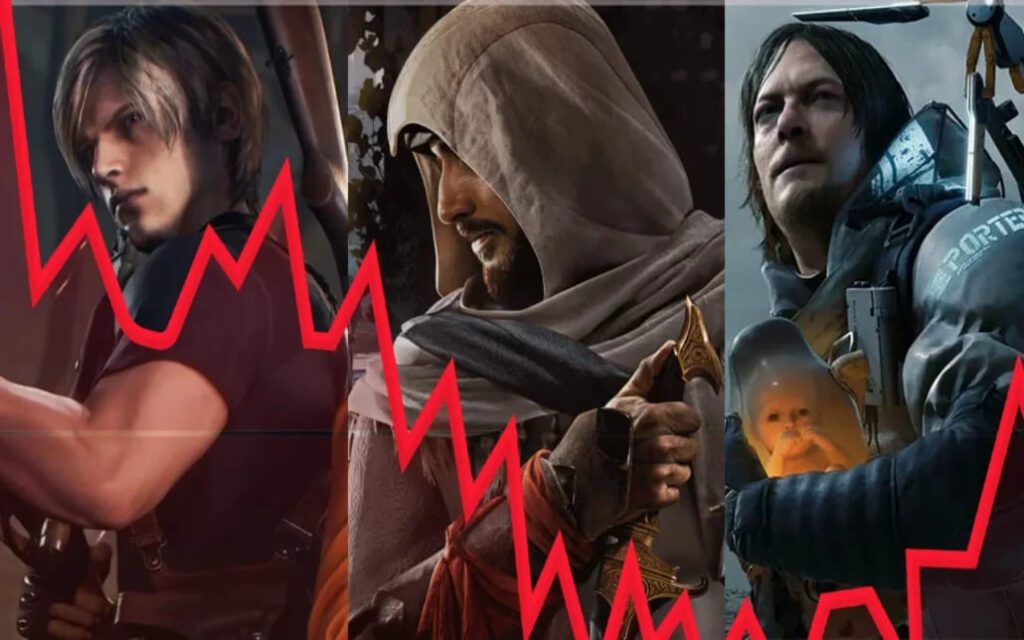
The Reality: Most AAA games need to sell 5-10 million copies to be profitable. Blockbusters like GTA V or Elden Ring selling 20-30+ million copies are exceptional. Many AAA games fail to recoup their investment, leading to studio closures or cancellations of planned sequels.
This financial pressure shapes game design, often prioritizing safe sequels over risky new IPs. It also drives the controversial microtransactions and “games as service” models that keep revenue flowing years after launch.
Pros and Cons of AAA Game Development
Advantages ✅
Cutting-Edge Experiences – The best graphics, gameplay, and production values money can buy create unforgettable experiences.
Industry Innovation – AAA budgets allow studios to push technological boundaries and pioneer new techniques that benefit the entire industry.
Career Opportunities – Working on AAA games provides prestige, learning opportunities, and competitive salaries for developers.
Cultural Impact – AAA games dominate conversations, create fandoms, and influence broader entertainment.
Financial Rewards – Successful AAA games generate billions, funding future projects and studio expansion.
Disadvantages ⚠️
Massive Financial Risk – One failure can bankrupt studios or lead to mass layoffs. The video game industry in 2025 was still in midst of large-scale layoffs since 2022.
Creative Conservatism – Huge budgets encourage safe sequels over innovative new concepts. Publishers fear alienating audiences.
Crunch Culture – Meeting deadlines often means mandatory overtime, leading to burnout and poor work-life balance.
Long Development Cycles – Developers might work on one game for 5+ years, which can be creatively stifling.
Homogenization – AAA games often feel similar, chasing proven formulas rather than experimenting.
Market Saturation – Too many AAA games release simultaneously, cannibalizing each other’s sales.
Unrealistic Player Expectations – Gamers expect every AAA game to be a masterpiece, creating unsustainable pressure.
The AAA model faces increasing scrutiny. Rising costs, longer development times, and market risks have many questioning if the model is sustainable long-term.
Can Indie Developers Create AAA-Quality Games?
This question sparks passionate debates. The short answer: it’s incredibly difficult but not impossible.
What Indies Can Achieve:
- High-quality art direction (Hollow Knight, Cuphead)
- Compelling narratives (Disco Elysium, What Remains of Edith Finch)
- Innovative gameplay (Portal was created by a small team)
- Technical excellence (Stray, Kena: Bridge of Spirits)
Where Indies Struggle:
- Scope and scale of massive open worlds
- Photorealistic graphics requiring specialized teams
- Orchestral soundtracks and Hollywood voice talent
- Marketing reach and visibility
- Multi-platform simultaneous launches
- Post-launch support and updates
The Middle Ground: Some projects blur the lines. Games like Hellblade: Senua’s Sacrifice were created by small teams with AAA-level polish in specific areas while being smart about scope. These “AAA indie” or “AA” games prove you don’t need $200 million to create impactful experiences.
The Future of AAA Gaming
Where is AAA gaming headed? Several trends are shaping the next decade:
Cloud Gaming – Services like Xbox Cloud Gaming and GeForce Now may eliminate hardware barriers, allowing AAA games to reach anyone with internet.
AI-Assisted Development – Artificial intelligence could reduce costs and development time by automating asset creation, bug detection, and even level design. AI game development is already impacting the industry.
Virtual Reality AAA – As VR technology improves and becomes more affordable, we’ll see more AAA studios investing in virtual reality experiences. Imagine playing the best horror games in full VR with AAA production values.
Cross-Platform Everything – Crossplay support is becoming standard, with games playable across PC, consoles, and mobile seamlessly.
Subscription Dominance – Game Pass, PlayStation Plus, and similar services may become the primary way players access AAA games.
Shorter Development Cycles – Industry pressure to reduce 5-7 year development times through better tools, more outsourcing, and smarter production pipelines.
Blockchain and NFTs? – Despite controversy, some publishers experiment with Web3 and NFT integration, though reception remains mixed.
Sustainability Questions – Can the $300+ million game model survive? Or will we see a shift toward smaller, more focused AAA projects?
Remote Development – Post-pandemic, many AAA studios embrace remote work, potentially reducing costs and expanding talent pools globally.
The industry stands at a crossroads. Rising costs and risks threaten the traditional AAA model, while new technologies and distribution methods offer solutions. The next few years will determine whether AAA gaming evolves or implodes under its own weight.
How can someone start a career in AAA games?
Many young people dream about working on the next GTA or The Witcher.
The realistic path usually looks like this.
First, choose one clear role. Programming. Art. Design. Audio. Production.
Then build a strong portfolio. Small projects. Game jams. Personal experiments.
Most people do not start in AAA. They start in small studios, mobile studios, or AA teams.
Tools matter. Learning Unreal Engine, Unity, Blender, version control, and teamwork tools is very important.
Networking also matters a lot. Conferences, online communities, and developer groups help you meet people and learn.
And the most important thing is patience.
Breaking into AAA takes time. If you are just starting and do not know what to practice, this friendly list of things to draw for game development is a nice and simple way to train your creative side for games: https://pinkcrow.net/development/things-to-draw-for-game-development/
AAA means a very big game made by a big studio with a very big budget. It does not automatically mean the game is perfect, but it usually means many people worked on it, a lot of money was spent, and the game looks and sounds very high quality.
No, not always. AAA games are bigger and more expensive, but indie games are often more creative and brave. Some small games feel more personal and emotional than big studio games.
Because many teams work on the same game at the same time. Art, story, animation, sound, code, testing and online systems all take years. One big AAA game can easily take five to seven years to finish.
They cost a lot to make. Studios must pay hundreds of developers, actors, artists and testers. They also spend a lot of money on marketing and promotion.
Yes, but it is very hard. Small teams can make beautiful and smart games, but they usually cannot create huge worlds, big online systems and movie-level graphics at the same time.