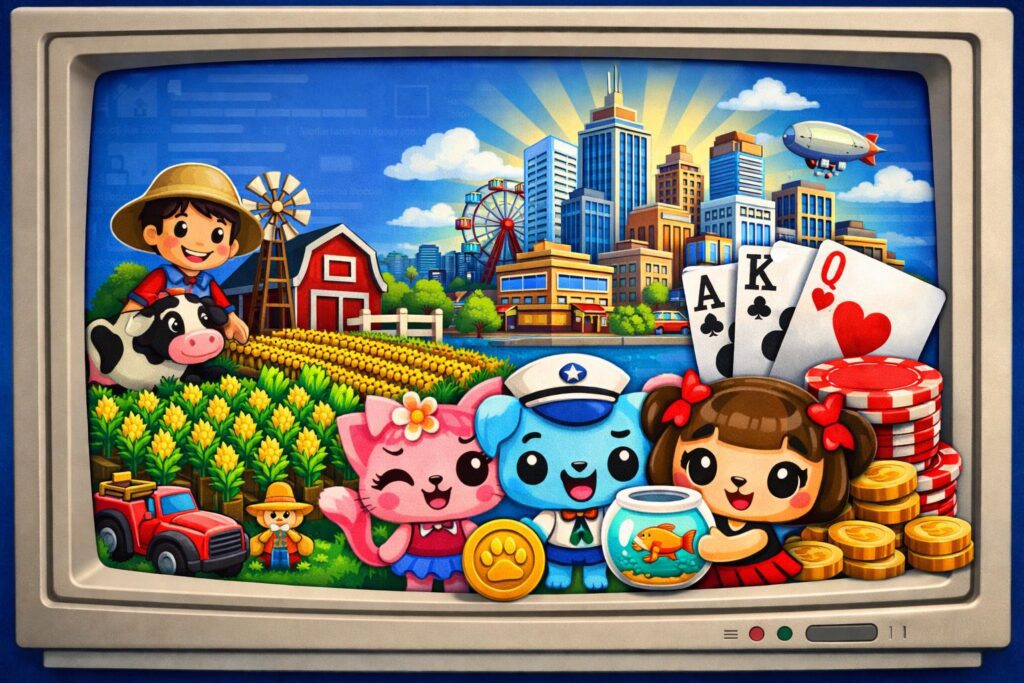
It was not only during 2008-2015 that Facebook hosted the games but altered the way an entire generation viewed gaming. The number of players who logged in surpassed 200million monthly at its highest. Billions-worth companies were constructed in a snap. People got addicted to some games such that they lost sleep over them.
It is not a nostalgia piece but rather the ultimate story of how social gaming became the cultural giant, why it failed and what it has forever altered about the industry that we currently play in.
What Made Facebook Games Different?
Before Facebook, casual gaming existed in isolated pockets — browser Flash games, early mobile titles, PC shareware. What Facebook did was weaponize the social graph. Suddenly, your game wasn’t just a game. It was a live conversation with everyone you knew.
The platform’s key structural advantages:
- Social Graph Access: Every friend you had was a potential teammate, rival, or resource
- Open Platform: The 2007 Facebook Platform launch allowed any developer to build directly on the network
- News Feed Integration: Achievements, milestones, and requests broadcast virally to hundreds of connections
- Zero Friction: No downloads, no installations — click a link and you were playing in seconds
That last point is underappreciated. The “click and play” model that Subway Surfers, Poki, and modern browser gaming now take for granted? Facebook normalized it first, at massive scale, years before it became standard.
Old Facebook Games List 2000s
The Origins
While Facebook officially opened to the public in 2006, the groundwork for social gaming was laid much earlier. Icy Tower, developed by Free Lunch Design in 2001, eventually made its way to Facebook in 2009, representing the bridge between traditional browser games and social gaming.
Before Facebook’s gaming explosion, the platform was primarily experimental. Early attempts at social gaming were rudimentary—text-based adventures, simple puzzles, and basic multiplayer experiences that tested whether users wanted to do more than just poke friends and share status updates.
Key Innovations
What made Facebook uniquely positioned for gaming success:
- Social Graph: Direct access to your entire friend network
- Open Platform: The 2007 launch of Facebook Platform allowed third-party developers to create applications
- News Feed Integration: Games could broadcast achievements directly to users’ feeds
- Low Barrier to Entry: No downloads, no installations—just click and play
Old Facebook Games 2008: The Dawn of Social Gaming
Breakthrough Titles
Scrabulous emerged as the unexpected pioneer. This Scrabble-inspired word game demonstrated that people would spend hours challenging friends to spelling competitions. Though legal issues forced its rebranding to “Lexulous,” it proved the viability of social gaming.
Texas HoldEm Poker by Zynga brought casino gaming to the masses. Players could join virtual tables, bet with virtual chips, and socialize with strangers—all within Facebook’s ecosystem.
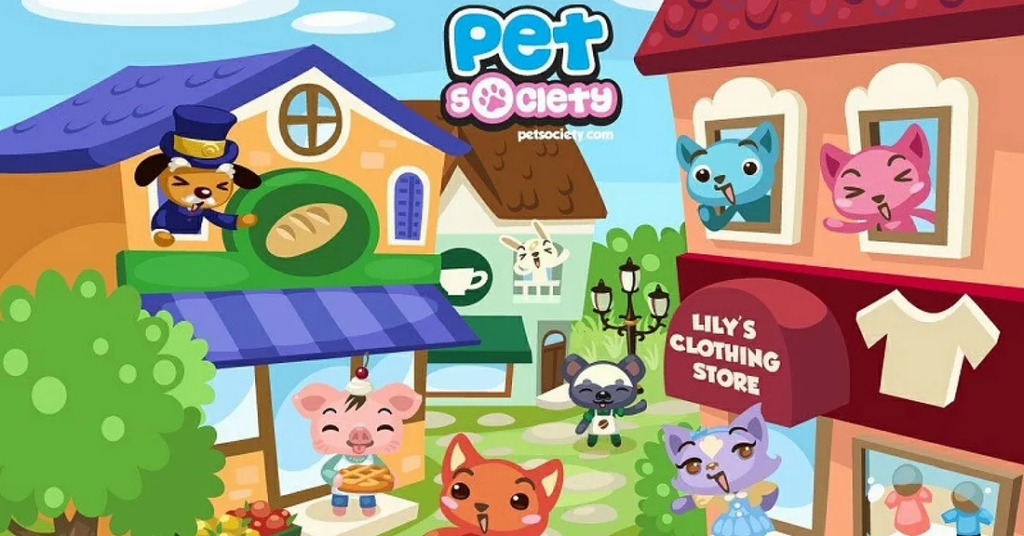
Pet Society by Playfish launched the pet simulation craze. Players adopted colorful virtual pets, decorated elaborate homes, and visited friends’ pets daily. The game’s charm lay in its simplicity: feed, play, customize, repeat.
The Formula Emerges
These early games established the core mechanics that would define the genre:
- Daily Engagement: Energy systems and time-gated content encouraged regular check-ins
- Social Dependency: Progress was tied to friend interactions—gifting, visiting, helping
- Customization: Personal expression through decorating, styling, and building
- Gentle Competition: Leaderboards and achievements that fostered friendly rivalry
By late 2008, over 30 million users were playing games on Facebook monthly—a number that would explode in the coming year.
The Formula:
Daily check-ins + friend dependency + gentle competition + personal customization. Every major hit from this era ran on these four pillars.
Old Facebook Games 2009: The Golden Year of Explosion
FarmVille Mania
In June 2009, Zynga launched FarmVille. Within nine months it had 83 million monthly active users — more than Twitter at the time.
FarmVille’s brilliance wasn’t invention. It was the perfection of existing mechanics:
| Mechanic | How It Worked | Why It Was Addictive |
|---|---|---|
| Crop Timing | Crops matured at specific intervals | Created real-world schedule anchoring |
| Neighbor Dependency | Farm expansion required Facebook friends | Built-in viral recruitment loop |
| News Feed Sharing | Every action could be broadcast | Generated organic, social growth |
| Loss Aversion | Crops withered if not harvested in time | Fear of loss drove daily logins |
The 2009 Roster
Other massive hits emerged:
- PetVille: Zynga’s response to Pet Society, virtually identical gameplay
- Restaurant City: Playfish’s cooking simulation where you managed kitchens and traded recipes
- Café World: Zynga’s answer to Restaurant City, featuring catering orders and time management
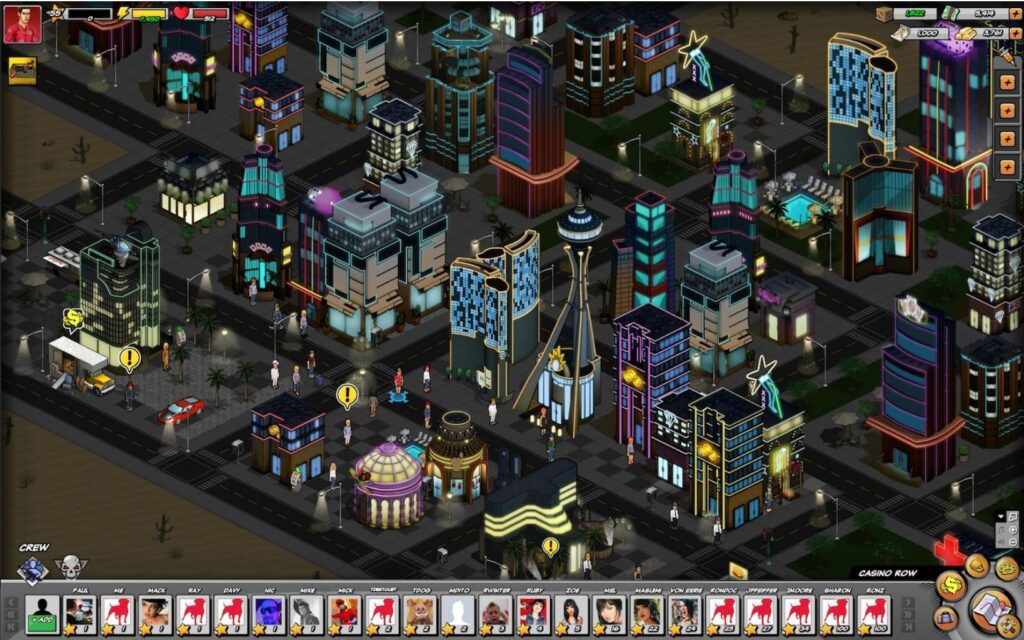
- Mafia Wars: Crime syndicate building with RPG elements
- Happy Aquarium: Underwater pet keeping with fish breeding and tank decoration
- FishVille: Zynga’s aquarium game with enhanced social features
The Psychological Hook
These games leveraged powerful psychological principles:
- Variable Rewards: You never knew what you’d get from mystery boxes or harvest bonuses
- Loss Aversion: Crops would wither if not harvested in time
- Social Obligation: Friend requests for help created reciprocity loops
- Completionist Drive: Collections and achievements appealed to gathering instincts
- Sunk Cost Fallacy: Time and money invested made quitting harder
By December 2009, Facebook games accounted for more than 30% of all time spent on the platform.
Old Facebook Games 2010: The Peak of Social Gaming
CityVille’s Record-Breaking Launch
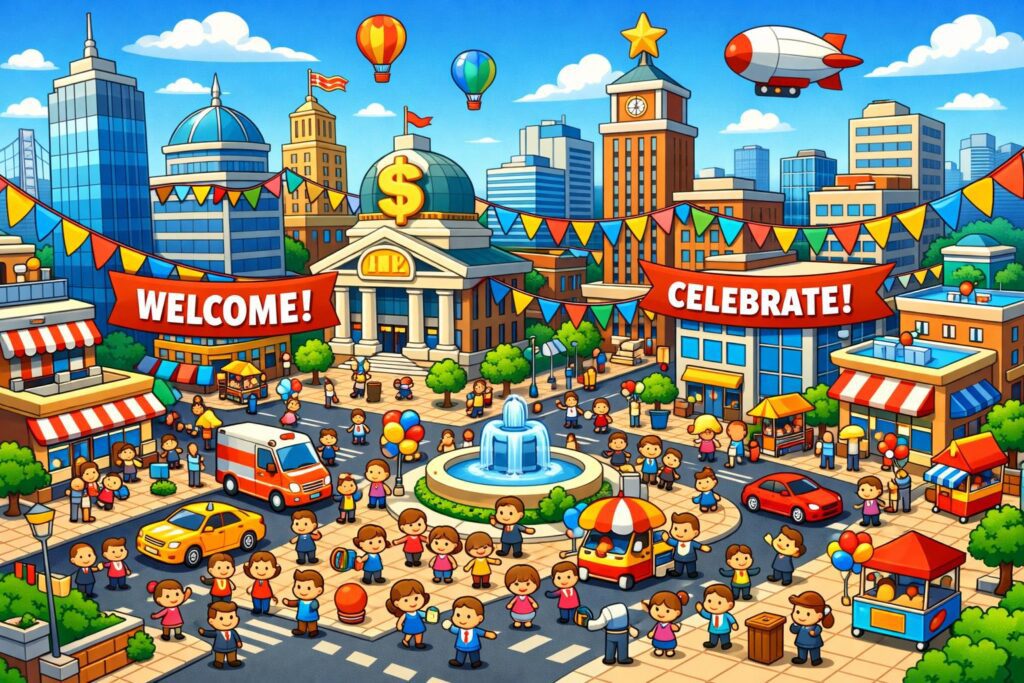
Launched in December 2010, CityVille shattered all records. Within 24 hours, it had 290,000 players. Within 31 days, it reached 100 million monthly active users—the fastest-growing game in history at that point.
CityVille combined city-building strategy with FarmVille’s social mechanics. Players constructed buildings, completed supply chains, and traded resources with neighboring cities (your Facebook friends).
Diversification of Genres
2010 saw developers branch beyond farming and pets:
- FrontierVille: Wild West frontier simulation with pioneering and exploration
- Treasure Isle: Adventure and treasure hunting with exploration mechanics
- Bejeweled Blitz: One-minute timed puzzle challenges with weekly tournaments
- Bubble Safari: Bubble-shooting with storylines and progression
- Words With Friends: Asynchronous word game that became a mobile phenomenon
The Revenue Explosion
Microtransactions transformed these free-to-play games into goldmines. Zynga’s 2011 IPO valued the company at $7 billion, powered almost entirely by Facebook game revenues.
Players spent real money on:
- Speed-ups: Instantly finishing tasks
- Premium Currency: Special coins for exclusive items
- Expansions: Additional land or features
- Decorations: Aesthetic items with no gameplay advantage
The average paying user spent $20-50 monthly, with whales (top spenders) investing thousands.
Old Facebook Games 2011: Maturation and Competition
The Sims Social
EA Games entered with The Sims Social, bringing the beloved franchise to Facebook. Players created Sims, built homes, developed relationships, and lived virtual lives with unprecedented depth for a browser game.
The game showcased how established franchises could leverage Facebook’s social graph to create authentic social simulations.
The 2011 Landscape
Other notable releases:
- CastleVille: Fairy-tale kingdom building with quests and exploration
- Words With Friends: Cross-platform word battles that became a cultural touchstone
- Dragon Age Legends: RPG mechanics in a Facebook game from BioWare
- Gardens of Time: Hidden object mystery with time travel themes
- Empires & Allies: Military strategy with base-building and PvP combat
Market Saturation
By mid-2011, concerns about oversaturation emerged. News feeds were cluttered with game notifications. Facebook began limiting how frequently games could post, impacting organic growth.
Players experienced invitation fatigue. The constant barrage of requests to help water crops or send gifts became annoying rather than engaging.
Old Facebook Games 2012: Innovation and Evolution
FarmVille 2’s Graphical Leap
Zynga released FarmVille 2 with significant improvements:
- 3D Graphics: Moving beyond Flash’s limitations
- Crafting Systems: Converting raw materials into finished goods
- Story-Driven Content: Narrative quests beyond simple farming
- Enhanced Social Features: Cooperative farming tasks
New Mechanics
Developers experimented with deeper systems:
- ChefVille: Combined cooking with restaurant management and recipe creation
- Bubble Safari: Added narrative progression to bubble-shooting
- The Ville: Life simulation with jobs, parties, and relationships
- Criminal Case: Hidden object detective game with serialized mysteries
The Mobile Threat
Smartphone adoption accelerated dramatically in 2012. Standalone mobile games offered superior graphics, touch controls, and on-the-go convenience.
Candy Crush Saga launched on mobile in November 2012, then came to Facebook. Its cross-platform approach and lack of intrusive friend mechanics pointed toward the future.
Old Facebook Games 2013: The Beginning of the End
Mobile Migration
As smartphone usage surged, desktop gaming declined. Facebook games faced an existential crisis: adapt or die.
Key challenges:
- Flash Dependency: Most games relied on Flash, which mobile devices didn’t support
- Design Philosophy: Games designed for mouse clicks didn’t translate well to touchscreens
- Competing Platforms: App stores offered direct monetization without Facebook’s revenue share
- Notification Fatigue: Users installed ad blockers and disabled game notifications
Survivors
Some games maintained strong communities:
- FarmVille 2: Transitioned to mobile while maintaining Facebook presence
- Candy Crush Saga: Perfected cross-platform synchronization
- Dragon City: Found a dedicated niche in dragon breeding and battling
Zynga’s Struggles
Zynga’s stock plummeted from $14.50 at IPO to under $3 by 2013. The company laid off hundreds of employees and closed multiple game studios.
The social gaming giant that once seemed invincible was crumbling.
Old Facebook Games 2014
Mobile-First Strategy
Developers scrambled to create mobile versions:
- FarmVille 2: Country Escape: Mobile-only successor that abandoned Facebook integration
- Candy Crush Soda Saga: King’s sequel that launched mobile-first
- Criminal Case: Successfully transitioned with touch-optimized gameplay
Technical Obstacles
The transition wasn’t smooth:
- Flash’s Death Sentence: Adobe announced Flash would be phased out
- Development Costs: Creating parallel versions for web and mobile was expensive
- Lost Features: Many social mechanics didn’t work without Facebook integration
- Platform Fragmentation: Supporting iOS, Android, and web stretched resources thin
Cultural Shift
Player preferences evolved:
- Sophistication: Gamers wanted deeper experiences than simple time-management
- Privacy Concerns: Sharing gaming activity publicly felt dated
- Standalone Apps: Why play through Facebook when direct apps offered better experiences?
- Gaming Identity: Hardcore gamers never embraced Facebook gaming; casual players moved to mobile
Facebook Games 2015: The Final Chapter
Last Gasps
Final notable releases:
- FarmVille 2: Country Escape: Successful mobile pivot
- Candy Crush Soda Saga: King’s continued dominance
- Criminal Case: One of the few games maintaining healthy player counts
Flash’s Death Knell
Adobe announced Flash would be deprecated by 2020. Games built on Flash—the vast majority of Facebook games—were living on borrowed time.
Post-Mortem
By end of 2015:
- Monthly active users dropped below 50 million (from 235 million in 2013)
- Major developers abandoned Facebook game development
- Zynga pivoted to mobile-first strategy
- Facebook Gaming platform was repositioned as a video streaming service
Why Facebook Games Failed
The standard explanation — “Flash died, mobile won” — is accurate but incomplete. The deeper causes were systemic:
Design Exploitation Over Engagement As Brian Reynolds, Zynga’s Chief Designer, admitted in 2013: “We optimized for virality over fun. In retrospect, that short-term thinking hurt us. Players felt used, not entertained.” Games were engineered to extract time and money, not to deliver genuine experiences. Players eventually noticed.
Social Mechanics Became Social Burdens Friend dependency was the feature that made these games viral. It was also the feature that made them exhausting. When helping a friend meant sending a gift request that would appear on their feed, the “social” layer became an obligation, not a joy.
The Platform Took Too Much Facebook’s 30% revenue cut on all transactions gave developers powerful incentive to build elsewhere the moment mobile app stores offered a better deal.
Privacy Awareness Grew What felt normal in 2009 — broadcasting your gaming activity to your entire social network — felt invasive by 2013. Cultural attitudes toward data sharing shifted dramatically, and Facebook games were perfectly positioned to feel like the worst example of oversharing.
What Facebook Games Changed Forever
It’s easy to dismiss these games as relics — time-wasting, manipulative, repetitive. Some of that criticism is fair. But the industry running on your phone right now carries Facebook gaming’s DNA in ways that are impossible to overstate.
Free-to-Play as Default Before Facebook games, free-to-play was a fringe model. After Zynga proved microtransactions could generate billions from a free product, the entire industry restructured. Every major mobile game you play today — including games like Subway Surfers, Clash Royale, and Fortnite — runs on a business model that Facebook gaming proved at scale.
Social Features as Standard Friend leaderboards, crew challenges, gifting systems, co-op events — these are now baseline expectations in mobile gaming. Facebook games didn’t invent social mechanics, but they pressure-tested them with hundreds of millions of players and taught developers exactly which ones worked.
Data-Driven Game Design A/B testing, daily active user metrics, retention rate optimization, funnel analysis — Facebook games pioneered applying these techniques to game design in real time. Every live-service game runs on this methodology today.
Casual Gaming Legitimacy Perhaps the most underappreciated legacy: Facebook games made it socially acceptable to be a gamer without calling yourself one. The 45-year-old parent who spent three years tending a FarmVille farm never identified as a “gamer.” But they were one. That expansion of gaming’s cultural footprint changed what the industry could become.
As one longtime player, Sarah M., reflected in 2025: “It sounds ridiculous now, but back then, it was how I connected with my mom who lived across the country. We’d compare farms every morning.” That’s not exploitation. That’s genuine human connection through a digital medium — which is what the best games have always provided.
Where to Play Old Facebook Games in 2026
The era is over, but the games aren’t entirely gone. Here’s where to find them:
BlueMaxima’s Flashpoint T
he gold standard for Flash game preservation. Over 150,000 Flash games archived and playable offline, including many Facebook titles. Available free at bluemaxima.org. Social features obviously won’t work, but the core gameplay is intact.
Mobile Successors
Several games live on in evolved forms:
- FarmVille 2: Country Escape (iOS/Android) — captures the core farming loop
- Candy Crush Saga (iOS/Android) — King’s match-3 legacy continues
- Dragon City Mobile (iOS/Android) — expanded dragon breeding
- Criminal Case (iOS/Android) — mystery-solving maintained
Community Archives
- Internet Archive hosts selected Flash games in browser-playable format
- Reddit’s r/WebGames maintains active discussion threads for tracking down specific titles
- YouTube playthroughs offer hundreds of hours of footage for pure nostalgia without the gameplay
Still-Active Communities
- YoWorld (originally YoVille) operates independently at yoworld.com
- Mob Wars: La Cosa Nostra remains playable on Facebook
- Select private server communities maintain Empires & Allies experiences
Old Facebook Games List
The Definitive List of Notable Facebook Games (2008-2015)
| Game Name | Category | Active Years | Developer | Description |
|---|---|---|---|---|
| Farming & Simulation | ||||
| FarmVille | Farming | 2009-2020 | Zynga | The game that started it all |
| FarmVille 2 | Farming | 2012-present | Zynga | Enhanced 3D sequel |
| Farm Town | Farming | 2009-2015 | SlashKey | Original farming sim |
| FrontierVille | Frontier | 2010-2012 | Zynga | Wild West frontier |
| CityVille | City-Building | 2010-2013 | Zynga | City-building phenomenon |
| The Ville | Life Sim | 2012-2013 | Zynga | Life simulation |
| ChefVille | Cooking | 2012-2015 | Zynga | Cooking and restaurant management |
| Café World | Cooking | 2009-2012 | Zynga | Coffee shop simulation |
| Restaurant City | Cooking | 2009-2011 | Playfish | Kitchen management |
| FishVille | Aquarium | 2009-2011 | Zynga | Aquarium building |
| Happy Aquarium | Aquarium | 2009-2014 | Playfish | Fish breeding and care |
| Pet & Creature Games | ||||
| Pet Society | Pet Care | 2008-2013 | Playfish | Original pet care game |
| PetVille | Pet Care | 2009-2012 | Zynga | Zynga’s pet competitor |
| Dragon City | Breeding | 2012-present | Social Point | Dragon breeding strategy |
| Monster Galaxy | RPG | 2011-2013 | Gaia Interactive | Creature collecting RPG |
| Zoo World | Management | 2009-2012 | RockYou | Zoo management |
| Happy Pets | Pet Care | 2010-2012 | Playfish | Virtual pet care |
| Strategy & War | ||||
| Mafia Wars | Strategy | 2008-2016 | Zynga | Crime syndicate building |
| Vampire Wars | Strategy | 2008-2012 | Zynga | Vampire clan management |
| Castle Age | RPG | 2009-2015 | Phoenix Age | Fantasy RPG strategy |
| CastleVille | Kingdom | 2011-2013 | Zynga | Medieval kingdom building |
| Empires & Allies | Military | 2011-2013 | Zynga | Military strategy |
| Kingdoms of Camelot | Medieval | 2009-2016 | Kabam | Medieval conquest |
| Age of Empires Online | RTS | 2011-2014 | Microsoft | RTS on Facebook |
| Puzzle & Casual | ||||
| Bejeweled Blitz | Match-3 | 2008-present | PopCap | Speed-matching gem game |
| Candy Crush Saga | Match-3 | 2012-present | King | Match-3 phenomenon |
| Bubble Witch Saga | Bubble | 2011-present | King | Bubble shooter |
| Bubble Safari | Bubble | 2012-2014 | Zynga | Story-driven bubble game |
| Diamond Dash | Match | 2011-2015 | Wooga | Fast-paced gem matching |
| Tetris Battle | Puzzle | 2007-2019 | Tetris Online | Social Tetris |
| Words With Friends | Word | 2009-present | Zynga | Asynchronous word game |
| Adventure & Mystery | ||||
| Criminal Case | Hidden Object | 2012-present | Pretty Simple | Detective hidden object |
| Hidden Chronicles | Hidden Object | 2011-2015 | Zynga | Hidden object puzzles |
| Mystery Manor | Hidden Object | 2010-present | Game Insight | Supernatural mysteries |
| Gardens of Time | Hidden Object | 2011-2015 | Playdom | Time-travel hidden object |
| Ravenwood Fair | Adventure | 2010-2012 | Lolapps | Fairground mystery |
| Casino & Cards | ||||
| Zynga Poker | Poker | 2007-present | Zynga | Texas Hold’em poker |
| Slotomania | Slots | 2011-present | Playtika | Slot machine simulator |
| Bingo Blitz | Bingo | 2012-present | Playtika | Social bingo |
| Hit It Rich! | Slots | 2012-present | Zynga | Celebrity-themed slots |
| DoubleDown Casino | Casino | 2010-present | DoubleDown | Multi-game casino |
| Sports & Action | ||||
| FIFA Superstars | Soccer | 2010-2013 | EA Sports | Soccer management |
| Top Eleven | Soccer | 2010-present | Nordeus | Football manager |
| Jetpack Joyride | Runner | 2011-2014 | Halfbrick | Endless runner |
| Angry Birds Friends | Puzzle | 2012-present | Rovio | Social Angry Birds |
| Wild Ones | Combat | 2011-2014 | Playdom | Artillery combat |
| Ninja Saga | RPG | 2009-2015 | Emagist | Ninja RPG |
| Life Simulation | ||||
| The Sims Social | Life Sim | 2011-2013 | EA/Playfish | Social life simulator |
| YoVille/YoWorld | Virtual World | 2008-present | Zynga/Big Viking | Virtual world |
| Mall World | Management | 2010-2012 | Rockyou | Shopping mall management |
| Resort World | Management | 2010-2012 | Playdom | Resort management |
| Nightclub City | Management | 2010-2012 | Booyah | Nightclub operation |
Interviews & Perspectives
From the Developers
Mark Pincus, Zynga Founder (2011): “We viewed Facebook as the new operating system. Building on Facebook was like building Windows applications in the 90s—everyone wanted in.”
Brian Reynolds, Zynga Chief Designer (2013): “We optimized for virality over fun. In retrospect, that short-term thinking hurt us. Players felt used, not entertained.”
From the Players
Sarah M., FarmVille enthusiast (2025): “I spent three years watering digital crops. It sounds ridiculous now, but back then, it was how I connected with my mom who lived across the country. We’d compare farms every morning.”
James T., former Mafia Wars player (2025): “The game taught me about resource management and strategy. Yeah, it was repetitive, but I made real friendships with people in my mafia family. We still keep in touch.”
The End of an Era
Facebook games were flawed. Many were exploitative. Some were genuinely terrible. The business practices that defined Zynga’s peak years left real scars on how the industry thought about player relationships for years afterward.
But they were also genuinely revolutionary — democratizing gaming for demographics the industry had never reached, proving business models that now power the entire mobile sector, and creating real moments of human connection through digital spaces.
Understanding why they rose, and why they fell, isn’t just nostalgia. It’s a case study in what happens when technology, social behavior, and game design align perfectly — and what happens when that alignment breaks.
The lesson the industry took: build games that respect the player’s time. The lesson the best modern games applied: social features should feel like gifts, not obligations.
That’s the Facebook gaming legacy. Messy, complicated, important — and impossible to forget if you lived through it.
Other Famous Games to Have Fun
While Facebook games dominated the social gaming scene from 2008-2015, the gaming landscape has evolved dramatically since then. Today’s players have access to an incredibly diverse range of experiences across all platforms. From the best horror games that deliver spine-chilling scares to the best idle games that let you progress even when you’re not actively playing, modern gaming offers something for everyone.
Console enthusiasts can explore the best GameCube games that still shine today or dive into the best PS2 games ever made, while handheld fans shouldn’t miss the best 3DS games you need to play. For those interested in gaming’s future, check out our comprehensive guide on how to make a video game in 2026. Even classic mobile experiences like the Snake Apple game continue to capture hearts with their simple yet addictive gameplay. The fall of Facebook games didn’t end social gaming—it simply transformed it into the rich, multi-platform ecosystem we enjoy today.