Few games sit at the intersection of vocabulary, quick thinking, and sheer luck quite like Boggle. You shake the plastic dome, the 16 lettered cubes settle, the timer flips — and suddenly everyone at the table is furiously scribbling words. That universally understood tension has kept Boggle on “best popular board games” lists for over five decades.
Quick Answer: What Is Boggle?
Boggle is a fast-paced word search board game in which two or more players race against a 3-minute timer to find as many words as possible on a 4×4 grid of letter cubes. Originally published by Parker Brothers in 1972 and now owned by Hasbro, it remains one of the most popular board games in the world — beloved by families, word nerds, and competitive players alike.
Whether you’ve never cracked open the box, you’re returning to the game after years away, or you’re hunting for an edge over competitive opponents, this complete guide covers everything: official rules, the scoring table, proven strategies, the best places to play Boggle online, and why the game continues to thrive in modern board gaming culture.
What’s Inside the Boggle Box?
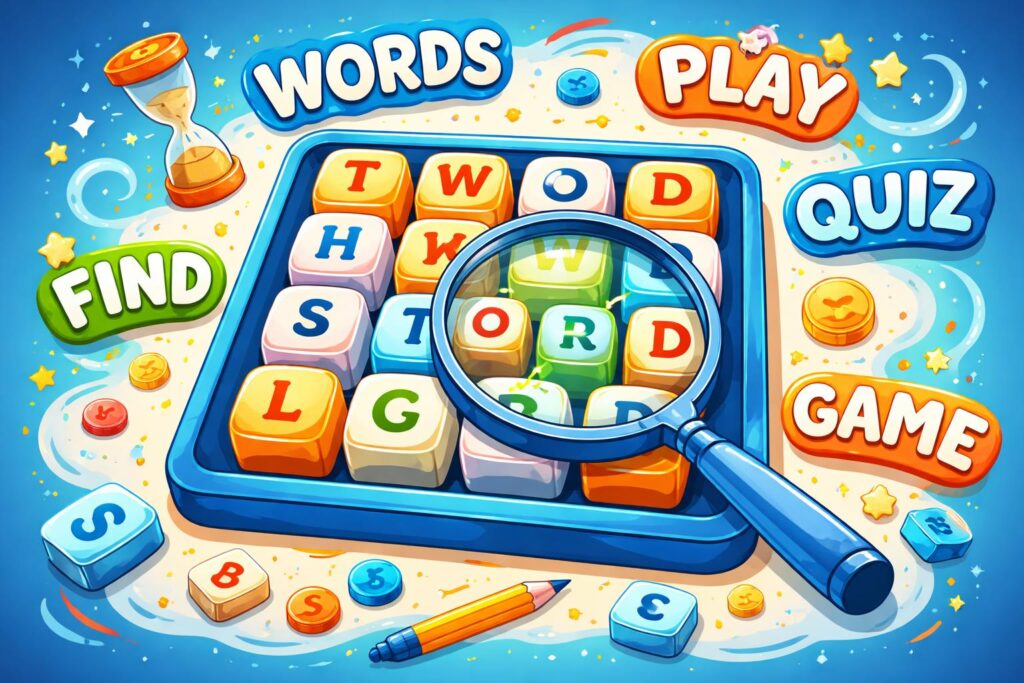
Before your first game, it helps to know exactly what comes in the standard Boggle board game set. The equipment is refreshingly simple, which is part of the game’s enduring charm.
Standard Equipment:
Rules booklet — Contains official word validation rules and scoring guidelines.
Game board with a plastic dome — The iconic square tray and clear plastic cover that shakes and settles the cubes into place. This is the central game board all players focus on.
16 letter cubes — Six-sided dice, each face printed with a single letter (the “Qu” face counts as two letters). Every cube has a unique combination of letters weighted toward common English usage.
Sand timer (3 minutes) — The urgency that makes Boggle, Boggle. Once flipped, the clock is the enemy.
Score pads and pencils — For recording words and calculating points after each round.
Pro Tip
Some editions — including Boggle Junior, Big Boggle (5×5 grid), and Boggle Master — come with different grid sizes or simplified rules. This guide focuses on the classic 4×4 version, which is the standard for most players and all major boggle game online free play platforms.
Official Boggle Rules: Step-by-Step Instructions
Learning how to play Boggle takes about five minutes. Mastering it takes much longer — but that’s the beauty of the game.
Setup:
- Place all 16 letter cubes into the plastic dome tray.
- Shake the dome firmly until every cube settles into its own square slot on the 4×4 grid.
- Cover the tray with the plastic lid so all players can see the game board clearly.
- Hand every player a sheet of paper and a pen or pencil.
Gameplay:
- Flip the 3-minute timer and start finding words simultaneously — all players search at the same time.
- Write down every valid word you can find on the grid. There is no turn order; this is a race.
- When the timer runs out, all players must immediately stop writing.
The “Chain of Letters” Logic — How Valid Words Are Formed
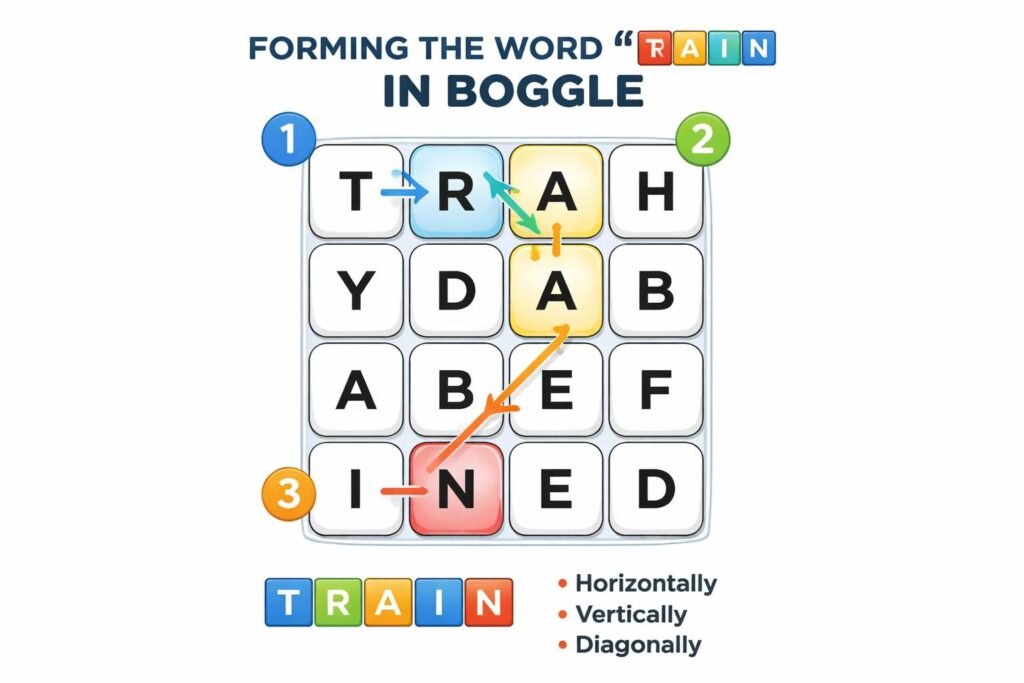
This is the core mechanic of Boggle. A valid word must be formed by connecting adjacent letter cubes in a continuous chain. “Adjacent” means any cube that is horizontally, vertically, or diagonally touching the previous cube. Think of it like drawing a path across the board — each step must land on a neighboring square.
The rules for a valid letter chain are:
- Each cube in the word’s path must be adjacent (sharing a side or corner) with the next cube.
- You cannot use the same cube twice in a single word, though the same letter can appear if it appears on two different cubes.
- Words must be at least 3 letters long.
- Words must be found in a standard dictionary (most editions reference Merriam-Webster).
- Proper nouns (names, places) are not allowed.
- Abbreviations and acronyms are not allowed.
- The “Qu” cube always counts as two letters — so using it contributes both Q and U to a word.
Scoring Round:
Tally the scores. The player with the highest total wins the round.
After the timer ends, players take turns reading their word lists aloud.
Any word found by two or more players is crossed off everyone’s list — only unique words score points.
Remaining unique words are scored based on their length (see the scoring table below).
Words that cannot be traced on the current board are disqualified, as are words challenged and not found in the agreed-upon dictionary.
Boggle Scoring System
The official Boggle scoring system rewards longer words exponentially. A 3-letter word earns just 1 point, but an 8-letter word earns 11. This creates genuine tension between grabbing short, easy words quickly and hunting for the elusive long ones.
| Word Length | Example Word | Points Earned |
|---|---|---|
| 3 letters | CAT, RUN, THE | 1 point |
| 4 letters | TREE, BAND, FARM | 1 point |
| 5 letters | STONE, CRANE, BLEND | 2 points |
| 6 letters | CANDLE, FROZEN, STRIPE | 3 points |
| 7 letters | PATTERN, STRANGE | 5 points |
| 8+ letters | STRAINED, CLAIMING | 11 points |
Per official Hasbro rules. Some house rules award 1 point per letter for words over 8 characters — agree before playing.
Notice that 3-letter and 4-letter words both earn just 1 point. This is intentional — it levels the playing field slightly between players with large vocabularies and those who are still building theirs, since short words are easy but don’t separate scores by much.
Winning Strategies for Boggle
Veteran players don’t just look for words they know — they deploy systematic scanning techniques and linguistic tricks. Here are the most effective strategies used by top Boggle competitors and seasoned families alike.
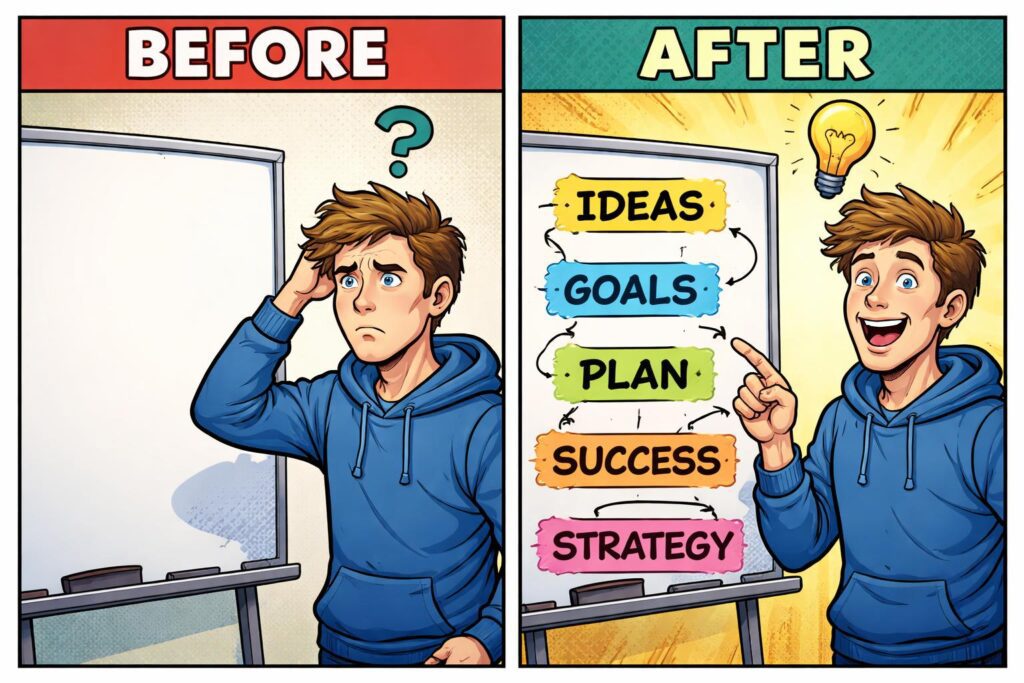
01 — Hunt for suffixes and prefixes first. Train your eye to find common endings like -ING, -ED, -ER, -EST, -TION, -LY, and -NESS on the board. Once you spot “-ING” as a connected chain, work backward to find every root word that feeds into it. One suffix cluster can yield five or six words in seconds.
02 — Pluralize everything. Found the word STONE? Immediately check if S is adjacent — STONES earns 2 points instead of 1. This “plural sweep” at the end of your time is one of the fastest ways to pad your score without finding entirely new words.
03 — Scan in zones, not randomly. Divide the 4×4 game board into four quadrants mentally and move through each zone methodically. Random scanning causes you to overlook obvious words in corners. Experienced players work left-to-right, row by row, then diagonally.
04 — Think in word families. The letters STORE may also give you TORE, ORE, ROTE, ROSE, ROES, TORES — all branching from the same cluster. When you find one word, don’t move on immediately; mine the surrounding cubes for related variations.
05 — Learn uncommon 3-letter words. Short words like AAL, OES, TAV, GIE, LEU and other valid-but-obscure dictionary entries are legitimate gold in Boggle. Since opponents rarely know them, these words survive the duplicate-elimination round and score every time.
06 — Practice spatial path-tracing. Speed comes from quickly visualizing adjacency. Players who can trace multi-step paths mentally — without needing a finger on the board — gain a significant advantage in the final 60 seconds.
07 — Don’t overinvest in one long word. Hunting for a single 8-letter word for 30 seconds while your opponent lists ten 3-letter words is often a losing trade. Unless you’re confident a long word exists, balance speed with depth.
Boggle Online: Where to Play for Free
Don’t have the physical board nearby? No problem. There are several excellent platforms where you can play Boggle online without spending a dime. If you enjoy free browser-based games in general, sites like Unblocked Games 6x and Unblocked Games G are worth bookmarking — they host a wide variety of games you can jump into instantly without downloads. Here are the top three dedicated options for boggle game online free play in 2025.
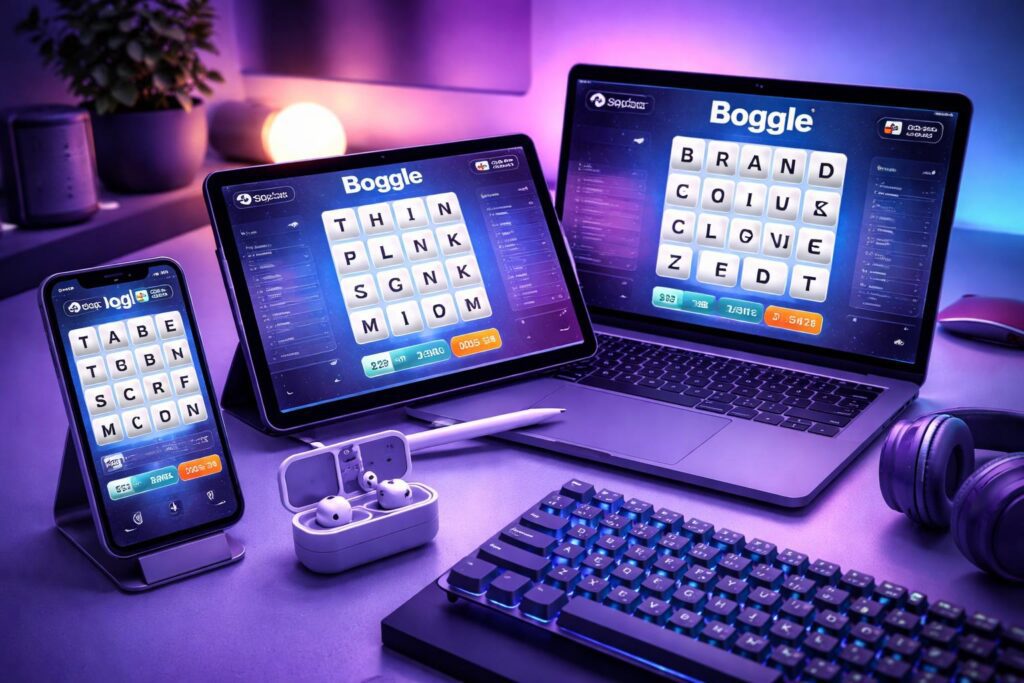
🥇 Wordsplay.net — Best Overall One of the cleanest boggle game online free experiences available. It offers solo play against the clock and competitive multiplayer rooms. The board rendering is faithful to the physical game, word validation uses a standard dictionary, and no account is needed to jump in. Excellent for players who want zero-friction access to play Boggle online.
🥈 Boggle.com / Hasbro Online — Best for Beginners The official digital home of the Boggle board game. Hasbro’s sanctioned version stays true to the original ruleset and is ideal for beginners learning how to play Boggle. The interface is approachable, rounds are timed correctly, and you play against an AI that adjusts to skill level — a solid training ground before playing socially.
🥉 Arkadium Word Games — Best Multiplayer Arkadium hosts a popular word grid game that mirrors Boggle’s core mechanics with real-time multiplayer. You can jump into public games or invite friends. The platform also serves up daily challenge boards, making it perfect for players who want a structured, ongoing boggle game online free play habit without downloading any apps.
If you prefer mobile, both the iOS App Store and Google Play host several highly-rated Boggle-style apps — search “word grid game” or “boggle online” to find them. Playing online is also a fantastic way to sharpen your skills before challenging others at your next board gaming night.
Why Boggle Remains a Staple in Board Gaming Culture
In an era of elaborate strategy games, cooperative epics, and hundreds of new board games launching every year, Boggle’s staying power is remarkable. What keeps this simple word game on tables worldwide?
Accessibility Without Sacrificing Depth
Boggle takes two minutes to explain to a first-time player. Yet the skill ceiling is genuinely high — linguists, crossword champions, and vocabulary enthusiasts regularly find new layers in the same 4×4 grid. That rare combination of low barrier to entry and high competitive depth is why it appeals to a 10-year-old and a college professor sitting at the same table.
The Social Energy Is Unmatched
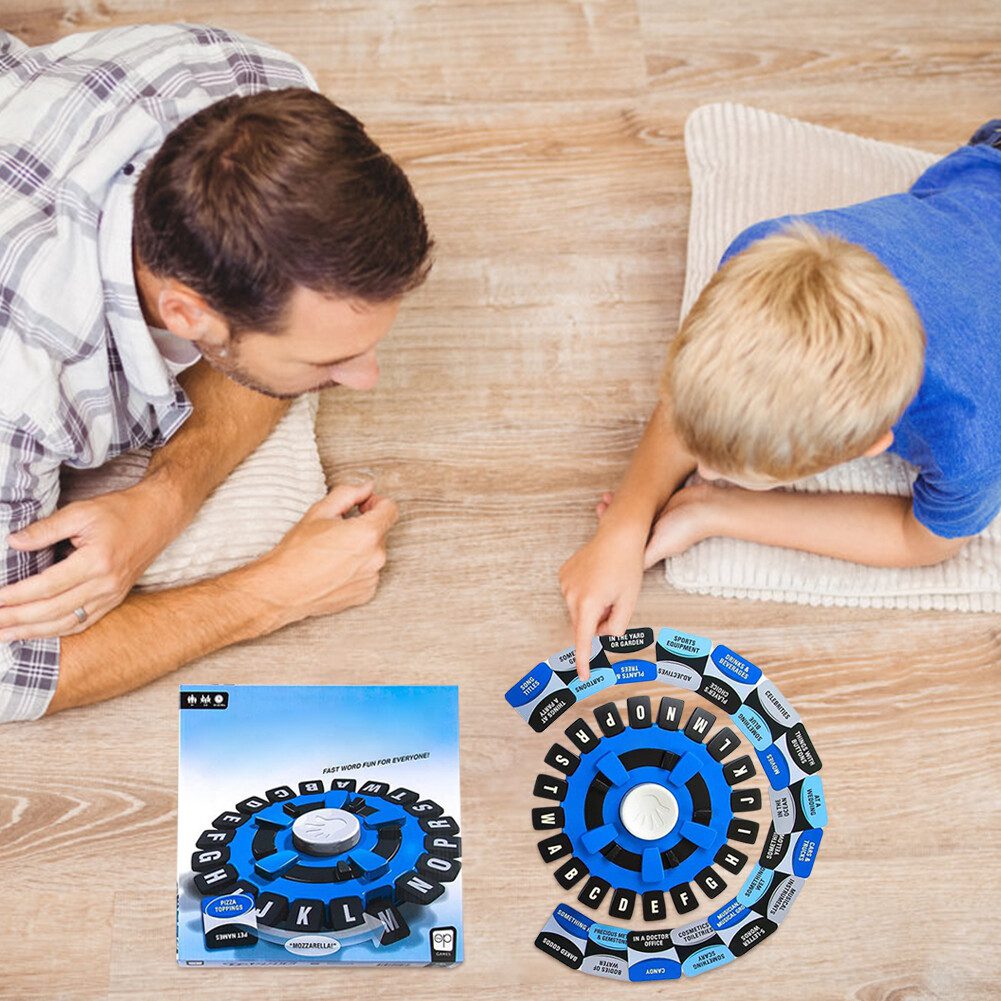
The sound of everyone scribbling furiously, the collective groan when a word gets crossed off because two people found it, the disbelief when someone produces a seven-letter word — these are shared moments that define playing board games with people you care about. Boggle creates a specific kind of table energy that digital games rarely replicate. If you love that fast-paced party game energy, you might also enjoy Tapple — another quick-fire word game that works brilliantly as a warm-up or cool-down alongside Boggle at game night.
A Bridge Between Classic and Contemporary
Boggle has influenced a generation of word and puzzle games. If Boggle sparked your love of pattern-based challenges, you’ll likely enjoy Sudoku — another game where the grid becomes a playground for focused, strategic thinking. And if you enjoy daily word puzzles in a social format, the NYT Connections puzzle scratches a very similar itch. Many players who discover new board games in the word genre trace their love of the format directly back to their first Boggle round.
The Hashtag Game and Other Modern Word Spin-Offs
Boggle’s influence even extends to party-format word games like the Hashtag Game, which borrows the same rapid-fire word association energy for a group setting. These games exist because Boggle proved decades ago that a simple word challenge, a ticking clock, and a room full of people is a formula that never gets old.
Educational Value
Teachers and parents have long used Boggle as a vocabulary-building tool. Research in language learning consistently supports word games as effective tools for spelling, pattern recognition, and vocabulary expansion. It’s one of the few popular board games that doubles as a legitimate educational activity without feeling like homework.
In short: Boggle endures because it is perfectly designed. The components are minimal. The rules are simple. The competition is real. And the replayability is infinite — no two boggle board game rounds ever look the same.
Comparing Boggle to Other Word Games
How does Boggle stack up against other word games? Let’s break it down because people always ask.
| Feature | Boggle Game | Scrabble | Words With Friends |
|---|---|---|---|
| Game Length | 3-10 minutes | 45-90 minutes | Ongoing (async) |
| Players | 1-8+ | 2-4 | 2 (typically) |
| Skill Required | Pattern recognition, speed | Strategy, vocabulary | Similar to Scrabble |
| Luck Factor | Medium (board setup) | Medium (tile draw) | Medium (tile draw) |
| Replay Value | Extremely high | High | High |
| Portability | Excellent | Poor (large board) | Perfect (digital only) |
Scrabble is more strategic and slower-paced. You’ve got time to think about tile placement and rack management. Boggle is pure adrenaline rush. Bananagrams sits somewhere in between – it’s got Scrabble’s tile-based gameplay but Boggle’s speed element.
The nice thing about Boggle is how quick it plays. You can knock out several rounds in the time it takes for one Scrabble game. Makes it perfect for when you want word game action but don’t have all evening. It’s also great for 2 player word games when you want something competitive but fast.
Building Your Vocabulary for Better Play
Wanna get seriously good at Boggle? You gotta expand your word knowledge. I’m not saying memorize the entire boggle dictionary (although some people do that), but knowing some unusual short words gives you a huge edge.
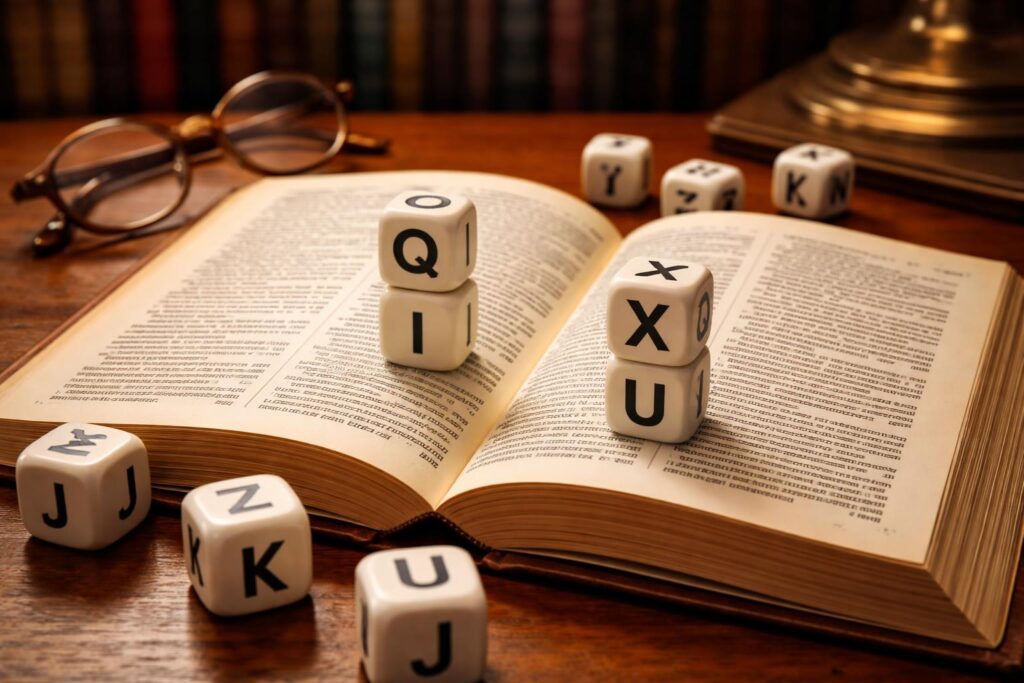
Learn the Q-without-U words. Yeah, they exist. QI, QOPH, QADI, QAID – these are all valid Scrabble words that work in Boggle too. When that Q shows up, most people panic because there’s no U nearby. Not you though.
Study word lists focused on high-value letters like J, X, Z, Q. Knowing that AX, OX, XI, XU, ZA, and JO are words means those “difficult” letters become opportunities instead of dead weight. Understanding the boggle definition of each letter’s value helps you prioritize which paths to explore first.
According to research from linguistics departments at major universities like MIT and Stanford, pattern recognition improves dramatically with practice. Your brain literally gets better at spotting word combinations the more you play. It’s like training a muscle, except the muscle is your mind and instead of getting swole, you get smart. Or something.
Tournament Play and Competitive Scene
Yeah, there’s actually a competitive Boggle scene, though it’s not as organized as Scrabble. Some universities have Boggle clubs – Dartmouth, University of Michigan, UC Berkeley, Grinnell College. These folks are serious about their word hunting.
There’s no official governing body like there is for Scrabble, so tournament rules can vary. Some events use the Official Scrabble Players Dictionary as the word authority, others pick different references. The key is agreeing on rules before you start because arguments over valid words can get heated fast.
Online competitive play has gotten huge. Sites like WordTwist and Serpentine have ranking systems similar to chess ratings. You start at 1500 and go up or down based on your performance against other players. Top players can hit ratings over 2000, which is genuinely impressive.
Common Tournament Formats:
- Single round elimination
- Best of 5 rounds
- Timed marathon sessions
- Point threshold (first to 100 points wins)
- Team competitions
I watched a tournament once where the winner averaged finding 47 words per round on 4×4 boards. Meanwhile I’m happy if I break 20. The skill ceiling on this game is wild.
Tips From Actual Experts
I’ve picked up some advice from people who are legitimately good at this, so let me share the wisdom.
First, systematically scan the board. Don’t just let your eyes wander randomly. Some players go row by row, others start from each letter and explore all paths. Find a system that works for you and stick with it. This is especially important when you’re playing big boggle with its larger grid.
Second, prioritize suffixes and prefixes when you spot them. If you see “TION” or “NESS” somewhere on the board, drop everything and work backwards from there. These endings are points waiting to happen.
Third, use the rotate feature in online games. Seriously, rotating the board 90 or 180 degrees can make words suddenly visible that your brain missed before. It’s like magic, except it’s just basic psychology.
Last bit of expert advice I got: don’t overthink it. The best players aren’t necessarily the ones with the biggest vocabulary. They’re the ones who can shut off the analytical part of their brain and let pattern recognition take over. Thinking too hard actually slows you down.
Teaching Kids to Play
Boggle Jr exists for younger kids, but regular Boggle can work for ages 8+ if you adjust expectations. Don’t stress about scoring – just let them hunt for any words they can find. The competitive element can come later.
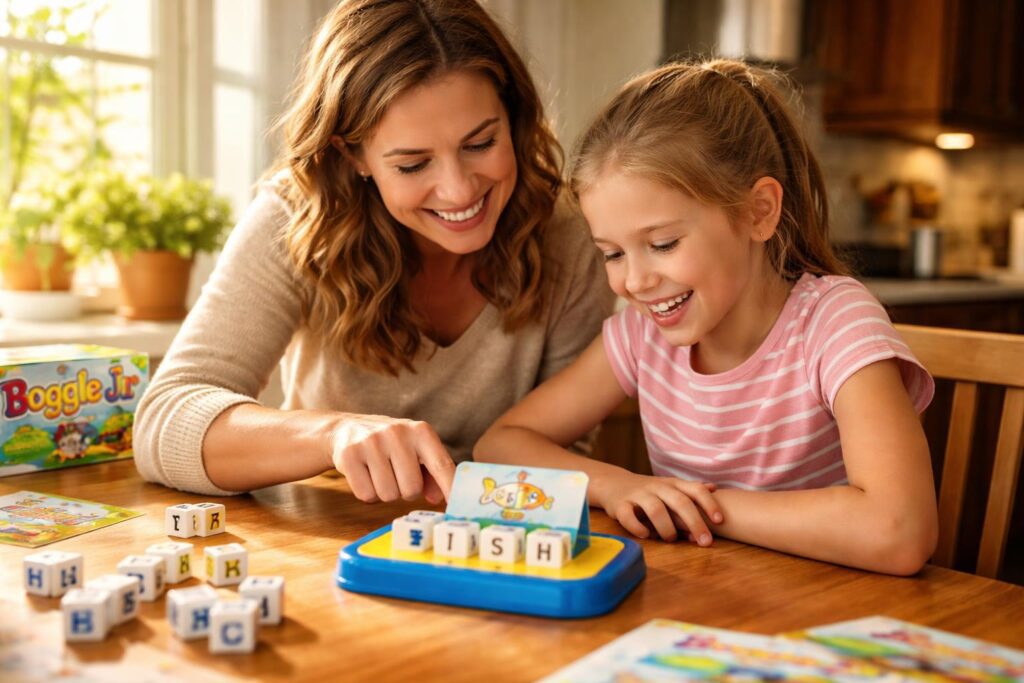
One trick that works well: let beginners use any letters to make words initially, ignoring the adjacency rule. Once they get comfortable finding words in the grid, then introduce the proper rules about letters needing to touch. Baby steps.
Playing cooperatively instead of competitively helps too. Work together as a team to find as many words as possible. This takes the pressure off and makes it more about learning than winning. Once kids get confident, then you can introduce competitive play.
If you’re looking for themed versions for younger players, there are editions featuring characters kids might recognize. Some people even joke about “boggle puppies” editions for dog-loving families, though that’s more of a wishful thinking thing than an actual product.
Why People Still Love This Game
What makes Boggle game stick around when so many other board games from the 70s have disappeared? I think it’s the perfect balance of simplicity and depth.
The rules fit on one page. A five-year-old could understand the basics. But mastering it? That takes years of practice and even then, every new board presents fresh challenges. You can’t just solve Boggle and be done with it.
It’s also genuinely social in a way that many games aren’t. Everyone plays simultaneously, so there’s no boring downtime waiting for your turn. You’re all hunting together, racing the same clock. The energy in the room during those three minutes is electric.
And honestly, finding words just feels good. There’s this little dopamine hit every time you spot something, especially a longer word you know nobody else will find. It’s addictive in the best way.
Why People Keep Playing:
- Quick games fit into busy schedules
- Every board is completely different
- Works well for all skill levels playing together
- No expensive expansions or updates needed
- Great for building vocabulary naturally
- Genuinely tests your brain without feeling like work
- Perfect mix of skill and luck
The game has aged incredibly well too. While the physical version is still solid, the digital adaptations have introduced it to whole new generations. Kids who’ve never seen a board game in their life are playing Boggle-style games on their phones.
Wrapping This All Up
Now that you know the official rules, the full scoring system, the best strategies, and where to play Boggle online for free, there’s only one thing left to do — start a game. Shake the dome, flip the timer, and race to find every word hidden in those 16 cubes.
Whether you’re dusting off the physical Boggle board game, heading to one of the free online platforms listed above, or exploring related word and puzzle games to round out your game night rotation, the fundamentals in this guide give you everything you need to play confidently, score competitively, and — most importantly — have a great time doing it. Happy word hunting!