
So you’ve stumbled onto Saiko no Sutoka, probably through a YouTube recommendation at 2AM when you should’ve been sleeping. Yeah, I’ve been there too. This indie horror game has been making waves in the yandere school horror community, and honestly? It deserves every bit of attention it’s getting.
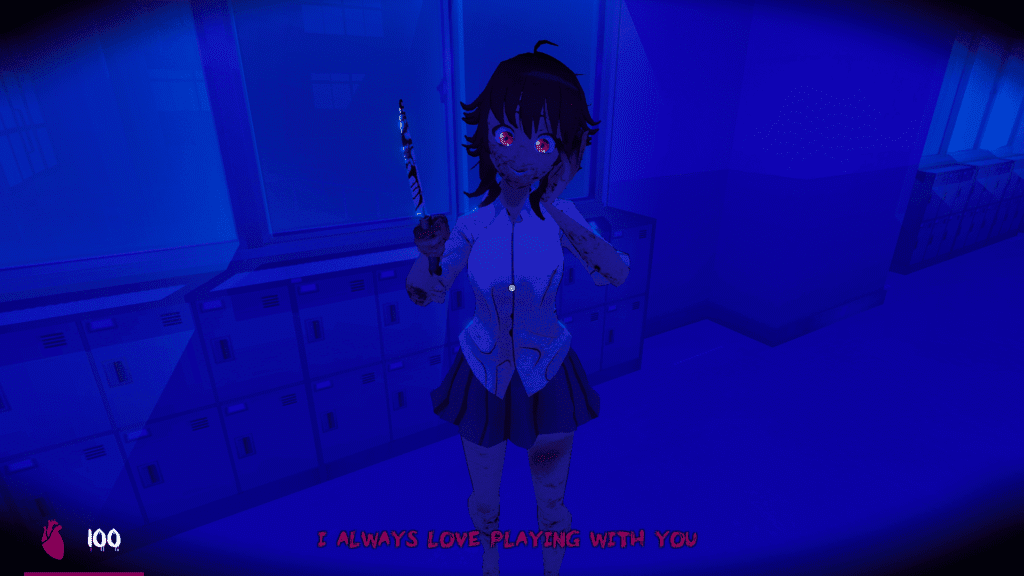
Developed by a solo creator named Habupain, this game takes the whole “obsessive anime girl” trope and turns it into something genuinely terrifying. Forget those visual novel simulators where you just click through dialogue. Saiko no Sutoka throws you into a school at night with one goal: get out before she finds you. And trust me, she will find you.
What Even Is Saiko no Sutoka?
Here’s the setup. You play as Akira, a regular high school student who wakes up tied to a chair in his school’s headmaster office. Your friendly neighborhood yandere, Saiko-chan, has decided you’re her “senpai” and she’s not letting you leave. Ever. She’s already killed your best friend Shinji (yep, right in front of you), so you know she means business.
The game’s name translates to “Psycho Stalker” from Japanese, which is pretty much on the nose. But what makes Saiko no Sutoka different from other yandere school horror games is the AI. Saiko doesn’t just mindlessly chase you around like some monster. She hides behind corners, waits for you to turn around, turns off lights to ambush you, and even plays little “games” with you before deciding whether to stab you or not.
Available on Steam, itch.io, Google Play, and the App Store, the game’s still in alpha but already has over 91% positive reviews on Steam. That’s pretty wild for an early access title.
The Two Faces of Saiko
This is where things get really interesting. Saiko has DID (Dissociative Identity Disorder), which the game uses to create two completely different behavioral states. It’s not just a cheap gimmick either, it actually affects how you play.

Yandere State: When Saiko’s in this mode, she’s… well, she’s still a psycho, but a playful one. She won’t immediately try to kill you. Instead, she might steal your keys and force you to play rock-paper-scissors to get them back. Or she’ll hop on your back for a piggyback ride, slowing you down but not hurting you. Sometimes she even gives you health items or tells you part of the safe code if you’ve been “good.”
Yangire State: This is when Saiko goes full murder mode. Her posture changes, she moves faster, and she will absolutely try to end you on sight. She’ll hide in classrooms waiting for you to walk past, turn off the power to trap you in darkness, and use every dirty trick in the book. When you see her start twitching and stabbing the air randomly, run.
The crazy part is you never know which Saiko you’re gonna get at any moment. She switches between states based on how you interact with her, how much noise you make, and sometimes just… randomly. It keeps you on edge the entire time.
| Feature | Yandere State | Yangire State |
|---|---|---|
| Hostility Level | Low – Playful | High – Murderous |
| Movement Speed | Normal | Faster |
| Player Interaction | Games, rides, hints | Ambushes, instant attacks |
| Light Sabotage | Occasionally | Frequently |
| Health Threat | Minimal | Critical |
Game Modes: How Many Ways Can One Yandere Kill You?
Saiko no Sutoka comes with five main difficulty modes, plus some secret stuff. Each one tells a different story and changes Saiko’s appearance and behavior.
Yandere Mode: This is basically the tutorial/story mode. You don’t play as Akira here. You’re actually looking for him while Saiko “helps” you. It’s set during daytime, and Saiko’s not even in the building at first. Great for learning the school layout without getting stabbed every five seconds.
Normal and Hard Mode: The main game right here. You’re trapped, you need to find seven numbers to unlock a safe that contains the exit key, and Saiko’s actively hunting you. Hard mode just makes Saiko more aggressive and the numbers harder to find. These modes have three different endings depending on how you play.
Yangire Mode: Remember when I said Yangire state was scary? Imagine that, but for the entire game. Saiko’s always hostile, supernatural fast, and basically a terminator in a school uniform. This mode’s only for people who hate themselves or really love pain.
Nightmare Mode: Currently in development, but it’s supposed to add three more maps and three more AI characters. Meaning you’ll be running from multiple psychos at once. Sounds fun, right? (It doesn’t.)
There’s also an Extreme Yangire mode where you face Hatsune Elissu, a secret character who looks almost identical to Saiko but carries bloody axes. Because one yandere wasn’t enough apparently.
Saiko no Sutoka Endings: Three Ways Out (If You’re Lucky)
The game has three main endings in Normal/Hard mode, and getting them requires different strategies.
Good Ending: Just beat the game. That’s it. Find all seven numbers, unlock the safe, get the exit key, and leave. Keep Saiko relatively happy by playing her games when she asks, don’t make too much noise, and you’ll probably make it out. She accidentally impales herself on broken glass while chasing you, and you escape. Bittersweet, but hey, you’re alive.
Bad Ending: You need to really tick Saiko off for this one. Play the game “normally” by avoiding her completely, refuse to interact when she wants attention, then let her catch you from behind when you have the exit key. She decapitates you. Congrats, you played yourself.
Best Ending: This one’s tricky and needs some luck. Keep Saiko fairly passive throughout the game, but when you get the exit key, let her steal it from you near the exit door. If the RNG gods smile on you, she’ll run directly to the exit. Chase her down and grab the key back right at the door to trigger this ending. You get out, and there’s a hint that maybe, just maybe, you might see her again.
Last year I tried getting all three endings in one night. Made it through the good ending fine, accidentally triggered the bad ending twice (stop sneaking up on me, Saiko!), and spent three hours trying to get the best ending because she kept running the wrong direction. The RNG in this game can be brutal, but that’s part of the charm.
Gameplay: Hide, Seek, and Try Not to Die
The core gameplay loop is pretty straightforward but executed really well. You need to explore the school to find seven random numbers hidden throughout classrooms. Problem is, most classrooms are locked, and you can only carry one key at a time. Keys spawn randomly, so you’re constantly backtracking.
Controls are basic FPS stuff. WASD to move, E to interact, Shift to sprint. But here’s the catch, when you sprint, Saiko can hear you. She’ll investigate loud noises, so you gotta balance speed with stealth. Crouch-walking is quieter but painfully slow when she’s right behind you.
The power system adds another layer. You need the power room key to turn on the lights, which reveals code hints scattered around the school. But even when you turn the power on, Saiko will shut it off constantly, especially when she’s in Yangire mode. Playing in the dark is terrifying because you can barely see her coming.
Saiko’s AI is genuinely impressive for an indie game. She doesn’t follow predictable patrol routes. She’ll hear you opening doors, investigate if you stay in one area too long, and adapts to your playstyle. If you keep hiding in lockers, she’ll start checking them more. If you sprint everywhere, she’ll set up ambushes. The game learns from you, which is both cool and frustrating.
Saiko no Sutoka Walkthrough Survival Tips

After dying about fifty times (no exaggeration), here’s what I’ve learned:
- Don’t sprint unless you absolutely have to. The noise attracts Saiko faster than anything else. Save your stamina for emergencies.
- Learn the school layout in Yandere mode first. Seriously. Knowing where classrooms, hiding spots, and shortcuts are will save your life in the harder modes.
- Play her games when she’s in Yandere state. Rock-paper-scissors might feel annoying, but winning gets you the key back and keeps her happy. Refusing just pisses her off.
- The power room is your friend. Get that key early, turn on the lights, and you’ll spot code numbers way easier. Just be ready to turn the power back on constantly.
- Hiding spots are limited use. Lockers, under desks, closets all work, but Saiko gets smarter about checking them the more you use them. Mix up your hiding strategy.
- Watch her animations. When Saiko starts doing that weird twitching thing and stabbing the air, she’s about to go Yangire. That’s your cue to find a hiding spot immediately.
- Sound is everything. You can hear Saiko’s footsteps, her humming when she’s in Yandere mode, and her heavy breathing when she’s hunting. Use headphones for the full experience.
One time I had all seven numbers, found the safe code, and was literally three steps from the exit when Saiko appeared out of nowhere and insta-killed me. I nearly threw my mouse across the room. Save often? Oh wait, you can’t. Live with the anxiety.
Comparing Saiko no Sutoka to Other Yandere Games
The yandere horror genre is kinda crowded these days, but most games in it are… not great. You’ve got asset flips charging money for Unity store models, visual novels with zero gameplay, and games that completely misunderstand what makes yanderes interesting.
| Game | Gameplay Type | AI Quality | Development Status | Price Range |
|---|---|---|---|---|
| Saiko no Sutoka | Survival Horror | Advanced, Adaptive | Active Alpha | $10-15 |
| Yandere Simulator | Stealth/Sandbox | Scripted Routes | Ongoing (10+ years) | Free Demo |
| Yandere School | Stealth Action | Basic Chasing | Complete | ~$5 |
| Generic Visual Novels | Story Choices | No AI | Various | Free-$20 |
| Mobile Yandere Games | Runner/Chase | Very Basic | Various | Free w/ Ads |
Saiko no Sutoka sits in a sweet spot. It’s not trying to be a massive open-world simulator like Yandere Simulator (which still hasn’t finished after a decade). It focuses on one thing and does it really well: making you feel hunted by an unpredictable AI that genuinely scares you.
The game also respects your time. A full playthrough takes 20-40 minutes depending on difficulty. You can jump in, get scared, maybe die a few times, and jump out. No hundred-hour commitment required.
The Indie Developer Behind the Madness
Habupain, the solo dev behind Saiko no Sutoka, deserves major props. Creating a game with this level of polish and AI complexity alone is no joke. The developer posts progress updates on YouTube and Discord, showing off new mechanics and taking community feedback seriously.
According to IGN’s research on indie game development, solo creators face unique challenges in maintaining consistent update schedules. Habupain’s been working on Saiko no Sutoka since 2020, and while updates have slowed down (the Steam version hasn’t had a major update in about three years), the mobile versions are still getting regular patches.
There’s been some community frustration about the slow development, which is fair. When you pay for an early access game, you expect continuous improvement. But game development is hard, especially for one person juggling coding, design, testing, and community management. The base game that exists right now is still solid and worth the price.
Technical Performance: How Well Does It Run?
PC version runs pretty smoothly on most modern systems. It’s built in Unity, so it’s not super demanding. You’ll need a decent graphics card for the higher settings, but even low-end machines can run it on reduced quality.
The mobile versions (Android and iOS) are where things get interesting. Some players report lag issues on older devices, and there are occasional bugs where Saiko gets stuck in dialogue loops or the sprint button stops working. The developer’s been patching these issues, but your mileage may vary depending on your device.

One weird quirk: the Android version seems to crash more frequently after the February update. Multiple reviews mention this, so if you’re on Android, maybe wait for the next patch before diving in.
Controls work better with a controller if you’re on PC. The keyboard setup is fine, but having analog movement makes hiding and sneaking way smoother. Mobile touch controls are functional but take getting used to, especially when you’re panicking and Saiko’s right behind you.
Why Saiko no Sutoka Succeeds Where Others Fail
Most yandere games fail because they either make the yandere too predictable or too random. Too predictable, and the game becomes a boring pattern memorization exercise. Too random, and it feels unfair, like the game’s cheating.
Saiko no Sutoka nails the balance. Saiko has rules she follows, you can learn her patterns, but there’s enough randomness to keep you guessing. She’s smart but not omniscient. Dangerous but not impossible to evade.
The game also understands that yanderes are supposed to be tragic characters. Saiko’s not just evil for the sake of being evil. The diary pages you can collect throughout the game reveal her backstory, showing how her obsession developed. It doesn’t excuse her actions, but it makes her more than just a jump scare machine.
Plus, the game has a weird sense of humor. Saiko’s idle animations where she does that orgasmic sigh when she spots you (total Yuno Gasai reference) or the crab hidden in the kitchen as an inside joke for Discord users. Little touches like that show the developer actually cares about the community.
Community and Modding Scene
The Saiko no Sutoka Discord server is surprisingly active considering the game’s development slowdown. Fans share strategies, custom skins, and theories about upcoming features. There’s also a decent amount of fanart, which ranges from cute to absolutely horrifying.
Habupain’s mentioned that mod support is coming in future updates, which could breathe new life into the game. Imagine custom maps, new yandere characters, or completely different game modes created by the community. The modding scene for games like this can extend their lifespan indefinitely.
YouTube and Twitch have been huge for Saiko no Sutoka’s popularity. Watching streamers lose their minds when Saiko jump-scares them never gets old. The game’s short playtime makes it perfect for streaming, you can showcase multiple attempts and different endings in one session.
The Spin-offs: Saiko no Sutoka No Shiki
In January 2024, Habupain released a full spin-off called Saiko no Sutoka No Shiki (also known as Saiko no Sutoka: Halloween Edition in its earlier form). Instead of escaping a school, you’re trying to escape a forest with a zombified Saiko who you need to help piece back together.
The spin-off is darker and more survival-focused. You’re collecting body parts to rebuild Saiko while also dealing with Yui, another psycho girl who wants you dead. It’s got multiple endings, shrine tasks, and a completely different vibe from the main game.
Here’s the twist: the entire spin-off is revealed to be Akira’s nightmare. He wakes up at the end and gets a call from Shinji, implying the events of the main game are about to happen. It’s a prequel to the trauma, which is kind of genius.
Should You Play Saiko no Sutoka in 2026?
Absolutely, with some caveats. If you’re into yandere school horror, survival games, or just want a unique indie experience, Saiko no Sutoka delivers. The core gameplay is solid, the AI is legitimately impressive, and the price point is fair for what you get.
However, be aware that the game’s still in alpha. There are bugs, the PC version hasn’t updated in years (though Habupain says a big update is coming), and some promised features like Nightmare mode aren’t fully implemented yet.
If you’re on mobile, check recent reviews for your specific device before buying. The optimization varies, and you don’t want to drop money on a game that crashes every ten minutes.
For PC players, grab it on Steam during a sale. At $10-15, it’s worth it for the unique experience alone. You’ll get a solid 5-10 hours trying to unlock all endings and achievements, maybe more if you’re going for speedruns or no-damage clears.
Will Saiko Ever Be Complete?
That’s the million-dollar question. Habupain’s been quiet about major updates, focusing on the spin-off and mobile versions instead of the main PC game. Some fans worry the project’s been abandoned, especially with no updates for 3+ years on Steam.
But according to Discord discussions and YouTube community posts, Habupain’s working on engine updates and Nightmare mode content. The developer’s also mentioned moving back to the main game after finishing Saiko no Sutoka No Shiki for mobile.
Will it actually happen? Hard to say. Solo indie development is unpredictable. Life happens, burnout is real, and sometimes projects just stall. But the fact that mobile versions are still getting updates suggests Habupain hasn’t completely moved on.
Bragging Rights and Challenges
If you’re an achievement hunter, Saiko no Sutoka has some good ones. The standard ending achievements (Escaped!, Headless Survivor, Escaped Again) are straightforward, but others require serious skill.
Unscathed: Beat the game without taking any damage. Sounds simple until Saiko teleports behind you and stabs you for the tenth time.
Saiko Speedster: Escape in under 5 minutes. This requires perfect routing, memorizing number locations, and insane luck with key spawns.
Be Nice: Get the good or best ending without letting Saiko turn Yangire at all. You have to be super careful about noise, play all her games perfectly, and basically be the perfect senpai.
Complete Diary: Find and read all of Saiko’s diary pages, then return them to her for the best ending trigger. The pages are hidden throughout the school and easy to miss.
The achievement list isn’t huge, but the challenges are genuinely tough. Getting them all feels like an actual accomplishment, not just a checkbox exercise.
Is the Psycho Stalker Worth Your Time?
Look, Saiko no Sutoka isn’t perfect. It’s rough around the edges, development’s been slow, and some mechanics could use polishing. But what it does well, it does really well.
The AI system is genuinely innovative for an indie horror game. Saiko feels like an actual character with moods and reactions, not just a scripted enemy following patrol routes. The tension of never knowing which version of Saiko you’re gonna encounter keeps every playthrough fresh.
The yandere school horror genre needed a game like this. Something that takes the concept seriously, builds actual gameplay around it, and respects the player’s intelligence. Saiko no Sutoka delivers on that promise, even in its unfinished state.
Whether you’re a horror fan looking for something different, a yandere enthusiast tired of visual novels, or just curious what all the YouTube buzz is about, give Saiko no Sutoka a shot. Just remember: when you hear her footsteps getting closer and that creepy humming echoing through the hallways, maybe don’t check that corner. It’s probably safer to just run.
And whatever you do, don’t upset her. Trust me on this one.