The ukulele’s cheerful sound conjures images of Hawaiian beaches and effortless summer days, but this perception barely scratches the surface of one of music’s most remarkable cultural journeys. Far from being a simple toy or novelty instrument, the ukulele represents a unique convergence of Portuguese craftsmanship, Hawaiian cultural identity, American commercial enterprise, and modern digital renaissance.
This diminutive four-stringed instrument has survived economic depressions, weathered changing musical tastes, and emerged as a symbol of accessible musicality that transcends age, skill level, and cultural boundaries. Understanding the ukulele’s history means understanding how musical instruments can become cultural ambassadors, how immigration shapes artistic traditions, and how a single instrument can tell the story of globalization itself.
What is the Ukulele?
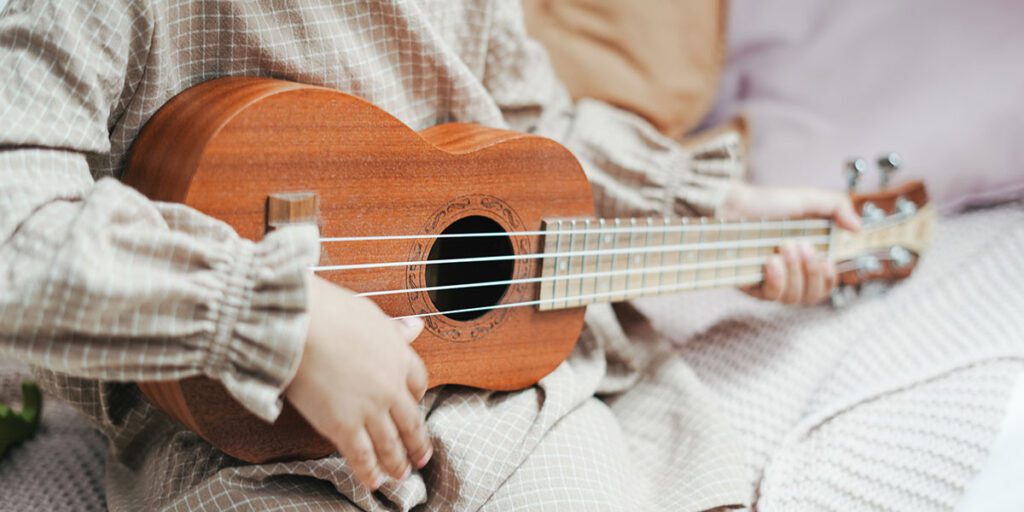
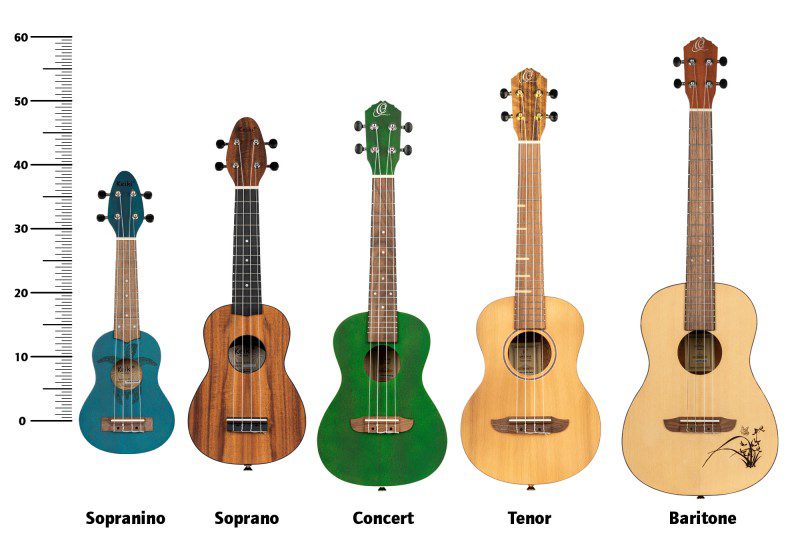
A ukulele is a small, four-stringed instrument that looks like a mini guitar and produces a light, uplifting tone. Today, it comes in four main sizes:
- Soprano – the classic, bright “island sound”
- Concert – slightly larger, fuller tone
- Tenor – richer, deeper sound
- Baritone – closest to a small guitar
Its Hawaiian name, ʻukulele, is often translated as “jumping flea,” a playful reference to how fast musicians’ fingers move across the strings.
Fun fact for kids
Ukuleles are so light and small that they became popular on sailing ships because sailors could play them even in cramped cabins.
The Real Ukulele History: From Portugal to Hawaii
The Braguinha and Cavaquinho: The Ukulele’s Ancestors
The ukulele’s story begins not in the Pacific, but in the Madeira and Azores archipelagos of Portugal. Two small stringed instruments formed the genetic blueprint for what would become the ukulele: the machete (also called machete de braga or braguinha) and the cavaquinho.
The machete, originating from the Braga region of northern Portugal, was a small, four-stringed instrument typically measuring 16-18 inches in total length. Portuguese workers and farmers used it for folk music during festivals and family gatherings. The cavaquinho, its slightly larger cousin, shared similar construction principles but featured different tuning and tonal characteristics.
Both instruments utilized:
- Four gut strings (later transitioning to steel)
- Figure-eight body shapes with relatively shallow depths
- Friction tuning pegs
- Traditional Portuguese decorative rosettes around the sound hole
- Indigenous Portuguese wood varieties
These weren’t professional concert instruments but rather utilitarian objects of cultural expression, crafted by local luthiers who passed down construction techniques through generations.
The Journey of the SS Ravenscrag (August 23, 1879)
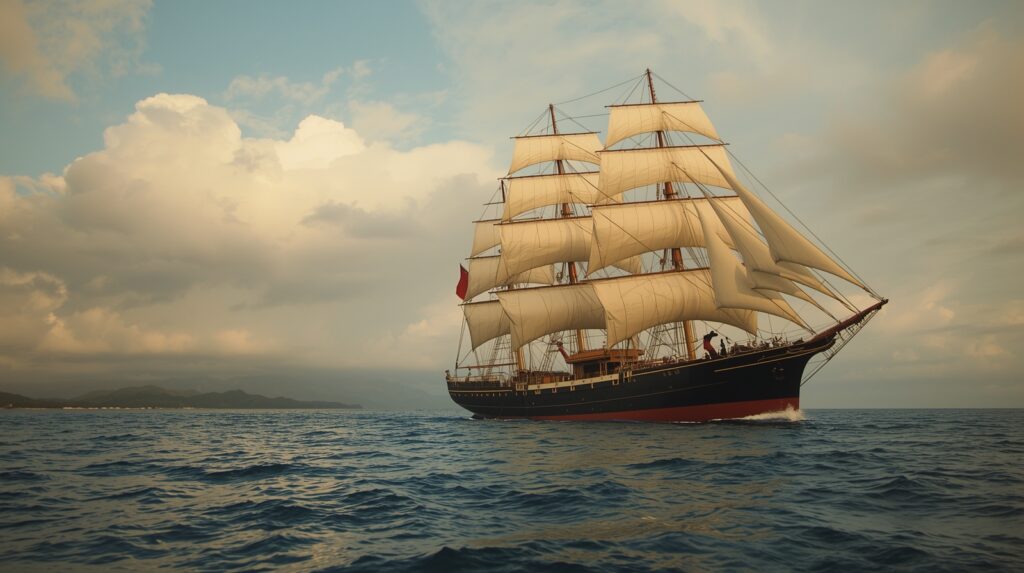
The pivotal moment in ukulele history occurred when the British ship SS Ravenscrag arrived at Honolulu Harbor on August 23, 1879. This vessel carried 419 Portuguese immigrants from Madeira and the Azores, recruited to work Hawaii’s expanding sugar plantations under the reign of King Kalākaua.
The four-month voyage from Funchal, Madeira, tested these immigrants’ resolve. Cramped conditions, limited food supplies, and uncertainty about their new lives weighed heavily. Yet upon arrival, according to Hawaiian newspaper accounts, the Portuguese passengers disembarked playing music and celebrating their safe arrival—a stark contrast to the typical somber arrival of immigrant laborers.
The Three Masters: Founding Fathers of Hawaiian Ukulele Making
Three woodworkers aboard the SS Ravenscrag would fundamentally alter musical history:
Manuel Nunes (1843-1922): Often credited as the primary architect of the modern ukulele, Nunes opened his shop in Honolulu and began adapting the machete to Hawaiian preferences. His instruments featured slightly larger bodies and utilized native Hawaiian koa wood, creating a brighter, more resonant tone. Nunes’s shop operated until 1920, and instruments bearing his label remain highly sought after by collectors.
Augusto Dias (1840-1915): Dias established his workshop shortly after arrival and experimented with body shapes and string materials. His innovations included the use of internal bracing patterns that would become standard in ukulele construction.
José do Espírito Santo (1850-1905): The youngest of the three masters, Espírito Santo focused on refining tuning mechanisms and developing consistent manufacturing processes that allowed for scaled production without sacrificing quality.
These craftsmen didn’t merely transplant their Portuguese traditions—they actively adapted their instruments to Hawaiian musical preferences, available materials, and cultural contexts.
Hawaii Gives the Ukulele Its Identity
How the Machete Became the Ukulele
The transformation from Portuguese machete to Hawaiian ukulele involved several critical adaptations:
While Portuguese craftsmen used European woods like spruce and cedar, the Hawaiian masters discovered that native koa wood (Acacia koa) produced a uniquely warm, mellow tone. Koa’s natural resonance and beautiful grain patterns made it ideal for the instrument, creating a distinctively Hawaiian sound that differentiated the new instrument from its Portuguese ancestor.
Hawaiian makers gradually increased body size slightly, altered the neck angle, and adjusted the bridge placement. These changes created better projection and a tonal quality that complemented Hawaiian vocal styles and traditional chant patterns.
The modern “my dog has fleas” tuning (G-C-E-A, called “C6” tuning) emerged as the standard, differing from Portuguese tunings and creating the ukulele’s characteristic cheerful, open sound.
Etymology: The “Jumping Flea” Debate
Two competing origin stories exist for the word “ukulele,” and both likely contain elements of truth:
The “Jumping Flea” Theory: The most popular explanation attributes the name to British officer Edward Purvis, a small, energetic man who was a favorite at the royal court. When Purvis played the instrument, his fingers allegedly moved so rapidly across the fretboard that Queen Liliʻuokalani remarked his hands resembled a jumping flea (ʻuku = flea, lele = jumping).
The “Gift That Came Here” Interpretation: An alternative etymology suggests ʻuku means “gift” and lele means “to come,” thus “the gift that came here”—a reference to the instrument’s arrival from Portugal. This interpretation emphasizes the Hawaiian people’s embrace of the instrument as a cultural gift rather than viewing it as a foreign import.
The linguistic truth may involve both interpretations coexisting, with different communities favoring different meanings at different times.
Royal Patronage: King David Kalākaua (The Merrie Monarch)
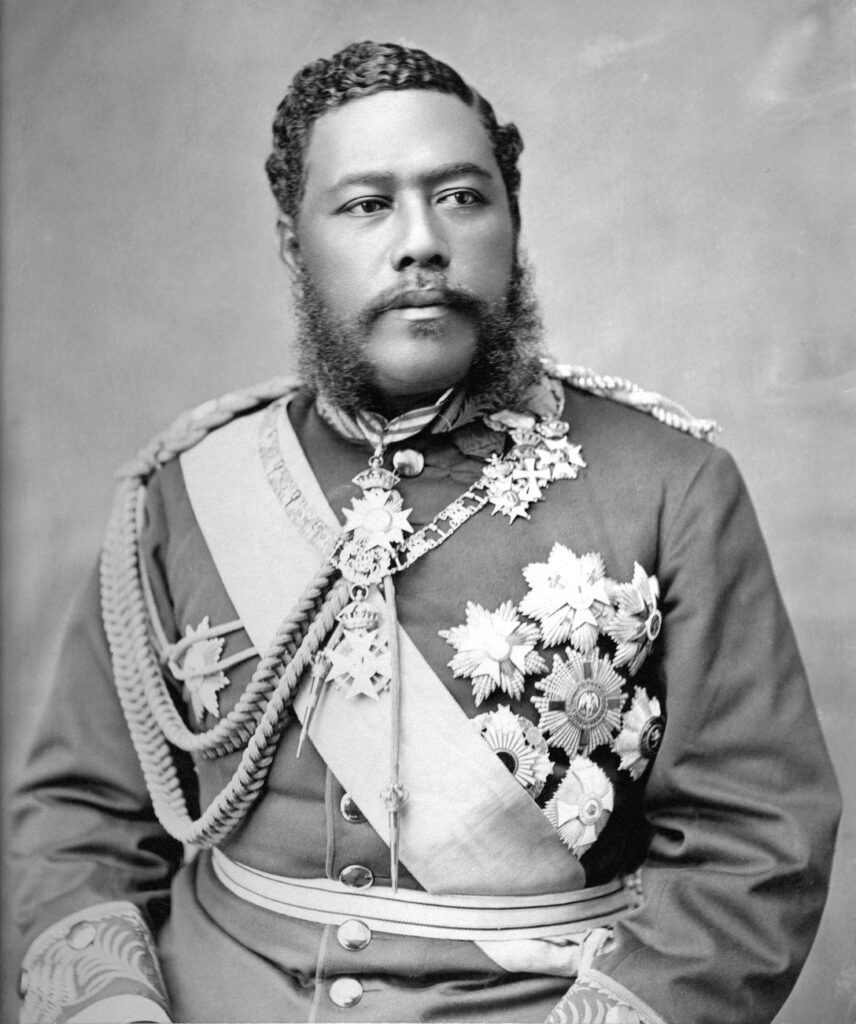
King David Kalākaua (1836-1891), known as the “Merrie Monarch,” played an absolutely crucial role in elevating the ukulele from immigrant curiosity to national cultural symbol. His patronage transformed the instrument’s trajectory in several ways:
Cultural Renaissance Leadership: Kalākaua actively promoted Hawaiian culture, arts, and music during his reign (1874-1891) as a counterbalance to increasing American influence. He believed preserving Hawaiian musical traditions would strengthen national identity.
Personal Performance: Unlike many monarchs, Kalākaua personally learned and performed on the ukulele at royal gatherings, effectively giving the instrument royal endorsement. His court musicians integrated the ukulele into traditional Hawaiian music, creating new compositional styles that blended Western harmony with Hawaiian melodic traditions.
ʻIolani Palace Sessions: The King regularly hosted musical performances at ʻIolani Palace where the ukulele featured prominently. These gatherings attracted foreign dignitaries, American businessmen, and international visitors, exposing the instrument to audiences who would carry its reputation worldwide.
Educational Initiatives: Kalākaua supported ukulele instruction in Hawaiian schools, ensuring younger generations would continue the tradition. This institutional support proved critical for the instrument’s survival.
Queen Liliʻuokalani, Hawaii’s last monarch and an accomplished composer herself, continued this tradition, further cementing the ukulele’s place in Hawaiian cultural identity even as the kingdom faced political upheaval.
Global Expansion: The Ukulele Conquers the Mainland (1915-1950s)
The Panama-Pacific International Exposition (1915)
The ukulele’s introduction to mainstream American audiences occurred at the 1915 Panama-Pacific International Exposition in San Francisco. This world’s fair, celebrating the completion of the Panama Canal, attracted 18 million visitors over ten months.
The Hawaiian Pavilion became one of the exposition’s most popular attractions. Hawaiian musicians performed daily, and the ukulele’s portability, accessibility, and cheerful sound captivated audiences exhausted by World War I’s escalating tensions. Thousands of fairgoers purchased ukuleles as souvenirs, creating an unprecedented demand that Hawaiian manufacturers couldn’t fulfill alone.
The Mainland Manufacturing Response:
Recognizing commercial opportunity, established American instrument manufacturers entered the market:
- C.F. Martin & Company (Nazareth, Pennsylvania) began producing ukuleles in 1916, applying guitar-making expertise to create high-quality instruments at various price points.
- Gibson Guitar Corporation introduced ukulele models in 1917, including ornate Art Deco designs that appealed to sophisticated urban markets.
- Lyon & Healy (Chicago) produced thousands of budget and mid-range instruments, making ukuleles accessible to working-class Americans.
The Jazz Age Craze (1920s)
The 1920s represented the ukulele’s first commercial peak. The instrument became synonymous with the era’s carefree spirit and featured prominently in:
Performers like Cliff “Ukulele Ike” Edwards and Roy Smeck became household names. Edwards, whose career later included voicing Jiminy Cricket for Disney, sold millions of records featuring ukulele accompaniment. Roy Smeck, “The Wizard of the Strings,” performed spectacular exhibitions that demonstrated the instrument’s versatility.
The ukulele became standard equipment for college students, particularly at Ivy League schools. Campus singing groups, fraternity gatherings, and dormitory jam sessions featured ukulele accompaniment, creating a association between the instrument and youthful sophistication.
New York’s music publishing industry produced thousands of songs specifically arranged for ukulele, with simplified chord diagrams printed on sheet music. This made popular songs instantly accessible to amateur musicians.
Before synchronized sound, live musicians accompanied silent films. The ukulele’s portability made it ideal for small theaters that couldn’t afford full orchestras.
The Great Depression
While the 1929 stock market crash devastated luxury goods markets, the ukulele actually benefited from economic hardship. Several factors contributed to the instrument’s Depression-era resilience:
Quality ukuleles could be purchased for $5-15 (equivalent to roughly $90-270 today), making them affordable entertainment during economic hardship. By comparison, guitars cost $25-100, pricing them beyond most families’ reach. With theatrical entertainment and restaurant dining becoming luxuries, families turned to home-based activities. The ukulele provided hours of entertainment for the price of a single movie outing.
Unemployed musicians could teach ukulele lessons as supplemental income. The instrument’s rapid learning curve meant students achieved satisfying results quickly, encouraging continued lessons. Companies like Maccaferri introduced plastic ukuleles using newly developed injection molding techniques. These instruments, while lacking wood ukuleles’ tonal warmth, proved virtually indestructible and sold for as little as $2.
1950s–1960s – Arthur Godfrey Brings It Back
The ukulele nearly disappeared during the 1930s and 1940s. The Depression and World War II made people forget about it, and many saw it as old-fashioned. Then television arrived, and with it came Arthur Godfrey.
Godfrey was one of the biggest stars on 1950s TV. His shows reached tens of millions of viewers every week. He had red hair, a friendly personality, and he genuinely loved the ukulele—he’d learned to play in the Navy. Godfrey often played ukulele on his shows, not as a joke but because he really enjoyed it. His casual, friendly playing style made the instrument seem easy and fun for regular people.
What really mattered was that Godfrey taught people how to play on TV. He’d slowly show viewers where to put their fingers to make chords, encouraging them to grab a ukulele and play along at home. It was like having free ukulele lessons delivered to your living room. Millions of Americans who’d never experienced the 1920s craze discovered the ukulele through Godfrey, and instrument sales jumped dramatically. While rock and roll eventually took over in the late 1950s, Godfrey had introduced a whole new generation to the ukulele.
1971 – The First Ukulele Festival
In 1971, Roy Sakuma and his wife Kathy organized a free ukulele concert on a beach in Waikiki, Hawaii. They thought maybe a few hundred people would come. Instead, thousands showed up, sitting on the sand and singing along as local musicians performed. The Sakumas were so overwhelmed by the response that they decided to make it happen every year. That’s how the Ukulele Festival Hawaii was born—it’s now the world’s biggest and longest-running ukulele festival.
Every July, thousands of people from around the world come to the festival. The highlight is when hundreds of players—kids, adults, and elders—all perform together, creating an incredible wall of sound. The festival celebrates both traditional Hawaiian music and new styles of ukulele playing. Local schools prepare students for months to perform, keeping ukulele education strong in Hawaii.
The festival’s success inspired similar events worldwide. Now there are ukulele festivals in England, Australia, Japan, Canada, and dozens of American cities. These festivals create communities where people can learn together, share techniques, and celebrate their love of the ukulele. The Hawaii festival remains the most important one, reminding everyone each year that the ukulele is Hawaii’s gift to the world.
2000s–Today – The Ukulele Goes Global
The 21st century has been an amazing time for the ukulele. The instrument went from being a Hawaiian tradition to a worldwide phenomenon, played in every style of music imaginable. Several key people and new technologies made this happen.
Israel Kamakawiwoʻole (often called “Iz”) recorded a beautiful version of “Somewhere Over the Rainbow” combined with “What a Wonderful World” in 1993. Though he died in 1997, his song became incredibly popular in the 2000s when people started sharing it online and it appeared in movies and TV commercials. Iz’s gentle voice with simple ukulele playing touched millions of people around the world, many who’d never heard a ukulele before. His recording showed that the small instrument could create deep emotions and beautiful music.
Jake Shimabukuro completely changed what people thought was possible on ukulele. This Hawaiian musician plays the ukulele like a guitar virtuoso, using lightning-fast finger work, complex chords, and techniques people didn’t think you could do on a ukulele. In 2006, he posted a YouTube video of himself playing “While My Guitar Gently Weeps,” and it went viral with millions of views. Suddenly, rock and pop fans who’d never cared about ukuleles were amazed. Jake plays everything from classical music to hip-hop covers, showing the instrument can handle any style. He’s performed on major TV shows, at famous concert halls, and with symphony orchestras.
The ukulele became the defining sound of 2000s indie-pop, featured prominently by artists including:
Eddie Vedder: Pearl Jam’s frontman released a critically acclaimed ukulele album
Twenty One Pilots: Tyler Joseph’s ukulele became a trademark of the band’s sound
Vance Joy: “Riptide” became one of the decade’s most-streamed songs
Train: “Hey, Soul Sister” introduced the ukulele to mainstream pop radio
Modern pop stars use ukuleles regularly. Grace VanderWaal won “America’s Got Talent” at age 12 playing ukulele. Vance Joy’s hit song “Riptide” features ukulele prominently. Even rock bands like Twenty One Pilots include it in their music. When young people hear ukulele in popular songs, they want to learn too.
Better manufacturing has made quality ukuleles affordable. Companies like Kala, Cordoba, and Ortega make reliable instruments at reasonable prices, so beginners don’t have to spend a fortune. High-end builders create expensive concert ukuleles that sound as good as fine classical guitars. Modern ukuleles come in different sizes (soprano, concert, tenor, and baritone) that produce different tones. Some are even made from carbon fiber or bamboo instead of traditional wood.
The Ukulele in Science: Why Its Sound Makes People Happy
Researchers studying ukulele sound have discovered:
1. Higher frequencies boost mood
Ukulele tones fall in a frequency range associated with:
- relaxation
- comfort
- emotional uplift
2. Simple chords reduce stress
Playing the ukulele lowers cortisol and increases dopamine.
3. Music therapy uses ukuleles
Because they’re accessible, ukuleles are used in:
- hospitals
- elderly homes
- mental health programs
- child development centers
If you enjoy exploring how emotions react to sound, you might also enjoy dark, atmospheric fiction such as The Price of Flesh or Duality Game — stories that tap into psychology just like music does.
Common Misconceptions About Ukulele History
- Myth: The ukulele was invented in Hawaii.
Fact: It’s based on Portuguese instruments but adapted and reimagined in Hawaii. - Myth: Ukuleles are only for Hawaiian music.
Fact: They’re used in jazz, pop, folk, and even rock songs worldwide. - Myth: Ukuleles are toys.
Fact: Professional musicians use high-quality ukuleles in concerts and recordings.
Interesting Facts to Make You Smile
- Elvis Presley often played a ukulele in his Hawaiian movies.
- The Guinness World Record for the largest ukulele ensemble was set in Hong Kong in 2017, with over 8,000 players.
- The world’s smallest playable ukulele is smaller than a chocolate bar!
- In space, astronauts have played ukuleles aboard the International Space Station.
If you love fun facts and unique stories, you might enjoy exploring strange worlds like the visual novel Mushroom Oasis Horror Game or creative horror novels in the Love & Horror Collection.
Why the Ukulele Became a Global Favorite
The ukulele isn’t just a fun instrument—it’s one of the most accessible, affordable, and joyful instruments ever created. Here’s why people everywhere love it:
| Reason | What It Means | Why It Matters | Who Benefits Most |
|---|---|---|---|
| Easy to learn | The ukulele has only four strings and simple chord shapes, unlike a six-string guitar | Beginners can play real songs in minutes instead of weeks, which keeps motivation high | Kids, adults, complete beginners |
| Lightweight & portable | Small body size and low weight make it easy to carry anywhere | You can practice and perform in more places—travel, school, outdoors, or on vacation | Travelers, students, casual players |
| Encourages creativity | Simple basics with room for advanced techniques like fingerstyle and solos | Players can grow without switching instruments, from simple strumming to complex music | Beginners, hobbyists, professionals |
| Connects generations | Easy learning curve makes it playable at any age | Families can play together regardless of skill or age gap | Families, teachers, community groups |
| Affordable | Entry-level ukuleles cost less than many toys or video games | Low financial risk makes it easy to start or gift | Parents, beginners, budget-conscious buyers |
Collecting Ukuleles: Vintage, Modern, and Rare Models
Collectors look for:
- early koa ukuleles from Nunes or Santo
- 1920s American brands (Martin, Kamaka)
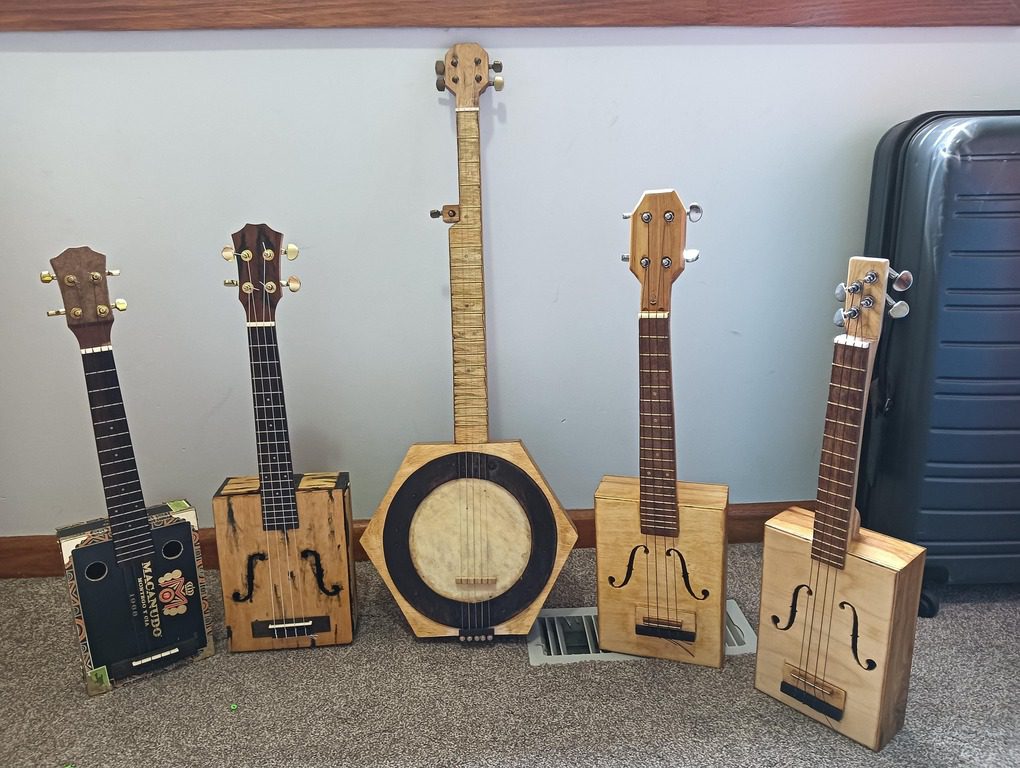
- hand-built luthier ukuleles
- limited-edition models
A rare early Martin soprano or pre-1900 Hawaiian koa ukulele can cost thousands of dollars.
Insane Ukulele World Records (2026)
Largest Ukulele Ensemble – 18,217 Players (Sweden, 2024)
In 2024, Sweden shattered the world record when 18,217 people played ukuleles together at once—more than doubling the previous record of 8,901 players. The event required months of planning, with participants learning the same songs and following a conductor to stay synchronized. This shows how popular ukuleles have become even in countries without traditional ukulele culture. The record proves why ukuleles work so well for massive gatherings—imagine trying this with pianos or drum sets.
Smallest Playable Ukulele – 1.8 Centimeters (Guinness, 2023)
A 1.8-centimeter ukulele—smaller than a penny, about thumbnail-sized—holds the record as the world’s smallest playable stringed instrument. It actually produces notes when plucked, though you’d need tweezers and magnification to play it. The builder constructed a working soundbox, installed microscopic tuning pegs, and strung it with threads thin enough to vibrate properly. It’s a masterpiece of miniature craftsmanship that pushes the limits of what’s technically possible.
Most Expensive Ukulele Ever Sold – $92,000 (2022 Auction)
A 1928 Martin 5K ukulele sold for $92,000 in 2022—enough to buy a car or 1,500 beginner ukuleles. The Martin Guitar Company made these during the 1920s ukulele boom as their absolute top-of-the-line model. Only a handful of Style 5K ukuleles were ever built, featuring exotic koa wood from Hawaii, elaborate abalone shell inlays forming intricate patterns, mother-of-pearl decorations, gold-plated hardware, and hand-carved details throughout. Fewer than 50 Style 5K ukuleles are known to exist today, making them incredibly rare. The 1928 model represents peak Jazz Age craftsmanship and connects directly to ukulele history’s golden era. Collectors view these instruments as playable museum pieces—functional works of art that sound as magnificent as they look.
Longest Continuous Ukulele Playing – 24+ Hours
Multiple attempts have been made at marathon ukulele sessions, with players staying awake and playing continuously for over 24 hours. These endurance records test not just musical stamina but physical resilience—fingers get sore, arms tire, and staying awake becomes the real challenge. Some attempts raised money for charity, combining the record attempt with fundraising goals.
Most Ukuleles Owned by One Person
While not officially tracked by Guinness, collectors report owning 200+ ukuleles. These massive collections include vintage instruments from the 1920s, modern concert ukuleles, rare manufacturer models, ukuleles from different countries, and instruments made from unusual materials. Serious collectors treat ukuleles like art, seeking specific makers, years, and styles to complete their collections.
Future Trends for the Ukulele
With eco-friendly materials, digital tuners, and online lessons, the ukulele is more accessible than ever. Social media platforms like TikTok have also sparked a new wave of ukulele covers, attracting millions of young players. You can also meet ukulele in the best PS2 games.
Famous People Who Played the Ukulele
The ukulele’s history is full of interesting characters who helped make it famous:
- King Kalākaua – Hawaii’s “Merrie Monarch” loved music and made the ukulele a star of royal events in the late 1800s. He used it in hula performances to showcase Hawaiian culture to visitors.
- Queen Liliʻuokalani – Hawaii’s last reigning queen, a gifted songwriter, composed music for the ukulele and promoted it as a national treasure.
- Cliff Edwards (“Ukulele Ike”) – A 1920s jazz singer who made the ukulele a household name in America. He also voiced Jiminy Cricket in Disney’s Pinocchio.
- George Formby – A British entertainer famous for comic songs and lightning-fast ukulele banjo playing in the 1930s and 40s.
- Israel Kamakawiwoʻole – Known as “Iz,” this Hawaiian legend’s medley of Somewhere Over the Rainbow and What a Wonderful World became one of the most beloved ukulele recordings ever.
- Jake Shimabukuro – A modern virtuoso who can play everything from classical to rock on the ukulele. His version of While My Guitar Gently Weeps went viral online.
- Grace VanderWaal – Won America’s Got Talent at age 12 singing original songs with her ukulele, sparking a surge in young players.
Read on how to make a video game today and where to find more inspiration. And as online creativity explodes, players discover inspiration not only from music platforms but also from modern storytelling and game worlds. For example, unique narrative games like 14 Days With Your Love or psychological stories like It Gets So Lonely Here show how digital culture influences young ukulele players today.
Ukulele Nest Steps
The ukulele history for kids is more than just a timeline—it’s a story of travel, adaptation, and joy. From Portugal to Hawaii to every corner of the globe, this little instrument has brought people together with its bright sound. The next time you hear one, remember: you’re listening to a piece of history that’s still writing new chapters.