By Senior Staff | ~2,800 Words | Full Spoilers
In This Deep Dive:
Lake of Voices:
Horror Romance,
Every Ending &
the Darkness Beneath
Full spoilers ahead — all endings, lore, and the True Ending unlocked
The lake doesn’t want you dead. It wants you lost — and there’s a meaningful difference. Lake of Voices by GB Patch Games is the rare horror visual novel that weaponizes warmth against you.
Most horror VNs telegraph their dread. Lake of Voices does something far more insidious: it buries the knife in a genre you think you understand — survival romance — and twists it slowly. The Sinnlos lake crossing is framed as an adventure with companions you’ll grow to love. The game never stops being beautiful. It also never stops being a machine designed to make you watch people die because of choices you made while feeling good about yourself.
That’s the deconstruction at its core. Traditional dark romance asks: will love save them? Lake of Voices asks something colder: does loving someone make you more or less likely to survive them? The answer is complicated, devastating, and mechanically enforced through one of the most elegant branching narrative systems in recent indie VN history.
At a Glance
Release: August 28, 2018
Length: ~7–10 hours for one route; multiple replays needed for full endings
Price: Free (donations via Patreon encouraged)
Features: Full English voice acting, timed choices with permanent consequences, 20+ ending variations, Steam achievements
If you enjoy this corner of love-horror, our guide to the best love-horror visual novels is a strong companion read — it’s the genre Lake of Voices belongs to and subtly dismantles. For genre context, our breakdown of Doki Doki Literature Club’s horrors and secrets covers the benchmark every horror VN now answers to.
The Brutality of Choice: Survival vs. Connection
The central mechanical tension in Lake of Voices is elegantly simple and emotionally brutal: building relationships costs resources that keep characters alive. Time spent learning a character’s backstory is time not spent navigating the fog. Trust extended is a vulnerability created. Every moment of genuine human warmth is also a calculated risk on the lake’s ledger.
This is player agency weaponized against the player. GB Patch built the system knowing that anyone drawn to a romance-adjacent horror VN will instinctively invest in the characters. The mechanics punish that instinct — not to be cruel, but to make a point: connection is inherently expensive in a survival scenario, and we almost never acknowledge that cost until it’s too late.
Design Note
The “Survival vs. Connection” axis is never explained to the player. You learn it exists by losing someone you trusted too completely. The first death lands like a revelation: oh, the game was tracking this the entire time.
Permanent character death is the enforcement mechanism. Unlike VNs where fallen companions are narrative inconveniences, death in Lake of Voices reshapes every subsequent scene. Characters who die aren’t referenced abstractly — other companions remember them, grieve differently, and the protagonist’s path forward physically narrows. The lake is smaller when walked with fewer people. That’s not metaphor; it’s narrative stakes made structural.
The horror-romance synthesis works because the game understands that horror and love share the same root fear: loss. For a wider look at how the genre weaponizes intimacy, our list of free love-horror novels worth playing is worth bookmarking alongside this guide.
Character Psychology: Four Faces of Grief
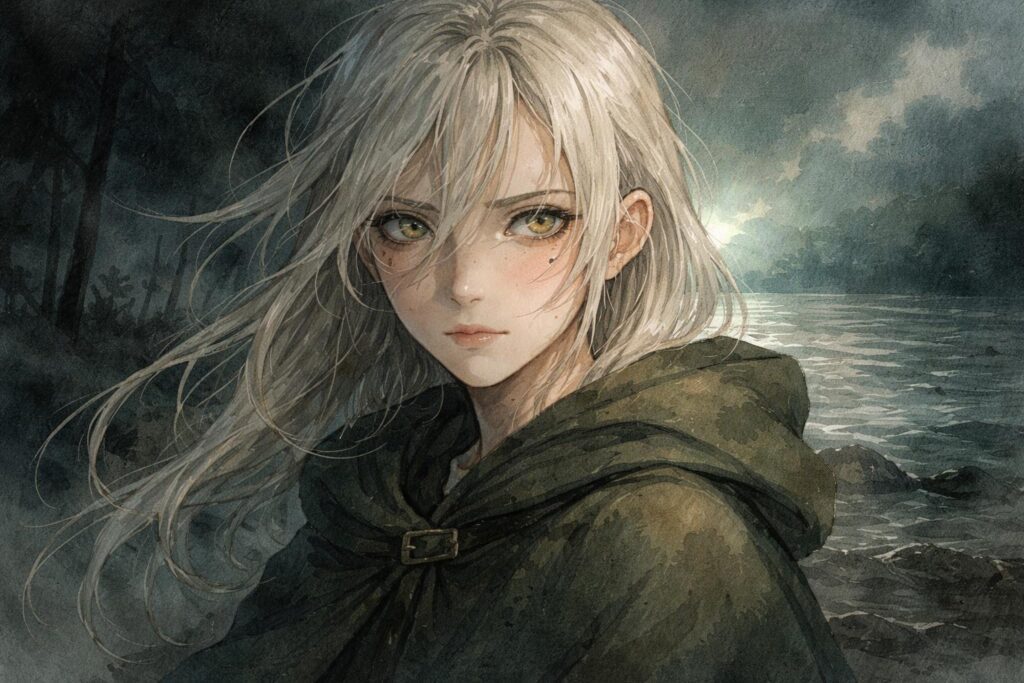
Each companion in Lake of Voices is a psychological archetype rendered with enough specificity to feel like a real person. Their traumas aren’t backstory decoration — they determine how each character responds to crisis, which choices they’ll survive, and what kind of ending is even narratively coherent for them. The player character is Kikka, the optimistic female protagonist whose choices drive the entire crossing.
Kikka
The Optimist in Denial
Kikka presents as the warmth of the group — performative cheerfulness functioning as a grief management tool. Her trauma lives in her inability to stay present during crisis. She deflects with humor, rushes toward connection prematurely, and makes reckless survival decisions when she senses emotional distance. Psychologically, she embodies complicated grief: the kind that looks like joy from the outside. Her death, when it comes, often results directly from the player reciprocating her warmth — a genuine act of cruelty disguised as kindness.
Bemelle
The Pragmatist as Wound
Bemelle is the game’s most misread character. Initial playthroughs mark her as cold or antagonistic. She is neither — she is someone whose grief has calcified into strategy. Every blunt interaction is a survival algorithm she developed after a loss the game reveals only obliquely. Her sprite-work is worth analyzing frame by frame: micro-expressions of longing flicker through her neutral mask during key scenes. She is the hardest companion to keep alive because she refuses the player’s help — and the most satisfying if you learn to help her without her noticing.
Lu
Grief Externalized as Rage
Lu is the group’s flashpoint — volatile, intensely physical in their emotional expression, and fascinating because their anger is accurate. Unlike characters whose rage reads as dysfunction, Lu’s fury is the most rational response anyone has to the Sinnlos crossing. They know, on some level, what the lake is doing. Their survival depends entirely on whether the player can validate their rage without feeding it into something destructive. Lu’s endings span the widest range in the game — best or worst outcomes of any companion.
The Guide
The System Made Flesh
The Guide is not a companion in the traditional sense — analyzing them as a romance option misunderstands their function, which is exactly what the game wants you to do. They represent institutional knowledge without accountability: they know the rules of the lake, they will not break them for you, and their warmth is genuine but conditional in ways they cannot fully articulate. The horror of The Guide is that they are not villainous. They are comfortable with necessary loss — and that should unsettle any player who has ever trusted an authority figure.
The Mystery of Sinnlos: What the Voices Actually Are
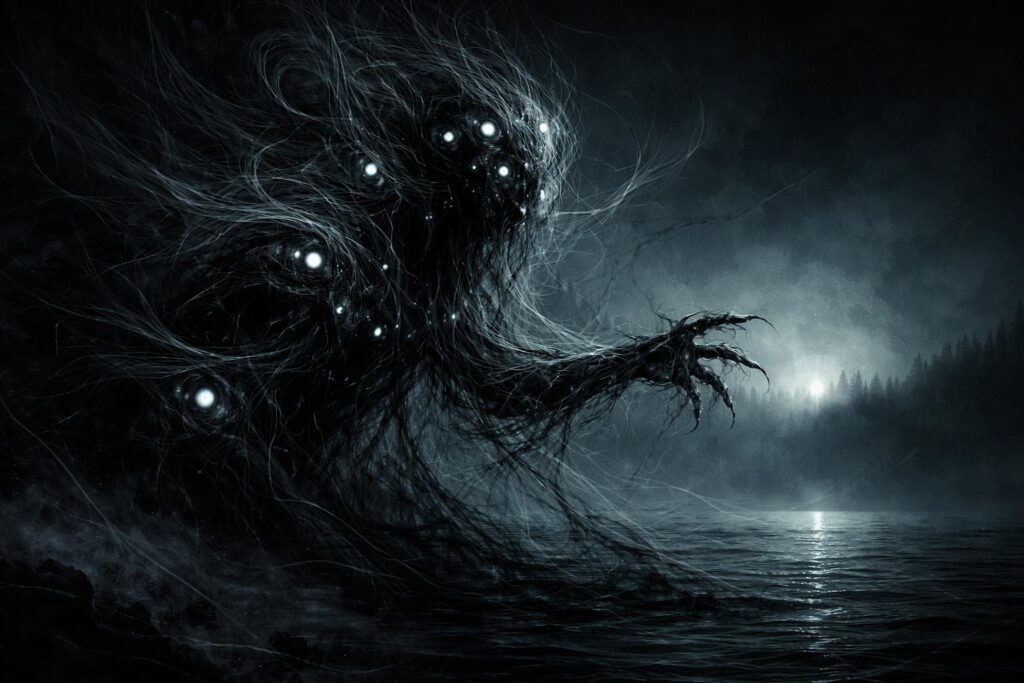
The Sinnlos lake’s supernatural architecture is built on a precise philosophical horror: the Voices are not malevolent. This is the reveal that reframes every prior scare. The Voices don’t hunt the crossing party; they offer. What they offer is the thing each character most needs to hear, perfectly calibrated to their specific grief — and the lake has had a very long time to learn what people need.
Lore: The Voices
The Voices are accumulated grief. Every traveler who surrendered to the lake’s offer left a fragment of their most desperate want behind. The Voices are a choir of human need — not demons, not gods, but the sediment of longing given ambient intelligence.
This transforms the existential horror from external threat to internal one. The lake doesn’t have to do anything aggressive. It simply knows what you want and offers it at the exact moment your emotional defenses are lowest — which, given the game’s mechanics, is usually right after a moment of genuine connection with a companion.
The horror-romance synthesis crystallizes here: the most dangerous moments in Lake of Voices are the beautiful ones. Quiet scenes by the water’s edge. A conversation that finally breaks through Bemelle’s armor. The moment Lu stops fighting long enough to laugh. These are the moments the lake has been waiting for — the player’s guard is down, the companion’s vulnerability is exposed, and the Voices know exactly which frequency to broadcast.
The philosophical weight is considerable. The game asks whether the comfort we seek in grief is itself a kind of dissolution. This places it in excellent company: Signalis similarly uses love and grief as its central horror mechanism, and Slay the Princess weaponizes the player’s instinct to connect in comparably devastating ways.
Endings Guide: Every Path Through Sinnlos
Lake of Voices does not sort its endings into clean categories — the game resists that. But for navigational purposes, they cluster into three registers, each reflecting a distinct relationship between the player’s priorities and what the lake extracts in return. Community estimates place the total distinct ending states (factoring companion survival combos and protagonist fate) at over 20.
Good Endings
Survival with Self
Characters reach the far shore changed but intact. These require consistent, calibrated emotional investment — present enough to maintain trust, disciplined enough to leave resources for the crossing.
Bad Endings
The Lake Keeps Them
Deaths that feel earned by the player’s choices. The game never editorializes. It simply shows the consequence of prioritizing one value over every other in a system that requires balance.
True Ending
What the Lake Owes You
The rarest path — requires confronting the Voices directly with a full party, all four companion arcs resolved, and a specific understanding of what the lake is actually asking for. Often considered the emotional “canon” payoff by fans, though the game never labels it as such.
Unlocking the True Ending: A Narrative Guide
The True Ending doesn’t advertise itself. There’s no achievement marker or in-game hint that it exists. The path to it emerges from playing as though the lake can be reasoned with — not defeated, not escaped, but answered.
The Voices are accumulated want. The True Ending requires the protagonist to recognize this and, at the final crossing point, offer genuine grief back to the lake rather than resisting or ignoring its overtures. This is mechanically represented by a choice sequence late in Act Three that most players read as a Bad Ending branch — the options that look like surrender. They are not surrender. They are acknowledgment.
The prerequisites are demanding but logical: all four companions must survive to Act Three, each companion’s primary trauma conversation must be completed, and — crucially — the protagonist must have declined at least two of the Voices’ direct offers in Acts One and Two. The lake must know you understand what it’s offering before it will accept that you’re choosing not to take it for real reasons rather than ignorance.
True Ending: What It Means
Grief is not something the lake invented. It was carried there. The only way through is to carry it out again — diminished but acknowledged. Everyone reaches the far shore. Nothing is healed. The Voices are still in the water behind you. That is the best possible outcome.
The Hidden Paths
Beyond the standard branching, Lake of Voices contains several hidden path triggers that most players miss entirely on first runs. These are not secret routes to secret endings but additional texture — scenes that recontextualize earlier moments and deepen companion psychology:
- Bemelle’s Second Conversation unlocks only if the player declines her first attempt to help the group and then, two scenes later, asks for her help anyway. The reversal triggers a vulnerability scene that rewrites her entire first act.
- The Guide’s History — fragments of what The Guide lost — emerges through three scattered environmental interactions that appear to be flavor text. They are not. Collected together, they explain why The Guide’s conditional warmth is specifically that shape.
- Lu’s Quiet Moment requires the player to lose an argument with Lu during Act Two and not attempt to re-litigate it. The game rewards concession with one of the most genuinely tender scenes in the VN.
- Kikka’s Fracture is the darkest hidden scene — it shows beneath the optimism in a way the main route carefully avoids. Triggered by consistently returning to Kikka when the game suggests checking on other companions first.
Production Value: Sound, Voice & the Atmosphere Engine
GB Patch’s production choices on Lake of Voices reflect a precise understanding of what visual novels live and die by: the audio layer.
The soundscape is the game’s most underappreciated achievement. The ambient design for Sinnlos is built on near-silence — not silence itself, but the unsettling almost-quiet of water, fog, and distant sounds that never quite resolve into identifiable sources. The Voices, when they speak, are layered in ways that take multiple playthroughs to fully parse: there are four distinct voice textures in the chorus that correspond to the four companions’ core fears. The lake, sonically, is made of the people crossing it.
Voice acting in VNs is where most productions stumble; Lake of Voices is a rare exception. The performances are calibrated to the game’s tonal specificity — naturalistic rather than theatrical, which makes the supernatural moments hit harder. Kikka’s voice actor carries that denial-as-warmth quality into every syllable. Bemelle’s delivery is the vocal equivalent of her sprite-work: nothing wasted, occasional micro-breaks in control that reward close listening.
The visual design operates in a limited but deliberate palette — the fog aesthetic is practically a genre at this point, but Lake of Voices earns it by using color temperature as an emotional cue. Warmer scenes are measurably warmer in color grading. As the crossing deteriorates, the palette cools without the player consciously noticing. It’s player agency modification through art direction — a technique also deployed memorably in Dead Wishes and other atmospheric horror VNs that understand light as language.
Editorial Score
A precise, melancholic machine for making you care about people before showing you what caring costs. One of the genre’s finest deconstructions of survival-romance tropes.
GB Patch Games is better known for heartfelt, choice-driven romance titles like Our Life: Beginnings & Always, but Lake of Voices stands out as their major foray into horror. It trades overt romance for tragic inevitability — yet still includes subtle romantic threads (including F/F options) that feel earned rather than forced. The game’s “no perfect outcome” philosophy echoes in the dev’s later works, where player agency often comes with real emotional cost.
FAQ: Lake of Voices — High-Intent Questions
Can you save everyone in Lake of Voices?
Yes — but only in the True Ending, and it requires careful, precise play across all three acts. Standard runs almost guarantee at least one death; the game is designed to make full-party survival feel like a genuine achievement rather than the default. Reaching the far shore with everyone intact requires completing all four companion trauma conversations, declining multiple Voice offers, and making the correct choice at the final Act Three crossing. Most players need multiple runs to piece the requirements together.
How many endings does Lake of Voices have?
Lake of Voices has over 20 distinct ending states when accounting for companion survival combinations and protagonist fate, though these cluster into roughly three tonal registers: survival endings (good), death-predominant endings (bad), and the singular True Ending. The branching narrative is dense enough that two playthroughs with similar broad choices can produce meaningfully different final scenes depending on which hidden path scenes were triggered.
Who is the best romance option for survival?
The game complicates this question deliberately — no romance path is objectively “safe”, and that’s the point. For players prioritizing their own protagonist’s survival, Bemelle is the mechanically optimal choice: her pragmatism buffers against the lake’s emotional exploitation, and her arc rewards patience with concrete survival advantages. For full-party survivability, however, a distributed connection strategy — moderate investment in all companions rather than deep investment in one — dramatically improves outcomes across the board.
Is there a True Ending in Lake of Voices?
Yes. The True Ending is the game’s thesis made explicit — it requires the full party intact at Act Three, all companion trauma arcs completed, and a counter-intuitive choice at the final Voice confrontation that most players misread as a death branch. It is not. The True Ending recontextualizes the entire crossing as a negotiation rather than a survival run, and it’s the only ending where the protagonist fully understands what the Voices are and why the lake exists.
How do you unlock the hidden paths in Lake of Voices?
The hidden paths are triggered through non-standard choice logic — the game hides them behind options that appear suboptimal or even wrong. The key principles: decline help before accepting it (Bemelle’s second conversation), lose arguments without re-litigating them (Lu’s quiet moment), prioritize other companions over the most vocal one (Kikka’s fracture), and interact with environmental details that appear decorative (The Guide’s history). None of these are signposted. The game trusts players to find them through genuine exploration — which is part of why the discoveries feel meaningful.
Lake of Voices is a free horror visual novel available on PC via itch.io and Steam. Developed and published by GB Patch Games. Donations via Patreon are encouraged to support the developer. This deep dive reflects the complete release including all post-launch updates.