Galloping Through Code: A Game Developer’s Guide to Building Realistic Horse Racing Mechanics From Scratch

Have you noticed how even the best games fail to nail realistic horse riding mechanics? We’re talking about games with a budget of millions of dollars, and yet still they fail to capture what it is really like to ride a horse.
But why? Well, horse racing or even riding mechanics are hard to recreate digitally. There are a lot of moving parts (different muscle groups) in the horse’s body; the movement is dependent on the terrain, and the horse should react to the environment. This makes the code thousands of lines long.
Even games like Red Dead Redemption 2, which are praised for the most realistic horse riding mechanics, are far from perfect. But horse racing games, on the other hand, may be simpler because the environment is controlled. We’re not talking about an open-world gam, but a game where horses run only on racecourses.
But then we have the problem of stamina, reaction to other horses, position, stride length, different surfaces, and conserving energy. So, let’s dive deeper into how to build realistic horse riding mechanics from scratch.
Build the Race Simulation Before the Animation System

Most developers first start building the horse model. That’s actually a big mistake. Instead, it should be a racehorse state.
At each simulation update, the game needs to know where the horse is along the course, how far it sits from the rail, how quickly it is moving, the current stride phase, and how much short-term energy remains (this is due to jockey controls).
So, how to build such a model? Well, a compact model might look like this:
| Variable | Purpose |
| distanceAlongTrack | Position measured along the course spline |
| lateralOffset | Distance from the inside rail |
| speed | Current forward speed |
| acceleration | Current change in speed |
| stridePhase | Position within the current gallop cycle |
| leadLeg | Current left or right lead |
| aerobicOutput | Sustainable energy contribution |
| anaerobicReserve | Limited energy available above sustainable effort |
| muscularFatigue | Loss of stride efficiency |
| composure | Response to crowding, kickback, and jockey requests |
| desiredLane | Tactical path selected by the rider or AI |
| effortRequest | How strongly the jockey is asking the horse |
World position should then be calculated from the track spline and lateral offset. Remember, the horse should not navigate the racehorse as an ordinary open-world character. And this makes everything simpler.
The AI thinks in racing terms. You have forward position, rail position, available gaps, and remaining distance, all of which can be calculated easily. The animation system receives speed, curvature, and stride information.
Let Stride Length and Frequency Produce the Speed
Since speed is the most important factor in racing games, the system needs most of the development attention.
At a basic level, horse speed can be described as:
speed = stride length × stride frequency
That equation should be at the center of the main mechanics of the game.
A study of Thoroughbreds galloping on a dirt racetrack recorded an average speed of 16.48 meters per second, an average stride length of 6.69 meters, and an average stride frequency of 2.47 strides per second.
This information should be the locomotive of your engine. This gives you a way to drive animation while making everything look realistic.
But if you’re a horse racing bettor, you probably already understand the importance of stride length. After all, this is one of the deciding factors when it comes to real-world racing. But if you don’t know much about betting, you should learn a few things that might be useful when creating a realistic game. To learn more, click here: twinspires.com/betting-guides/beginners-guide-betting-horse-racing/
So, let’s say a horse is traveling at 15 meters per second. The game should not merely play the gallop animation faster until the root motion reaches 15 meters per second. Then the engine should decide how much of that speed comes from stride length and how much comes from stride frequency.
Why is this important? Well, it adds diversity to the game and makes energy consumption much more realistic. For example, one horse might reach speed through rapid strides but waste a lot of energy. A horse with frequent runs might be exhausted, and even though it may maintain frequency, the stride shortens.
These combinations allow horses in your game to reach the finish line in many different ways, which adds realism.
Stride Mechanics
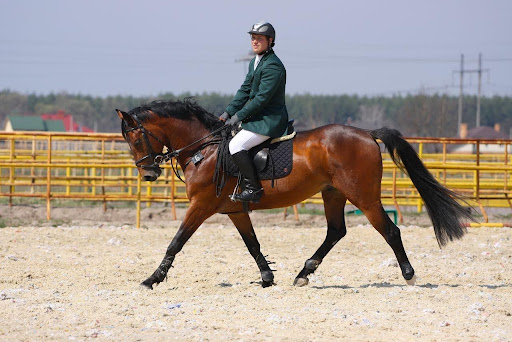
The next thing you need to worry about is giving each horse a normalized stride phase from 0.0 to 1.0.
Give every horse a normalized stride phase from 0.0 to 1.0.
What does this mean? Well, the value should advance according to stride frequency.
stridePhase += strideFrequency * deltaTime
stridePhase %= 1.0
This allows you to sync many different elements of the game, such as the jockey animation, the audio system, and so on.
So, you should never:
- Let the audio system guess when a hoof lands (this calculation will help you deploy a hoof landing sound at the right time)
- Let the particle system create dirt automatically (on a repeated timer). This removes the realism.
- Let the jockey animation run on a separate gallop loop.
Everything should be on one clock, matching the four hooves of the horse.
The gallop is an asymmetrical four-beat gait, and horses can use left or right leads. The lead choice matters particularly on curves, where the horse is balancing and loading its limbs differently from straight-line running.
To make it as realistic as possible, it is best to record or create separate left-lead and right-lead cycles. You can also mirror one for the early prototype to save time, but if the cameras are close, it becomes noticeable.
Root Motion
Horse animation can make or break the game. No matter how accurate your background system is, it needs to be in sync with what players are seeing on their screen.
Most developers face the same problem when creating horse racing mechanics. There is a root-motion natural displacement. This isn’t a problem, but it needs the right system in order for it to work.
So if an animation clip naturally travels 6.4 meters per stride, while the current horse travels 6.8 meters, the game has several choices. It can apply modest distance warping, adjust stride frequency slightly, or select another animation from the library, which is often the best choice.
Root-motion animation can provide excellent natural displacement, but it should not be allowed to decide the outcome of the race. But you should never let the animation decide the speed of the horse.
You can use Unreal Engine Motion Matching, which can select poses using trajectory, prone position, velocity, and phase data rather than relying on conventional state transitions.
This system is really important, especially for horse racing games where there is rapid acceleration, change of pace, turning, and a lot of movement.
Build Energy Around Required Power
A useful stamina model begins by separating sustainable effort from limited high-intensity effort.
The horse should have an aerobic output that can support a substantial but not unlimited pace. When the mechanical power required exceeds that aerobic supply, the difference comes from an anaerobic reserve.
In simplified form:
requiredPower =
rollingResistance
+ aerodynamicDrag
+ accelerationCost
+ slopeCost
+ surfaceCost
anaerobicDrain =
max(0, requiredPower – availableAerobicPower)
anaerobicReserve -= anaerobicDrain * deltaTime
This is much better than subtracting stamina whenever the sprint button is held.
The same speed can cost different amounts depending on circumstances. Accelerating uphill on soft ground while racing wide should be more expensive than holding that speed on firm level ground behind another horse.
Mathematical work on optimal Thoroughbred pacing uses exactly this type of relationship between mechanics, aerobic supply, and finite anaerobic energy. The key racing problem is not simply reaching maximum speed; it is deciding how speed should be distributed because the horse cannot maintain its maximum speed for the entire race.
Surface Conditions Need Curves, Not Labels
After you’ve built the horse motion, trajectory, racetrack line, and all the stride and speed mechanics, it is time to make it more realistic by adding different surfaces. This is a big thing in horse racing, and it should be in your game.
As you probably already know, there are different types of surfaces in horse racing. Whether it is turf, dirt, mud, or synthetic, it affects the horse’s movement.
You should model the track with a few physical characteristics, such as:
- Firmness
- Shear Strength
- Moisture
- Penetration Depth
- Rebound and Kickback
Then you can add different behaviour for each of these values.
So, on a harder surface, you can reduce energy lost through deformation but increase impact. A deeper surface may require more propulsive work (more energy consumption) and more visual animations by throwing material into the path of following horses. Lastly, a low-shear surface may produce more hoof slip during acceleration and turns.
For a game, you can translate those relationships into four visible outcomes.
The horse takes slightly longer to reach speed. It loses more energy maintaining the same pace. It’s turning confidence changes. Its stride animation shows more penetration, slip, or vertical movement.
Do not change all four by the same percentage.
That creates another disguised speed modifier.
Jockey Controls Should Modify Requests, Not Velocity
The player should control what the jockey asks for.
The horse decides how completely and how quickly it responds.
A useful control model contains four continuous requests: desired effort, desired lateral movement, settling pressure, and balance assistance.
Effort asks the horse to increase or maintain pace. Lateral input asks for a path change. Settling pressure attempts to reduce unwanted early speed. Balance assistance represents how well the jockey is moving with the horse during turns, contact and fatigue.
The response can then depend on temperament, training, current stride phase, crowding and fatigue.
A keen horse may resist being settled and waste energy pulling. A tired horse may respond slowly to a drive. A green horse may overreact to lateral pressure. A well-balanced experienced runner makes smaller, cleaner adjustments.
Do Not Build Breeding Until One Race Works
Breeding, training schedules, injuries, auctions, bloodlines and stable management can all make the final game richer.
They will not repair weak racing mechanics.
Before adding inherited attributes, build three horses with manually chosen profiles and make them produce recognizably different races.
The first should be a strong front-runner that can establish pace but becomes vulnerable if challenged early. The second should travel economically behind leaders and accelerate well from a clean position. The third should possess the best late speed but react badly to crowding.
Run them repeatedly on a straight course, a tight oval, firm ground, and a deeper surface.
The main thing you should nail right from the start is the speed calculations. If you do these right, the game will feel realistic and smooth, and all other systems will work as they should.