Reading Time · 8 Minutes · Illustration & Game Design
of There’s something almost magnetic about a finely drawn cat in a video game. Whether it’s a diminutive friend padding besider your hero, or a menacing guardian curled at the entrance of a dungeon, cats have also scored as one of the most adorable sorts game artists can make. Developing the skills to draw a cat for a game is essentially combining traditional illustration technique with hours of tutorials on how to sit in front of a computer, and it’s so much more within your reach than you give yourself credit for.
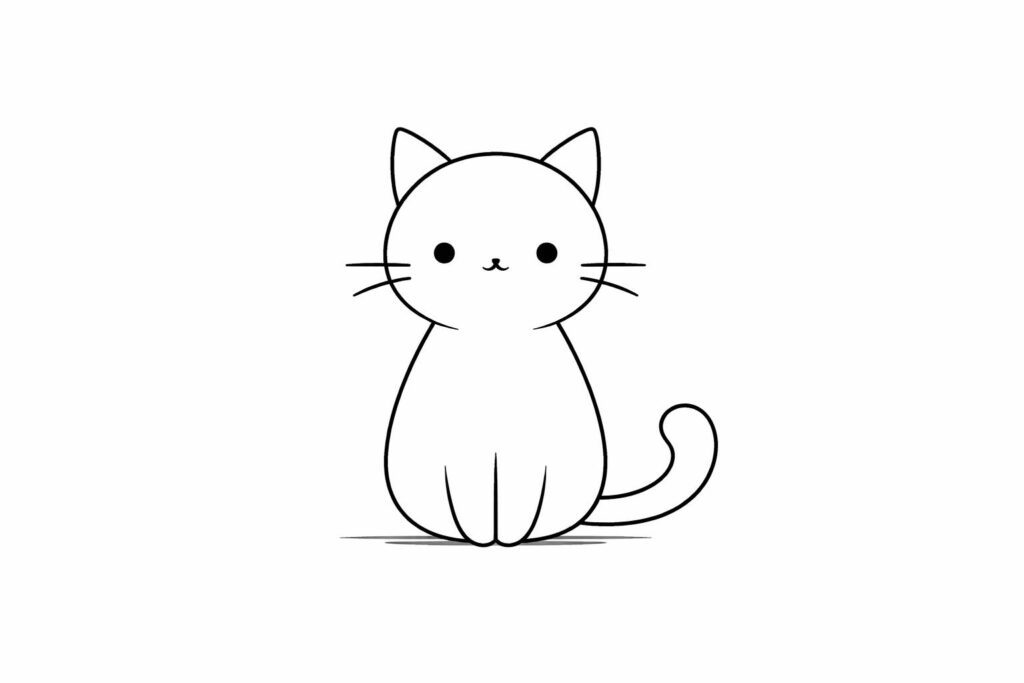
This guide takes you through the whole journey, from simple anatomy to easy to grasp drawing and adapting your work for different artstyles or resolutions. Whether you are a hobbyist drawing your cute cat drawing or a developer in need of a polished asset for a studio project, the principles here won’t let you down.
“A cat in a game doesn’t just fill a role — it becomes a character the player forms a bond with. That’s why getting the drawing right matters so much.”— On Character Design in Interactive Media
Start Simple: The Foundations
Every great game cat begins the same way every great drawing does — with basic shapes. If you want to know how to draw a cat easy, the key is not to rush and go straight into detail. Begin with a circle for the head, and an oval below for the body, and two smaller triangles on top for the ears. It is the skeleton your final design will hang on. This is especially crucial when you are learning how to draw a cat step by step. Breaking the process up into chunks will stop it from overwhelming you — and you’ll have ready-made staging points to check proportion and balance before you go in with ink or pixels.
Step 01. Sketch the Basic Silhouette
Draw a large circle for the head and a slightly smaller oval below it, slightly overlapping, for the torso. Add two small isoceles triangles on top of the head circle for ears. Don’t worry about smoothness yet — this is just a guide.
Step 02. Place the Face
Sketch two almond-shaped eyes in the upper third of the head circle. Add a small inverted triangle for the nose centered just below the midpoint. Two short lines extend down from the nose to form the mouth. This is the moment your cat starts to have personality. If you want inspiration for stylized cats, check out cute character art examples.
Step 03. Define the Body Pose
Connect the head oval to the body oval with two gentle curves for the neck. Add two front legs — simple rectangles that you’ll refine later — and suggest the back legs tucked beneath or extended depending on whether your cat is sitting or mid-stride. Looking at reference materials from games can help—try classic and modern game examples.
💡 Pro Tip
When drawing how to draw a cat face, remember that a cat’s face is wider than it is tall. The eyes are the largest feature and sit higher than you’d expect. Exaggerating this slightly gives your game cat a more expressive, appealing look.
Making It Cute — The Art of Kawaii Proportions
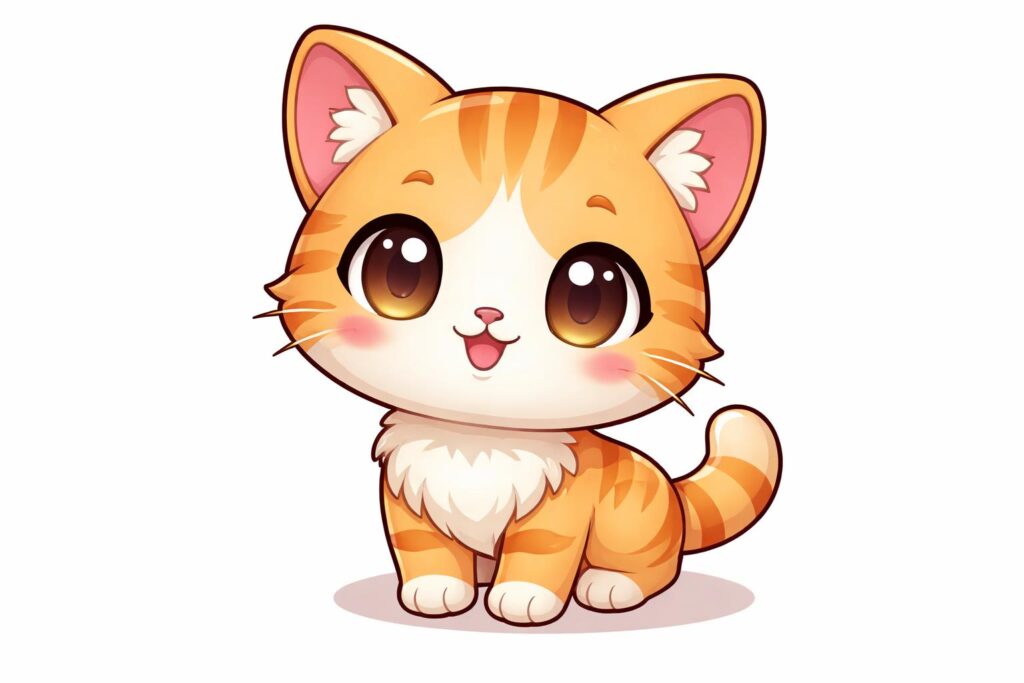
If your game calls for an adorable companion, you’ll want to master the art of drawing how to draw a cute cat. The “cute” formula in character design has a surprisingly consistent logic: large eyes relative to the head, a small nose and mouth, a round body shape, and soft, slightly chubby proportions. These are the same principles used in kawaii illustration, and they translate beautifully to game art.
To how to draw a cute cat easy, simply amplify the roundness of every shape you draw. Make the head bigger relative to the body. Shrink the nose to a tiny dot or a small “w” shape. Enlarge the eyes until they take up nearly a third of the face. Add blush circles beneath the eyes for extra charm. The result is a cute cat drawing that players will instantly want to protect and follow.
Step 04. Exaggerate for Expression
Redraw your basic cat shape with a noticeably larger head — think a 2:1 or even 3:1 head-to-body ratio. Round out the ears so they look softer. Enlarge the eyes and add a subtle highlight dot in each one to give them life and shine. This is the foundation of any cute cat drawing destined for a game.
Drawing a Realistic Cat
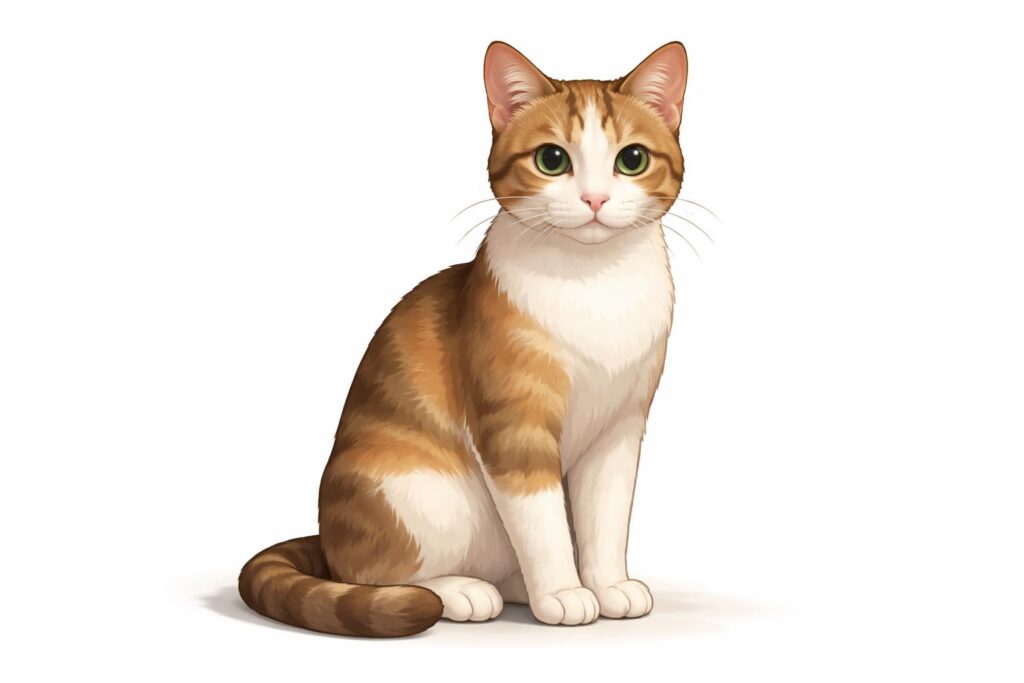
Not every game needs a fluffy companion. If you’re working on an action RPG, a survival game, or anything with a darker tone, you might need to know how to draw a realistic cat. This requires a closer study of actual feline anatomy — the way muscle moves beneath fur, how the spine arches, and the precise geometry of a cat’s skull.
Learning how to draw a realistic cat step by step is a slower process, but it pays off enormously. Start by studying reference photos. Pay attention to how the ears sit on the skull (they’re further back and wider apart than most people assume), how the jaw is narrower than the cheekbones, and how the eyes are angled inward toward the bridge of the nose. When you want to how to draw a realistic cat with pencil, use layered shading — start light with an HB pencil to block in the major tonal areas, then deepen shadows with a 4B or 6B. Fur direction is everything: always stroke in the direction the fur grows.
“Realism in game art isn’t about photographic accuracy — it’s about convincing the viewer that this creature could breathe, move, and exist.”— On Creature Design Philosophy
💡 Pro Tip
For how to draw a realistic cat full body, pay special attention to the legs. A cat’s “knees” are actually high up on the body — what looks like a knee bending backward is actually the ankle. Getting this right is the single biggest difference between a cat that looks alive and one that looks stiff.
The Details That Bring Life
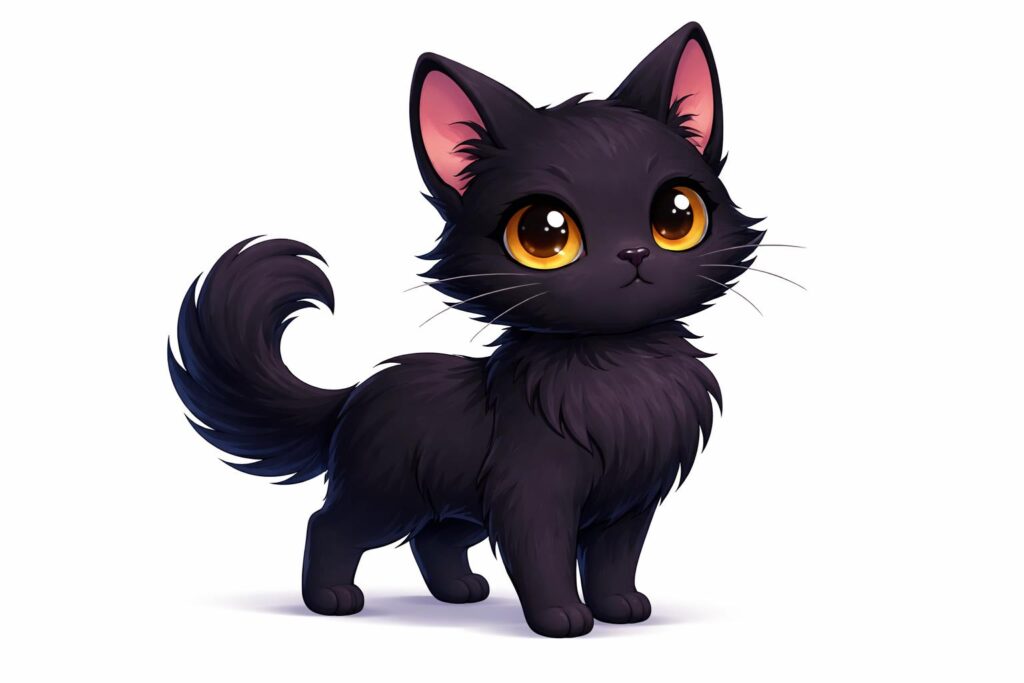
How to Draw a Cat Head
The head is where personality lives. When you’re working on how to draw a cat head, think of it as a slightly flattened sphere — not a perfect circle. The ears should feel like they grow from the top of the skull naturally. For a how to draw a simple cat face, keep features minimal and centered. For something more expressive, play with asymmetry — one ear tilted forward, one back — to suggest mood and attention.
How to Draw a Cat Paw
Paws are one of the trickiest parts to get right, but mastering how to draw a cat paw adds tremendous polish to your game art. A cat’s paw is roughly oval when viewed from above, with four rounded toe beans and one slightly offset thumb pad. The lines separating the toes are subtle — don’t overdefine them. If you also need a how to draw a cat paw print for a UI element or texture, remember it’s the toe beans and the large central pad, arranged in an arc.
How to Draw a Cat Eye
Eyes are the soul of any character drawing. When it comes to learning how to draw a cat eye, be sure to learn about the reflection of light. One highlight is a live eye; two (one large and one small) mean depth and dimension. When it comes to game art in particular, you can more easily get away with simplification — a thick outline, solid iris color and one or two sharp highlight dots may be more effective than a fully shaded eye at lower resolutions.
Adapting for Different Game Styles
The beauty of drawing cats for games is that the same fundamental skills scale across wildly different art directions. A cartoon cat drawing uses the same underlying geometry as a realistic one — it just pushes proportions further and simplifies detail. A black cat drawing challenges you to think about silhouette and light rather than relying on color contrast. And if you’re making something festive, a christmas cat or halloween cat is simply your base design adorned with seasonal props and color grading.
For how to draw a cat for kids — perhaps in an educational game — lean heavily into the cute proportions: big round eyes, a small body, and minimal detail. Children respond to simplicity and warmth, and a how to draw a cat for beginners approach actually aligns perfectly with this style.
If your game features a specific breed, like a maine coon cat, study that breed’s distinctive features — the tufted ears, the long fur, the large frame — and exaggerate them slightly so the breed is immediately recognizable even at a glance. Game art often needs to communicate identity in a fraction of a second.
The Warrior Cat — Drawing Action and Attitude
Some games demand something fiercer. If you need to how to draw a warrior cat, the key is in the pose and the expression. A warrior cat crouches low, ears flat, eyes narrowed. The body is leaner, the muscles more defined. Think about adding armor, scars, or a weapon to immediately communicate the character’s role. The silhouette alone should read as “dangerous” before the player even registers the details.
A how to draw a fat cat is the opposite challenge — and just as valid for games. Think of a plump house cat lounging in a sunbeam inside a cozy simulation game. The body is round, the limbs are short and stubby, and the expression is one of supreme contentment. Fat cats are surprisingly fun to draw because their rounded forms are forgiving and inherently comedic.
From Sketch to Game Asset
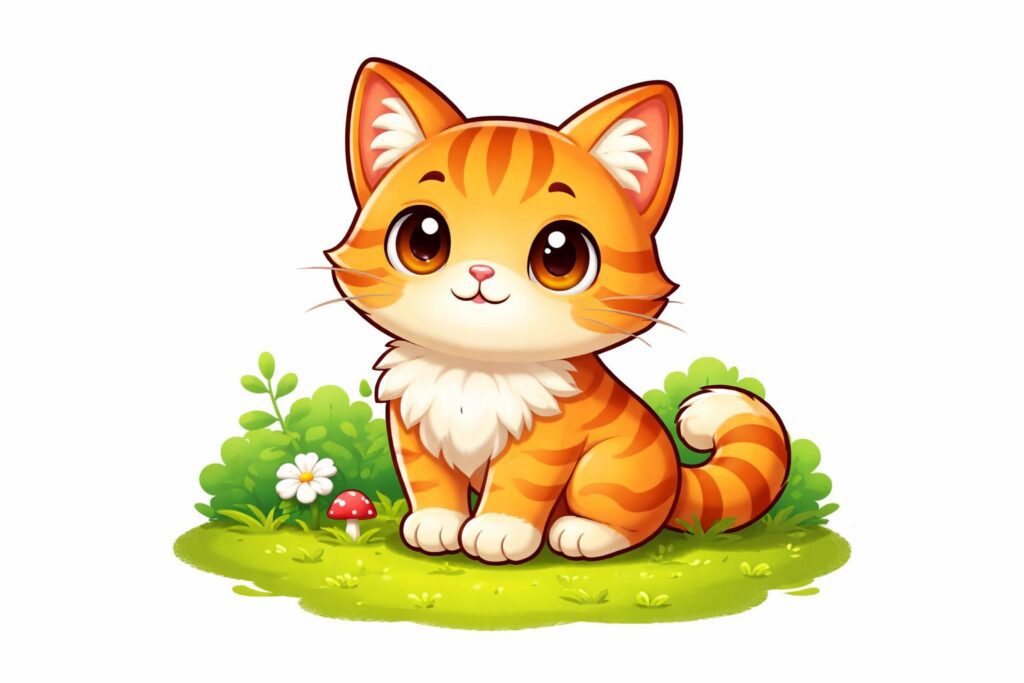
Once you have a drawing you’re happy with, the next step is translating it into a usable game asset. If you’re working in pixel art, simplify ruthlessly — at 16×16 or 32×32 pixels, you have very few pixels to work with, so every one must count. At higher resolutions (128×128 and above), you can retain more of the detail from your original sketch.
If you’re working in vector or raster illustration for a 2D game, clean up your sketch into smooth linework, then apply flat colors before adding shading. Many indie game artists use a cel-shading approach — bold outlines with flat or two-tone shading — which keeps things readable and stylish at any resolution.
A baby cat or kitten character is a wonderful candidate for your first full game asset. The simple proportions and high cuteness factor mean even a relatively simple drawing will land well with players. It’s also a great way to practice the full pipeline — from how to draw a cat step by step easy all the way through to exporting and integrating the final sprite. Use reference videos, or explore animation tips for indie and AAA games here.
Drawing a cat for a game is one of the most rewarding exercises in character art.
Start simple. Stay curious. And let your cats have personality.