I still remember the first time I wrote a Python script that actually worked. It was nothing fancy—just a few lines that scraped some data from a website and organized it into a spreadsheet. But when I hit enter and watched it run, I felt something click. After months of wrestling with semicolons, curly braces, and compiler errors in other languages, Python felt like someone had finally turned on the lights.
That was eight years ago, and I’m still here, still writing Python, still discovering new reasons to love it.
It Reads Like English (Almost)
Here’s the thing about Python that hooked me from day one: you can usually guess what the code does just by reading it. Take this example:
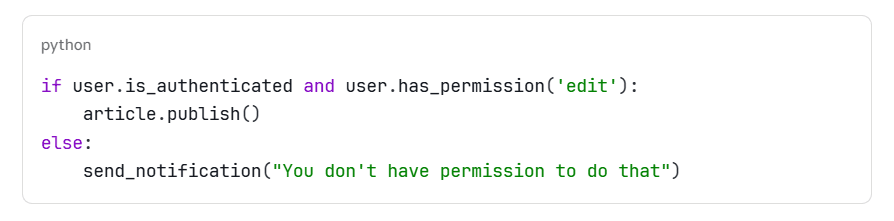
You don’t need a computer science degree to understand what’s happening there. It’s almost conversational. Compare that to some languages where you need a Rosetta Stone just to figure out how to print “Hello, World!” to the screen.
This readability isn’t just a nice-to-have feature. It’s a game-changer when you’re coming back to code you wrote six months ago at 2 AM, trying to remember what on earth you were thinking. With Python, there’s a decent chance you’ll actually understand your own code.
The Community That Keeps on Giving
I’ve dabbled in a lot of programming languages over the years, but I’ve never encountered a community quite like Python’s. It’s this beautiful mix of academic researchers, web developers, data scientists, hobbyists, and everything in between. And somehow, they all seem genuinely excited to help each other.
Got a problem? There’s probably a Stack Overflow answer for it. Need a library to do something obscure? Someone’s already built it and put it on PyPI. Want to learn something new? There are more free tutorials, YouTube channels, and blog posts than you could consume in a lifetime.
I once spent three hours stuck on a bug, posted a question online, and had two detailed answers within 20 minutes. One person even created a GitHub repo with a working example just to help me understand. That’s the Python community in a nutshell.
The Swiss Army Knife of Programming

What I love most about Python is its versatility. It’s like that friend who’s up for anything—want to build a website? Python’s got you covered with Django or Flask. Need to analyze some data? Pandas and NumPy are waiting. Want to get into machine learning? TensorFlow and PyTorch say hello. Building automation scripts? Python practically wrote the book on it.
Last year, I used Python to:
- Build a web app for a local nonprofit
- Automate my monthly expense reports (saved me hours)
- Analyze my running data to see if I was actually getting faster (jury’s still out)
- Create a Discord bot that tells dad jokes on command
- Help my partner scrape job postings to track hiring trends
Five completely different projects, one language. Try doing that with some specialized languages that excel at one thing but struggle with everything else. Whether you’re interested in game development or building software development tools, Python gives you the flexibility to explore different domains without starting from scratch each time.
It’s Not Perfect (And That’s Okay)
Look, I’m not going to pretend Python is flawless. It’s not the fastest language out there—if you need raw performance for real-time systems or game engines, you might want to look elsewhere. The Global Interpreter Lock can be a pain when you’re trying to do true parallel processing. And don’t even get me started on Python 2 vs. Python 3 (though thankfully, that war is mostly over now).
But here’s what I’ve learned: no language is perfect for everything. What matters is finding the right tool for the job, and for a huge range of jobs, Python is an absolutely fantastic choice.
The Gentle On-Ramp
I’ve taught programming to dozens of people over the years, from teenagers to retirees changing careers. And almost every time, I start them with Python. Not because it’s the only language worth learning, but because it removes so many of the barriers that make programming feel impossible at first.
No need to declare variable types. No memory management headaches. No compiling and linking steps. Just write your idea and run it. See what happens. Adjust. Run it again. This immediate feedback loop is incredibly powerful for learning.
I watched my 12-year-old nephew go from zero programming knowledge to building a text-based adventure game in a weekend with Python. Would that have been possible with C++ or Java? Technically, maybe. Realistically? No way. And if you’re curious about taking your game-building further, there are great resources on how to make a video game using various tools and approaches.
Where It’s Taking Us
The exciting thing about Python is where it’s going. It’s at the heart of the AI revolution—almost every major machine learning framework uses it. It’s powering scientific research, from analyzing astronomical data to modeling climate change. It’s running on millions of websites and automating countless business processes. Python developers are in high demand, and with the rise of remote work, many are setting up their own remote work environments to code from anywhere.
But it’s also small enough and friendly enough that a complete beginner can write their first program in an afternoon and feel genuinely proud of what they’ve created.
My Advice? Just Start
If you’ve been thinking about learning Python but haven’t taken the plunge yet, stop overthinking it. You don’t need to buy a course or read a 900-page book (though there are excellent resources if you want them). Just install Python, open a terminal, and start playing. If you’re completely new to coding, check out some basic coding concepts to get your feet wet.
Write a program that tells you a joke. Build something that organizes your photo library. Create a script that reminds you to drink water every hour. The beautiful thing about Python is that it meets you where you are. Whether you want to become a data scientist, build web apps, or just automate the boring parts of your life, Python is ready to help you get there.
And who knows? Maybe in a few years, you’ll be writing your own love letter to the language that changed everything for you.
Absolutely! Python is widely considered the best programming language for beginners. Its syntax reads almost like English, which makes it much easier to understand compared to other languages. You don’t need to worry about complex concepts like memory management or strict typing rules when you’re starting out. Most beginners can write their first working program within hours, not weeks. Plus, the massive community means you’ll find tons of free tutorials, helpful forums, and resources specifically designed for people who are brand new to coding.
Python is incredibly versatile. You can build websites and web applications using frameworks like Django or Flask. It’s the go-to language for data science and machine learning, powering everything from simple data analysis to complex AI models. You can create automation scripts to handle repetitive tasks, build desktop applications, develop games, scrape and analyze web data, create Discord or Telegram bots, and even program hardware like Raspberry Pi devices. The real question is: what can’t you build with Python? While it’s not ideal for mobile apps or high-performance game engines, it covers an enormous range of use cases.
This is a common concern, but it’s often overstated. Yes, Python is slower than compiled languages like C++ or Java in raw execution speed. However, for the vast majority of applications, this doesn’t matter. Major companies like Instagram, Spotify, Netflix, and Dropbox run on Python and serve millions of users daily. The “slowness” only becomes an issue for very specific use cases like high-frequency trading, real-time 3D games, or embedded systems. For web development, data analysis, automation, and most business applications, Python is plenty fast enough—and the development speed you gain from Python’s simplicity far outweighs any performance concerns.
Python 3, no question. Python 2 officially reached end-of-life in January 2020, meaning it no longer receives updates or security patches. While you might occasionally encounter legacy Python 2 code in older projects, all new development should be done in Python 3. The good news is that Python 3 has been around since 2008 and is now the standard—all tutorials, libraries, and resources you find will be for Python 3. Don’t waste time learning Python 2; jump straight into Python 3 and you’ll be learning the current, supported version of the language.
It depends on what you mean by “learn.” You can grasp the basics and write simple, useful programs in just a few weeks if you practice regularly—maybe dedicate an hour or two each day. Within 2-3 months, you could be comfortable building real projects like web scrapers, automation scripts, or simple web apps. To reach an intermediate level where you’re working with frameworks, databases, and more complex applications, expect 6-12 months of consistent learning and practice. Becoming truly proficient is a multi-year journey, but here’s the beautiful part: you don’t need to be an expert to create valuable, working programs. You can start solving real problems and building actual projects within your first month of learning Python.