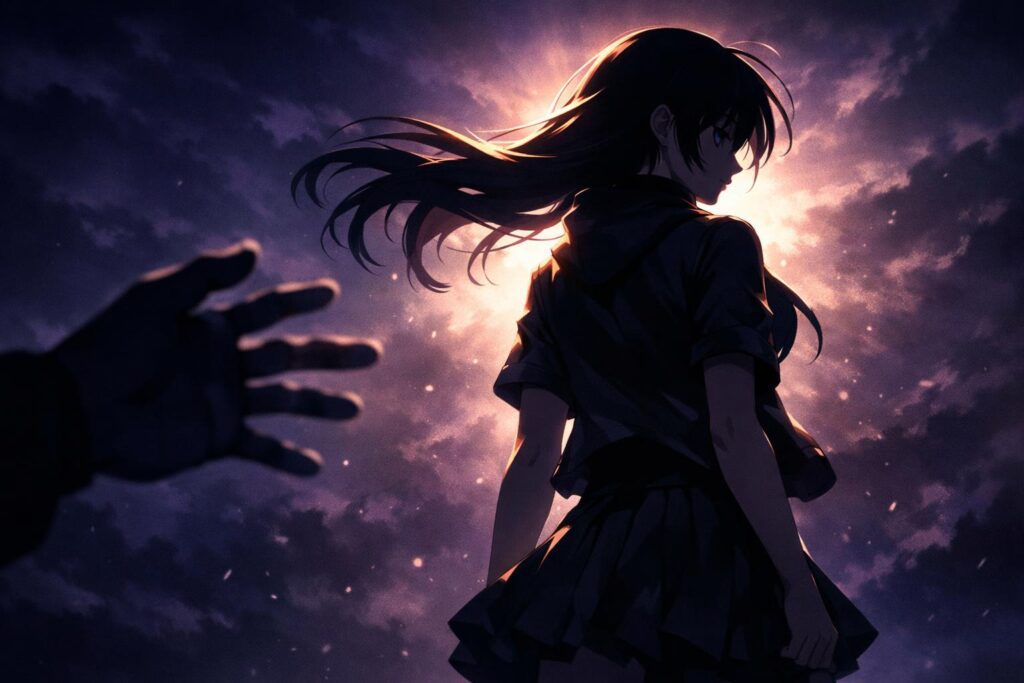
There’s a moment that keeps showing up in anime. Someone reaches out to save a girl. She looks at that hand and says no.
Not because she’s being difficult. Because being saved would cost her something she can’t give up—her choices, her path, herself.
These characters break the damsel-in-distress pattern. They don’t wait for rescue. They hold onto their agency even when it hurts, even when giving up would be easier.
The Price of Rescue
Homura Akemi: When Being Saved Means Losing Everything
Puella Magi Madoka Magica shows this in the most painful way possible. Homura spends the entire series trying to save Madoka. She rewinds time over and over, watching her friend die in different ways, trying to find the one timeline where Madoka survives.
Then Madoka becomes a goddess. She transcends reality itself to save every magical girl across all timelines. It’s the ultimate salvation.
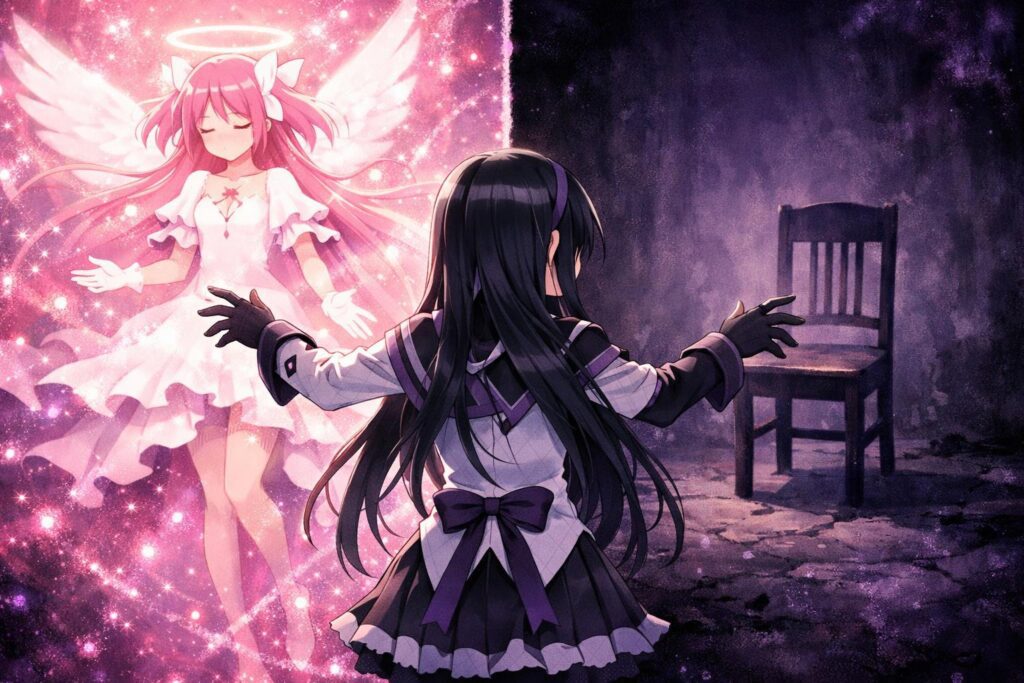
Homura can’t accept it.
Because Madoka saved everyone by erasing herself from existence. No one remembers her except Homura. The girl Homura fought to protect is gone, replaced by a cosmic concept.
In Rebellion, Homura does something unforgivable. She tears apart Madoka’s salvation and rewrites reality to trap everyone in a world where Madoka can exist as a person again. She becomes the devil to Madoka’s god. She chooses damnation over accepting a rescue that erased the person she loved.
The movie asks: what’s worse? Madoka’s self-sacrifice that saved everyone but destroyed herself? Or Homura’s selfish choice that gave Madoka existence but stole her agency?
There’s no good answer. That’s the point.
Casca: The Long Road No One Can Walk For You
Berserk gives us Casca, who spent years as one of anime’s most frustrating examples of a woman needing rescue. After the Eclipse, she’s left in a childlike state. Guts carries her, protects her, fights to restore her mind.
When Casca finally comes back, fans expected her to fall into Guts’ arms. To be grateful. To let him continue being her protector.
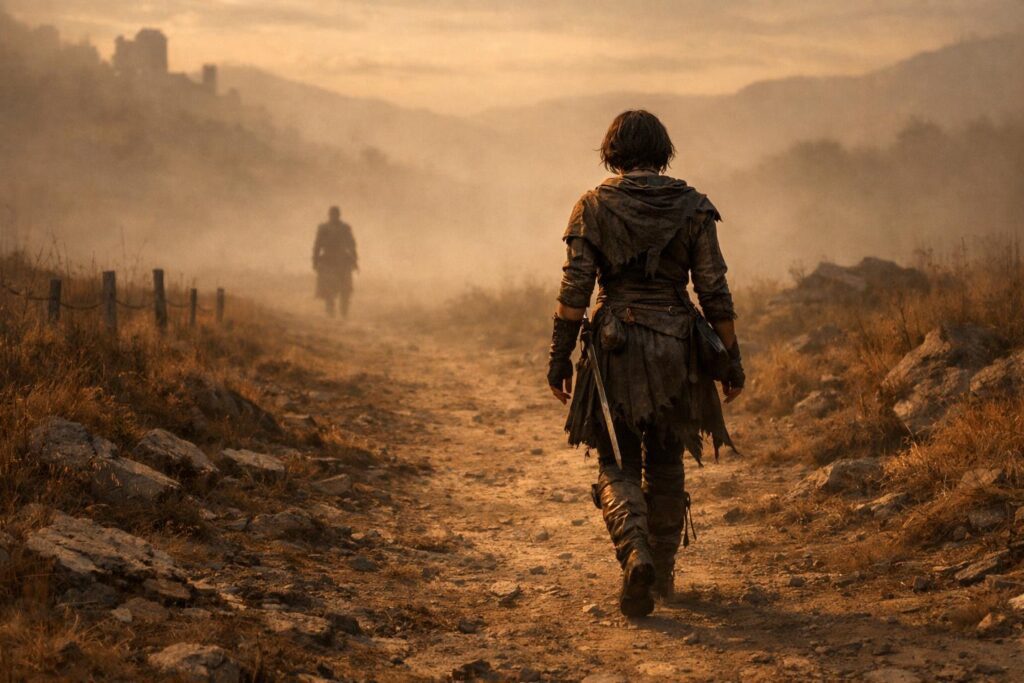
She doesn’t.
She can’t even look at him. Because Guts’ face triggers her trauma. The man who fought demons to save her is also a living reminder of the worst thing that ever happened to her. His presence, his protection, his love—all of it hurts.
Casca doesn’t want to be carried anymore. She doesn’t want Guts making decisions for her safety. She needs space to figure out who she is after everything that happened. And that means pushing away the person who never stopped trying to save her.
It’s cruel. It’s also necessary. Some healing has to happen alone.
Nana Osaki: Refusing the Soft Landing
Nana is built on the contrast between two girls with the same name. Nana Komatsu (Hachi) keeps looking for someone to save her, to give her direction, to make her life make sense.
Nana Osaki does the opposite.
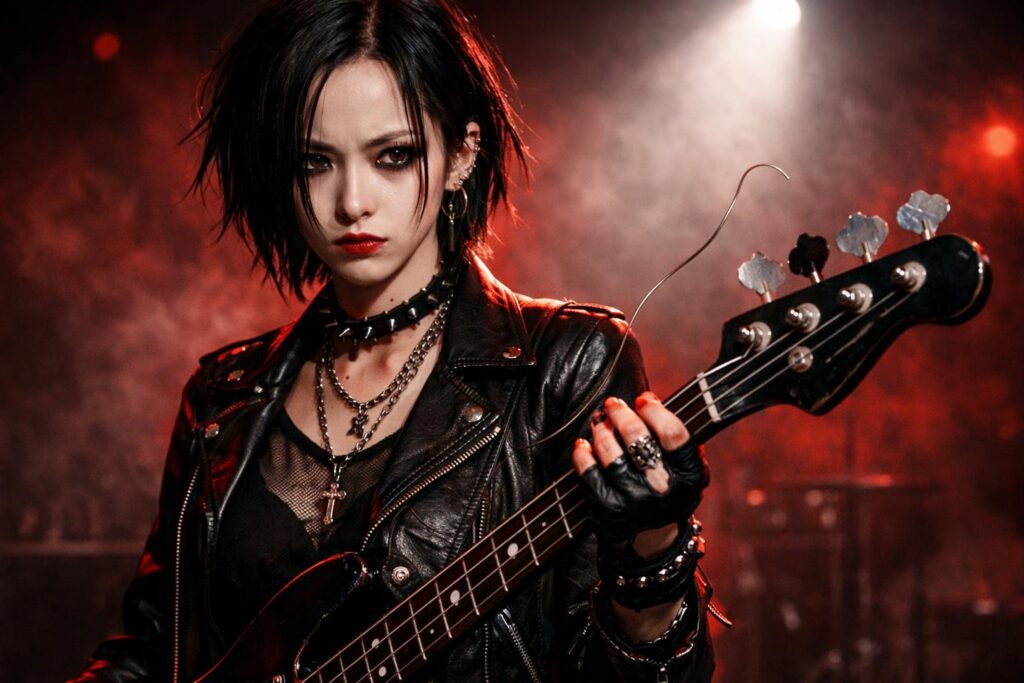
When her band starts falling apart, when her boyfriend Ren spirals into addiction, when people offer her easier paths—she refuses all of it. She won’t let her bandmates sacrifice their dreams for hers. She won’t become someone’s housewife. She won’t take shortcuts that compromise what she’s building.
The tragedy is that her refusal to be saved or to save others leads to disaster. Ren dies. The band breaks up. Nana disappears.
But even in tragedy, she stays true to herself. She doesn’t regret choosing autonomy over safety. The series never punishes her for wanting to stand alone. It just shows that independence has costs, and sometimes those costs are devastating.
Why These Characters Matter
They Complicate the Hero Narrative
Most stories run on a simple engine: someone’s in trouble, someone saves them, everyone’s grateful. These characters break that engine.
They show that rescue can be its own form of violence. That being saved often means giving up control. That the person extending their hand might be solving their own need to feel heroic more than addressing what you actually need.
Homura didn’t need Madoka to become a god. She needed her friend to stay alive and human. Casca didn’t need Guts to keep fighting for her. She needed space to reconstruct herself. Nana didn’t need a safety net. She needed people to trust that she could build something on her own terms.
They Reject the Transaction
There’s an unspoken deal in most rescue narratives: you save someone, they owe you. Gratitude. Loyalty. Love. Their story becomes an extension of yours.
These girls reject that transaction. They don’t owe their rescuers a damn thing.
When Homura becomes the devil, she’s saying: I don’t care if your sacrifice was noble. I didn’t consent to losing you. When Casca pushes Guts away, she’s saying: you don’t get to decide what I need just because you suffered for me. When Nana walks away from help, she’s saying: I’d rather fail on my own terms than succeed on someone else’s.
They Show That Strength Isn’t Always Visible
The strongest moment for these characters isn’t when they fight. It’s when they refuse.
Refusing help takes more strength than accepting it. Especially when you’re hurt, tired, and the person offering genuinely cares. Especially when saying no means walking into uncertainty alone.
These girls aren’t strong because they don’t need anyone. They’re strong because they understand that needing someone and giving up your agency to them are different things. They know the difference between accepting help and accepting rescue.
The Uncomfortable Truth
Stories love rescue because it’s clean. Someone suffers, someone saves them, everyone feels good. We want to believe that caring about someone and fighting for them is always right.
These characters say it’s not that simple.
Sometimes the person who loves you most can’t save you. Sometimes being saved means losing yourself. Sometimes the kindest thing someone can do is let you struggle, fail, and figure it out alone.
That’s harder to watch. It’s frustrating. We want Homura to accept Madoka’s sacrifice. We want Casca to heal faster so Guts’ suffering means something. We want Nana to take the easier path so we don’t have to watch her self-destruct.
But these girls aren’t written for our comfort. They’re written to show that agency matters more than safety. That autonomy is worth protecting even when it leads to tragedy. That sometimes the most heroic thing you can do is refuse the hero.
What It Means to Truly Help
Here’s what these characters teach: if you want to help someone, ask what they actually need. Not what you think they need. Not what would make you feel like a hero. What they need, in their words, on their terms.
Maybe they need you to stay. Maybe they need you to leave. Maybe they need you to stop trying to fix things and just witness their struggle without interfering.
The girls who refuse to be saved aren’t ungrateful or self-destructive. They’re just demanding something most stories don’t want to give them: the right to choose their own suffering, their own path, their own ending.
Even if it’s the wrong one.
More Anime Deep Dives
If you’re interested in complex anime characters who challenge typical storytelling, check out our analysis of Sukuna from Jujutsu Kaisen—a villain who refuses anyone’s control, even while sharing a body with the hero. Or explore Gojo Satoru, whose godlike power creates its own kind of isolation. For a different take on strength and determination, our piece on Goku examines how one of anime’s most iconic heroes balances power with personality.