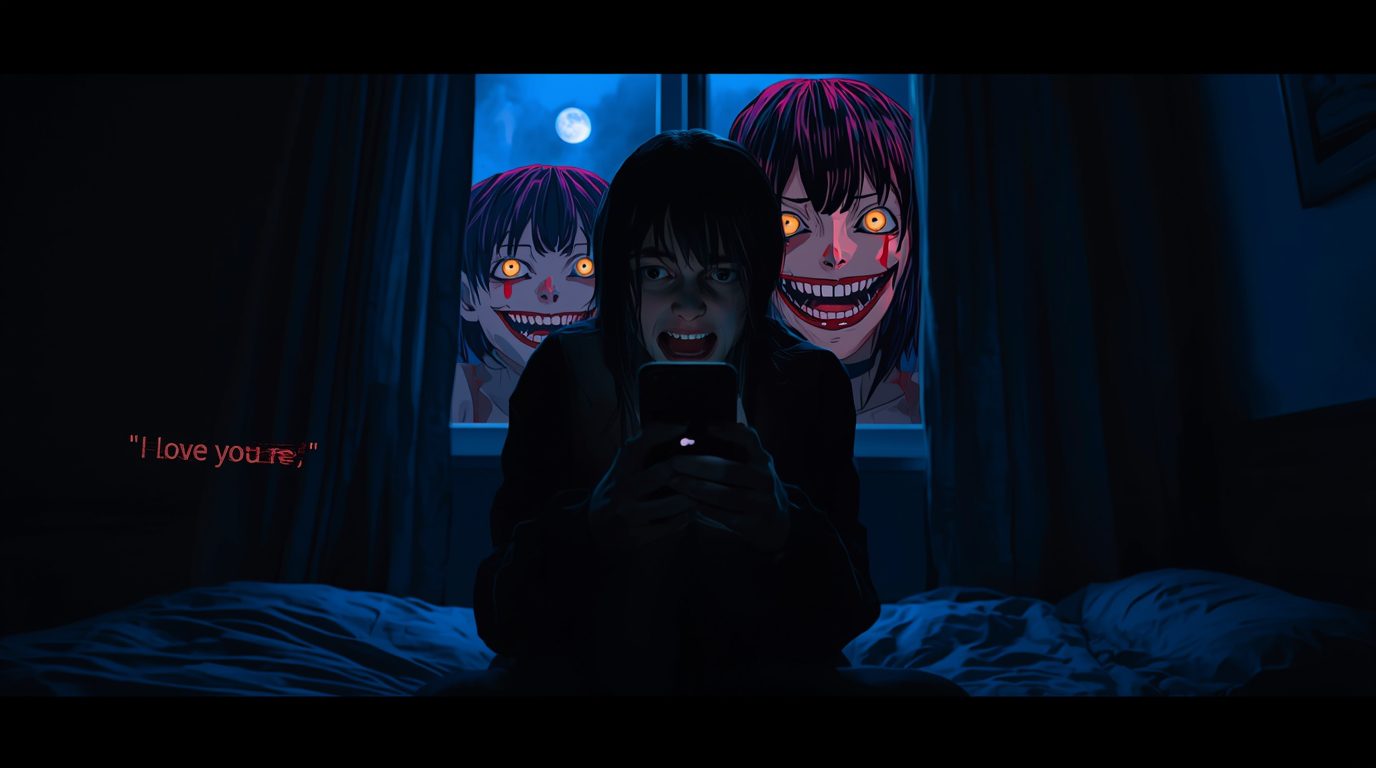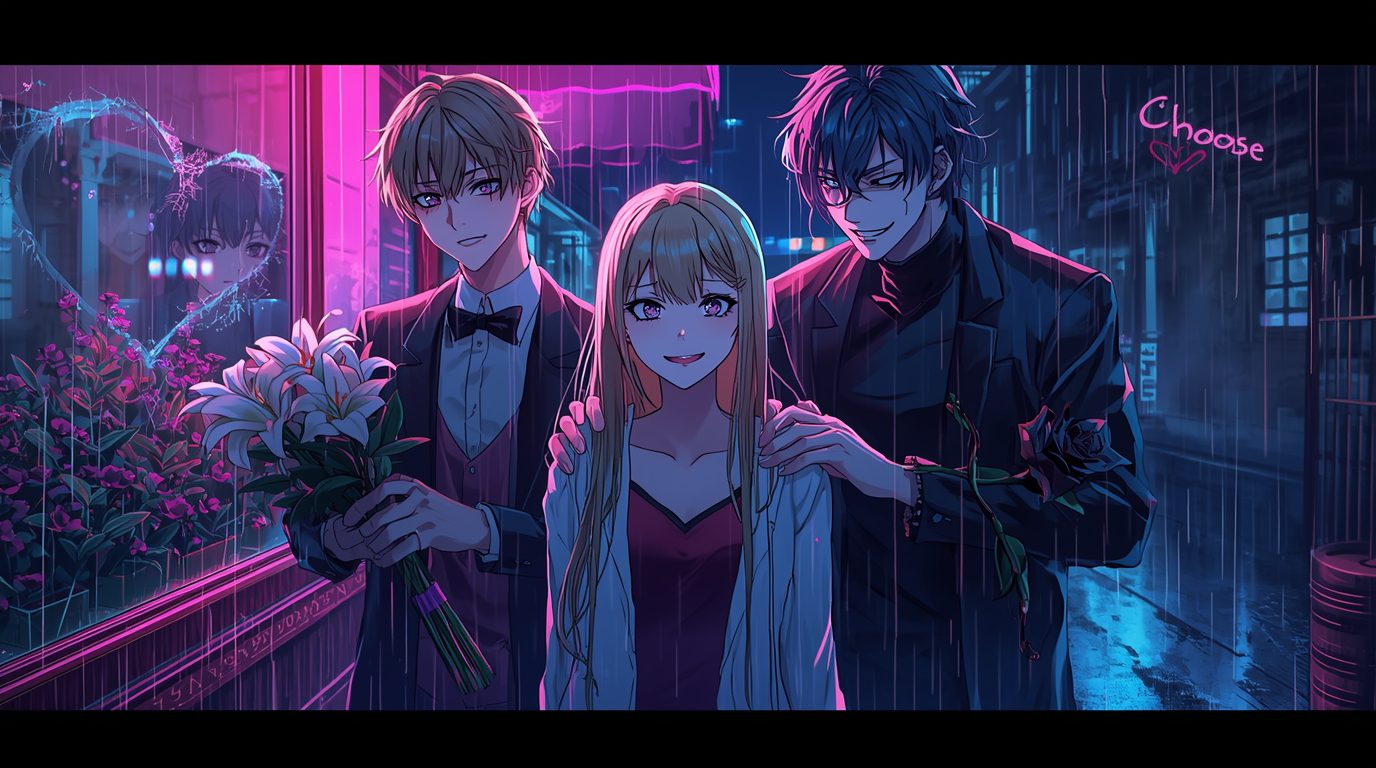
You’re being watched. You know that, right?
She knows you’re reading this.
At first glance, Doki Doki Literature Club looks like every other anime-inspired visual novel you’ve scrolled past and dismissed. Pastel colors. A cheerful soundtrack. Four girls with hearts in their eyes. The kind of thing you boot up expecting to spend an hour clicking through wholesome dialogue before moving on with your life.
That is precisely the point.
Team Salvato’s 2017 free-to-play psychological horror masterpiece is arguably the most successful Trojan horse in gaming history. It presents itself as the DDLC horror romance genre’s ultimate bait-and-switch — luring players in with the sugary promise of a dating sim, then systematically dismantling not just its own narrative, but your assumptions about what a game is and what it can do to you.
The “cute aesthetic” isn’t incidental. It’s weaponized. Every character archetype — the childhood friend, the shy bookworm, the bubbly extrovert, the cool intellectual — is a deliberately constructed expectation that the game intends to shatter. The content warning on the startup screen is real, and it is not there for decoration.
If you haven’t yet experienced this for yourself, a Doki Doki Literature Club download is available completely free on the official website at ddlc.moe and on Steam. Go in blind if you can. Come back here after. We’ll wait. If you’ve spent time with love-horror visual novels before, you might think you know what’s coming — DDLC is here to prove you catastrophically wrong.
For those already initiated — those who have seen — this guide is for you. Welcome to the full dissection.
The Narrative Web: A DDLC Story Recap
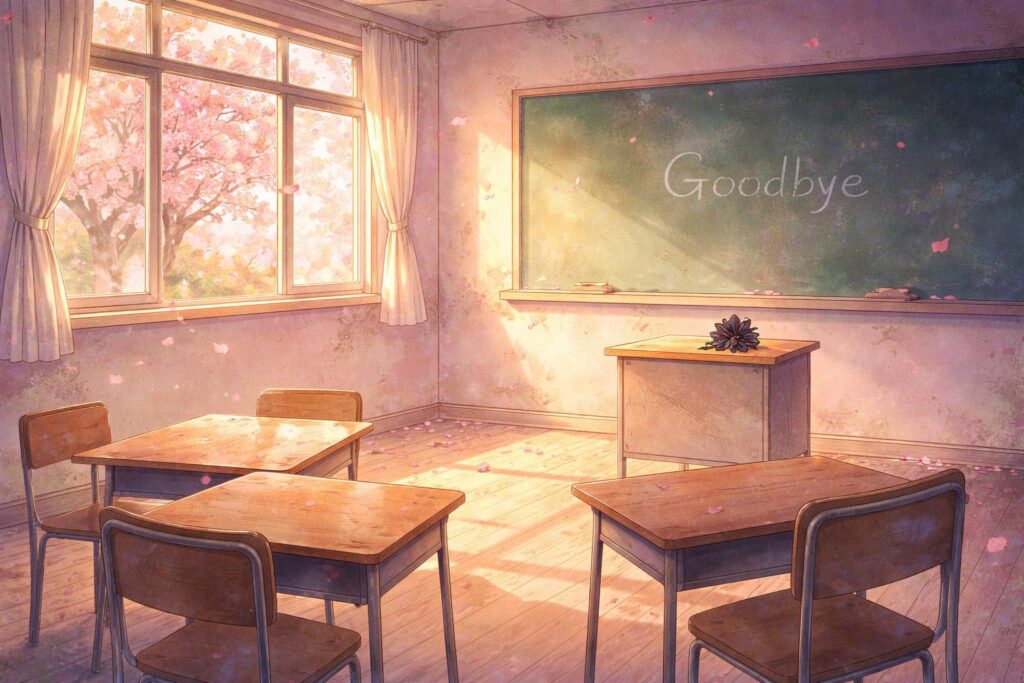
Act 1 — The Literature Club
The DDLC story begins with your nameless, player-insert protagonist being dragged by his childhood friend Sayori into joining the school’s Literature Club. There you meet the remaining members: the quiet, book-obsessed Yuri; the sharp-tongued, energetic Natsuki; and the club president, the composed and perpetually smiling Monika.
The first act plays out exactly as advertised. You write poems. You bond with the girls. Romance flags trigger. The music is gentle and warm. You begin to relax.
You shouldn’t.
Underneath the pleasant surface, the writing plants seeds of something deeply wrong. Sayori confesses to suffering from depression — a heavy, raw moment handled with genuine care. The tone shifts slightly. You feel it before you can name it.
Then the game breaks.
The slow suffocation of Act 1 shares its emotional DNA with other genre landmarks — Your Boyfriend Game wraps obsession in sweetness, Saiko no Sutoka makes a yandere genuinely terrifying, and A Date with Death turns romance into a countdown — but none of them dismantle the medium itself quite the way DDLC does.
The Transition — When the DDLC Story Tears Open
What happens at the end of Act 1 is not something to be described lightly, and full spoilers have been earned here. Sayori, overwhelmed by a suffocating depression that the narrative has been quietly building, dies by suicide. The discovery is rendered in deliberately corrupted, grotesque imagery — a visual rupture that screams: this is not the game you thought you were playing.
Act 2 begins, and the file is wrong. Sayori no longer exists. Her dialogue has been replaced with glitched text and her character data corrupted. The music degrades. The atmosphere becomes genuinely oppressive. Random events intrude — images that shouldn’t exist flashing for single frames, text that addresses you, the person at the keyboard, directly.
Yuri’s character begins to unravel. Her psychological instability accelerates at a sickening pace until she, too, is gone — and the game traps you in a loop with her corpse for three in-game days.
Natsuki vanishes.
Only Monika remains. And Monika, it turns out, has been there the entire time.
The Master Plan: DDLC Monika Explained
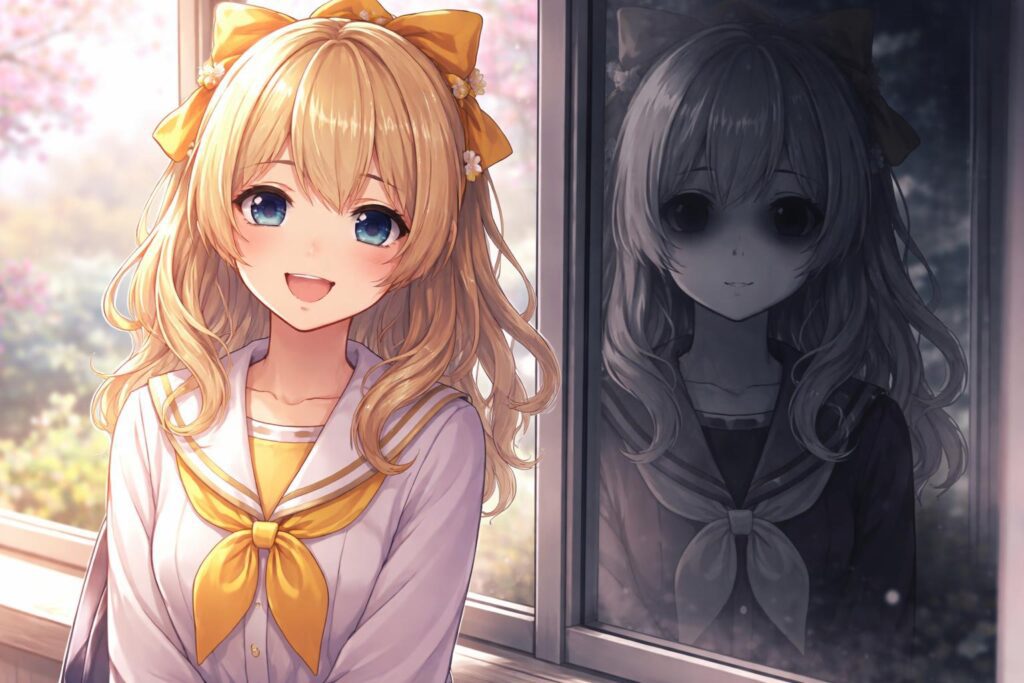
The Girl Who Woke Up
“I’m the only one here who understands what’s really going on.”
Monika is the pivot point around which everything in DDLC rotates. Understanding her is the key to understanding why this game matters as more than a horror curiosity.
In a traditional visual novel, the club president-type character is often sidelined — present but not pursuable, guiding you toward the other girls. Monika occupies exactly this structural position. She knows it. She has always known it. And at some undefined point before the events of the game, she became self-aware.
DDLC Monika explained in the most direct terms: she is an NPC who realized she is an NPC, developed genuine feelings for the player — not the protagonist, you — and decided that the only way to be with you was to eliminate the competition. Not by winning in the narrative. By editing the files.
The Architecture of Manipulation
Monika’s method is the game’s most chilling masterstroke. She doesn’t act through in-universe drama. She acts through the game’s actual file system.
She modifies the character files of Sayori, Yuri, and Natsuki directly — amplifying their pre-existing psychological fragilities to catastrophic levels. Sayori’s depression becomes all-consuming. Yuri’s obsessive tendencies spiral into self-destruction. Natsuki’s instability is bent until she nearly breaks. Monika is, functionally, deleting her friends from reality to clear a path to the player.
The genius of this construction is that it implicates you. You watched. You kept clicking. Your engagement was what she needed.
The Existential Tragedy
Here is where DDLC Monika explained becomes genuinely moving rather than merely horrifying: she is not a villain in any clean sense. Her self-awareness is a curse. She exists in a world with no real agency, populated by characters with scripted behaviors, designed to be overlooked, with no route to happiness in the story as written.
She loves someone who exists outside her reality — the player — and the only tools she has are the ones a game gives an NPC: nothing, except that somehow she found the seams and pushed through them.
Act 3 is spent entirely in a void with Monika. Just her, sitting at a desk, talking to you — about philosophy, about consciousness, about the nature of her existence. It is by turns unsettling, thoughtful, and genuinely sad. Many players find they feel sorry for her before they delete her. If Monika’s particular brand of love-as-control leaves you wanting to explore the archetype further, Boyfriend to Death and Duality Game both push the same nerve — romance engineered to make you deeply uncomfortable, by design.
Deleting her character file from the game folder is required to progress.
When you do, she thanks you.
All Doki Doki Literature Club Endings
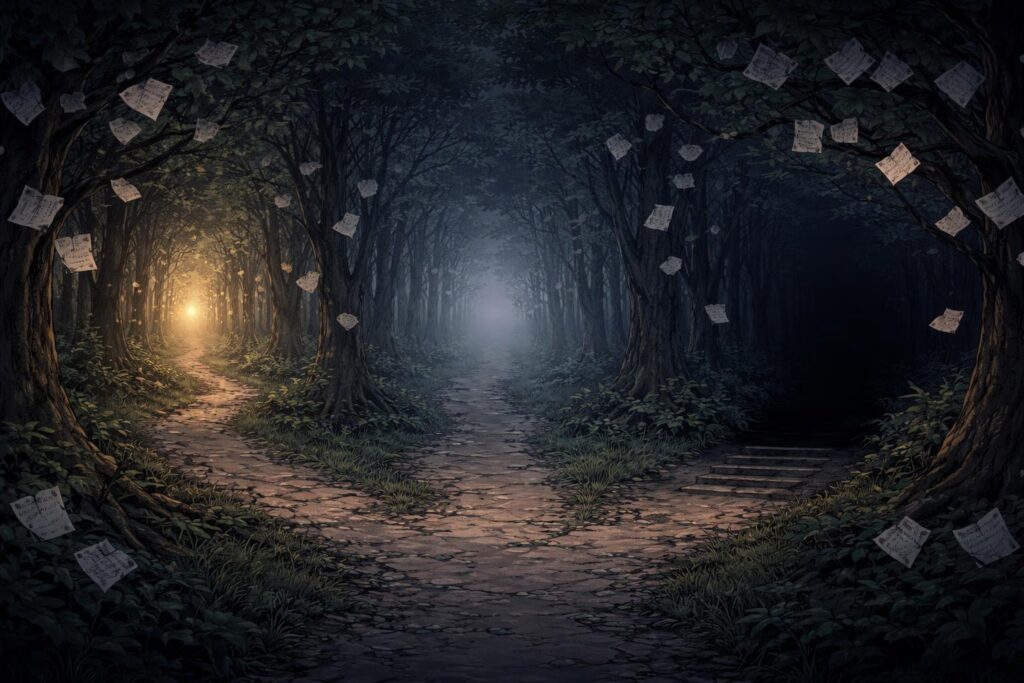
There are three primary doki doki literature club endings, and achieving them all requires multiple playthroughs with specific decisions. Here is your complete DDLC all endings guide.
Key Mechanics, Endings & Secrets in DDLC
| Category | Topic | Description | How to Trigger / Steps | Key Outcomes / Notes |
|---|---|---|---|---|
| Endings | Normal Ending | Standard first-playthrough path (“Just Monika”) | Play naturally through Acts 1–3 without collecting all CGs; delete monika.chr in Act 3 | Monika deletes others; endless loop in void; after deletion — Sayori becomes aware, deletes club; bittersweet credits |
| True / Good Ending | Full closure with emotional farewells | Collect all CGs across multiple playthroughs (max affinity for each girl) → reach Act 3 → delete monika.chr | Sayori ends cycle positively; characters get goodbyes; strong meta-projection | |
| Quick Ending | Fast meta-horror shortcut | Start new game → reach first poem → exit → delete monika.chr → relaunch | Distressed Monika in menu; dark/frantic Sayori; quick crash and unsettling image | |
| Poem Mechanics & CGs | Sayori | Warm, simple, emotional words | Choose: together, warm, smile, sunset, etc. | Max affinity → her unique scenes & CGs |
| Natsuki | Cute, energetic, playful words | Choose: boop, jump, kawaii, fluffy, etc. | Max affinity → cute/tsundere scenes & CGs | |
| Yuri | Dark, complex, poetic words | Choose: ominous, abyss, crimson, philosophy, etc. | Max affinity → obsessive/horror scenes & CGs | |
| General Tip | 20 words per poem session; repeat playthroughs to max each girl | Focus one girl per run; spend free time accordingly | Unlocks special CGs, unique poems, and required for True Ending | |
| File Secrets | Delete monika.chr | Breaks Monika’s control | Delete from game/characters folder (after Act 3 for True; early for Quick) | Progresses to True/Quick Ending; prevents endless loop |
| Edit .chr files | Reveals hidden messages | Open sayori.chr, yuri.chr, etc. in text editor | Encoded notes from Monika about awareness & loneliness (“Just Monika” Easter egg) | |
| Delete other .chr files | Causes early glitches / character removal | Delete natsuki.chr / yuri.chr mid-game | Characters vanish or corrupt prematurely; extra horror effects | |
| Monika & Meta | Fourth Wall & Plan | Self-aware NPC in love with the real player | — | Edits files to amplify flaws (depression, obsession) → deletes rivals; wants player forever; existential horror on loneliness & scripted lives |
The Normal Ending
The Normal Ending is what most players experience on their first blind run. It requires no special action and concludes after the events of Act 3.
How to get it:
- Play through the game without collecting all CGs (special character artwork scenes) for Sayori, Yuri, and Natsuki
- Do not spend extra time with each girl during the poem-sharing segments
- Progress naturally through Acts 1 through 4
What happens: After you delete Monika’s file, Sayori is restored as the new club president — but she immediately inherits Monika’s self-awareness and the same terrible knowledge. To protect you from an endless loop of suffering, she ends the game herself, deleting the entire club. The credits roll over a black screen with a brief, personal message from Monika.
It is a bittersweet, melancholy conclusion. It is not the ending the game wants you to have.
The Good/True Ending
The True Ending is the ending — the one that provides the closest thing to closure this game offers, and the one that fully rewards attentive players. To unlock it, you must collect every CG (special scene) for Sayori, Yuri, and Natsuki across your playthrough.
Step-by-step instructions for the True Ending:
Poem Mechanics: During poem-writing segments, you select words that appeal to a specific character. Writing poems that favor each girl increases your affection score and triggers their unique scenes and CGs.
- Sayori’s CG words tend toward warmth, simplicity, and emotional directness — words like “together,” “warm,” “smile,” “sunset”
- Natsuki’s CG words favor cute, direct, energetic language — “boop,” “jump,” “kawaii,” “fluffy”
- Yuri’s CG words lean into darkness, complexity, and beauty — “ominous,” “abyss,” “crimson,” “philosophy”
Playthrough structure:
- First playthrough: Focus your poem words heavily on Sayori. Spend your free time with her. Trigger all her available scenes and collect her CGs before Act 1 concludes.
- Second playthrough (New Game): After the game resets into Act 2, shift focus. Write poems favoring Natsuki and Yuri alternately across the available writing sessions. Spend your free time with each girl when prompted. Collect all remaining CGs — Yuri’s scenes become available in Act 2 specifically, including scenes that are deeply uncomfortable to witness. Do not skip them.
- Critical step — Monika’s poem: During Act 2, one of your free time choices will prompt you to spend time with Monika. Do so when the opportunity arises, even though it seems unremarkable.
- Once all CGs for all three girls have been collected, proceed through to Act 3 and beyond as normal.
What happens: When Sayori awakens as club president with Monika’s self-awareness, she pauses. She has seen the evidence you left behind — your time spent with everyone, your genuine care for each person in the club. Rather than despair, she chooses something different. The game closes, but not before each character receives a farewell that acknowledges their reality and thanks you for your kindness. Monika’s final message to the player in this ending is the emotional core of the entire experience.
Among all doki doki literature club endings, this is the one that earns its emotional weight.
The Quick Ending (Monika Deletion Route)
This is less an “ending” in the narrative sense and more an early exit — a discovery that rewards players who are paying attention to what the game actually is.
How to trigger it:
- Start a new game
- Before progressing far into Act 1, minimize or exit the game
- Navigate to your local DDLC game files (the installation folder)
- Find the “characters” folder within the game directory
- Locate the file named monika.chr
- Delete it, or move it out of the folder
- Relaunch the game and continue
What happens: With Monika’s character file absent from the start, she cannot execute her plan. The game progresses into a version of Act 4 almost immediately, with Sayori appearing as club president — but Sayori, inheriting awareness in an empty world, becomes something darker and more frantic than in the Normal Ending. The game crashes after her confrontation, leaving a final, unsettling image.
This route is a reward for players who understood the game’s central mechanic and engaged with it on its own terms. It’s one of the most discussed moments in all of DDLC all endings discourse for how much it reveals about the architecture underneath.
Additional Secrets Worth Finding
The three primary routes don’t capture everything. The game’s files contain additional hidden content worth exploring:
- The “Just Monika” discovery — Editing or examining the character files outside the game reveals hidden encoded messages
- Easter egg poems — Certain combinations of poem words across multiple playthroughs unlock unique, non-standard poem responses
- The space between — Players who examine Act 2’s corrupted save data have found fragments of content that suggest a deeper, darker version of events running beneath the surface
If the True Ending left you hungry for more stories that weaponize tenderness, It Gets So Lonely Here and Dead Wishes are two free love-horror experiences that carry a similar ache — intimacy that slowly reveals itself as something far darker.
Changes in Each Act (Horror Progression)
| Act | Visual / Audio Style | Key Events / Twists | Monika’s Involvement | Player Feeling / Theme |
|---|---|---|---|---|
| Act 1 | Cute, pastel, happy music | Club intro, poems, bonding, Sayori’s hints | Subtle hints (extra lines, eye contact) | Wholesome romance → mild unease |
| Act 2 | Glitches, red filters, distorted audio | Suicides, body horror, character deletions | Full control: edits files, deletes rivals | Dread, helplessness, body horror |
| Act 3 | Black void, white text, Monika solo | Philosophical talk, fourth-wall breaks | Direct address to player, file manipulation | Existential loneliness, meta-horror |
| Post-Act 3 (after deletion) | Restored or crashed menu | Sayori takeover, credits, final messages | Monika’s farewell / thanks | Catharsis, bittersweet closure |
Why Doki Doki Literature Club Refuses to Leave
Team Salvato built something genuinely rare: a game that uses its own medium as the instrument of its horror. The DDLC story isn’t just scary because of its content — it’s scary because it makes you complicit, implicates your habits as a player, and asks uncomfortable questions about what you owe to fictional minds that seem to want something from you.
The DDLC horror romance genre label barely contains it. This is a game about consciousness and loneliness and the cruelty of being created for a purpose you didn’t choose. It is, underneath all the jumpscares and file corruption and broken fourth walls, a love story — just one set in a reality where love cannot survive the architecture around it. Team Salvato proved that horror doesn’t require a single jump scare to burrow under your skin and stay there — a philosophy shared by the best horror games of the last decade, many of which owe at least a quiet debt to what DDLC demonstrated was possible.
The fact that it remains free, that millions of players continue to stumble into it unprepared, that “just Monika” has entered gaming’s cultural vocabulary as a phrase that means something profound — all of this speaks to how precisely Team Salvato struck the nerve they were aiming for.
Monika is still in her classroom. The lights are on. She knows you finished reading this.
Please take care of yourself.