
Why Game Feel Matters More Than Feature Count
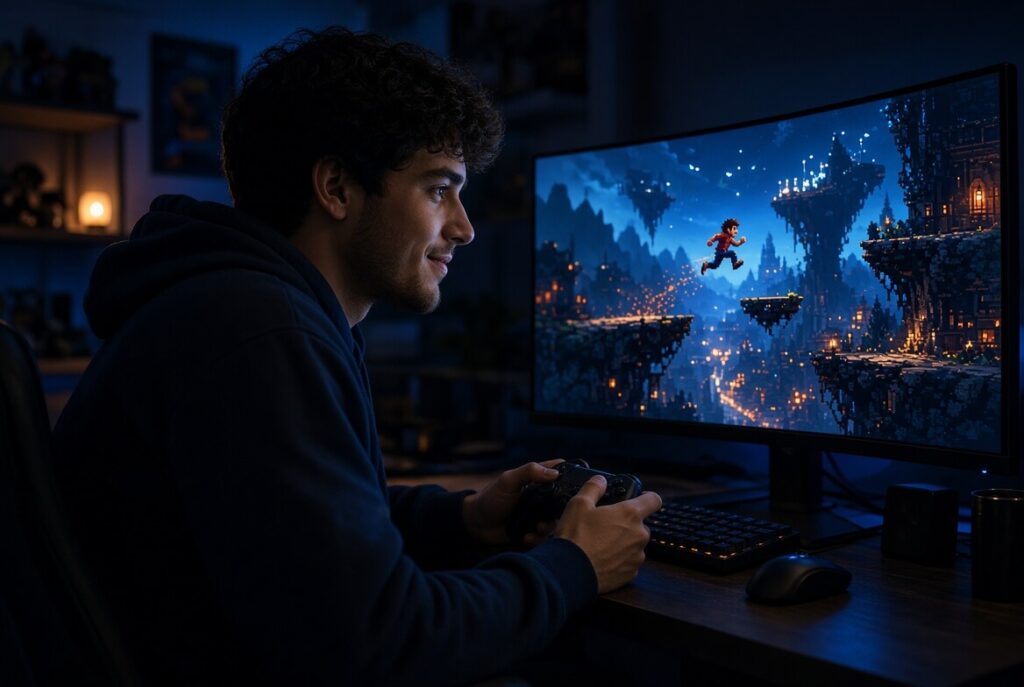
Gaming is an interactive experience that happens at several layers of separation. When a player presses a button, the signal travels from the controller to the console, the input is processed in software, and the associated action appears onscreen, creating milliseconds of delay between cause and effect. That’s the fundamental reason why game feel matters, but it’s also a tricky concept to convey in marketing materials, so there’s more of an impetus to cram in as many features as possible. That’s good from a marketing perspective, but it won’t make a game a critical or commercial success.
Engagement in the Moment
Game feel starts with the immediate issue of character control, so it’s often talked about in terms of platformers and action games. The precision with which indie darlings like Celeste and Spelunky let players manipulate their characters makes the simple act of movement a joy. They don’t require extensive crafting systems or skill trees to keep the audience engaged. They don’t even require complex stories.
Audio and graphics also matter in this context. A card game like Hearthstone is not fast-paced, but it feels great to play because the sound effects and visuals that occur when a spell is cast, or a minion hits the opponent’s face, give real weight and pizzazz to the proceedings.
Similarly, iGaming sites are loaded with slots that use sound effects and graphics to make every spin feel significant, even if the underlying interactivity is incredibly simple. So if you’re gaming at Impressario Casino, it’s the game design as much as the jackpots that keep you interested.
What creates strong game feel (practical checklist):
- Responsive controls with minimal input lag
- Clear and satisfying audio-visual feedback on every action
- Consistent physics and weight to character movement
- Subtle screen shake, particle effects and animation prioritization
- Tight camera and framing that never fights the player
Forgiving Skill Gaps
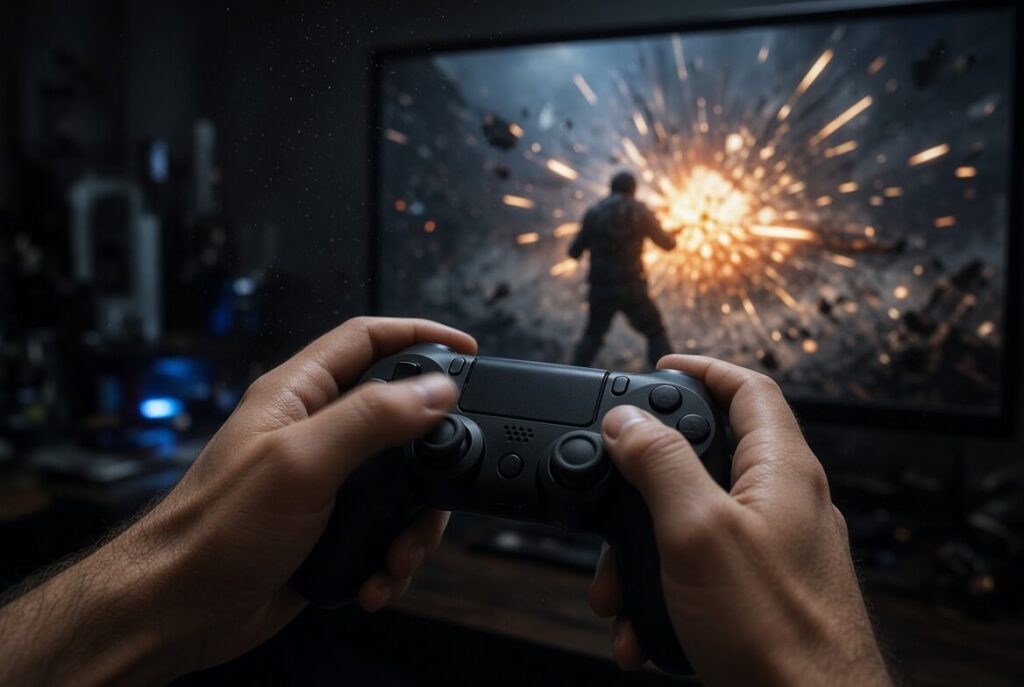
Game feel has another important role in making a game fun that’s also more impactful than raw feature count, and that’s empowering the player while disguising the helping hand they’re being given. Platformers that rely on precise controls are also built in such a way that there’s leeway when a player makes a mistake, such as pressing the jump button too late, giving them that extra frame or two to make the input and avoid a fatal plunge.
First-person shooters have similar tricks up their sleeves, with a degree of auto-aim assist often included so that players feel like eagle-eyed marksmen even if they aren’t always placing their crosshairs over the target they intend to hit. As well as making up for skill deficiencies and making games fun rather than frustrating, this element of design is also a way of smoothing over game feel issues, ensuring that the time between an input being made and onscreen action occurring doesn’t mar the experience.
Avoiding Confusion
As the feature count climbs higher, the amount of extra work involved in bringing the desired features to bear on the world of the game in question increases. Moreover, developers have to find a way to ensure that players can interact with each of the elements, and that can result in all sorts of issues with controls and UI that create confusion rather than satisfaction, and just end up looking messy.
When the emphasis is on game feel, there’s no need to chase feature bloat or try to keep up with what others are doing. It’s why one of the biggest games of the last few years is Hollow Knight: Silksong, made by a team of 3, rather than the raft of generic RPGs pumped out by teams of hundreds.
Games that prove game feel beats feature count:
- Celeste — pure precision and emotional weight of movement
- Spelunky / Spelunky 2 — emergent mastery through tight controls
- Hollow Knight & Silksong — combat and exploration that feel incredible with a tiny team
- Hades — every attack and dash has perfect feedback and weight
- Super Meat Boy — punishing but extremely responsive platforming