For more than 40 years, Star Wars has thrilled fans with iconic films and entertainment. These games, from literal space simulators to story-rich RPGs, have allowed fans to live their Star Wars dreams in ways no film could ever match. Here is a curated ranking based on critical reception, innovation and cultural impact.
The Greatest Star Wars Games of All Time
1. Star Wars: Knights of the Old Republic (2003)
Platform: PC, Xbox, Mobile
Developer: BioWare
KOTOR has been named the undisputed winner of the Star Wars game and has been regarded by most people as one of the greatest RPGs of all times. BioWare also placed their story 4,000 years prior to the films so they had total creative freedom to work upon an original story without such restrictions as film canon. This separation by the films allowed them to experiment with the Force, Jedi philosophy and ethical decisions in a way that was new but still true to Star Wars.The game follows your personalized character in a quest to bring to a stop Darth Malak and his Sith Empire. It begins as a simple good-evil narrative, but slowly becomes more and more complex, progressing towards one of the most famous plot twists in the history of the video game-industry, something that even outranks I am your father in The Empire Strikes Back.
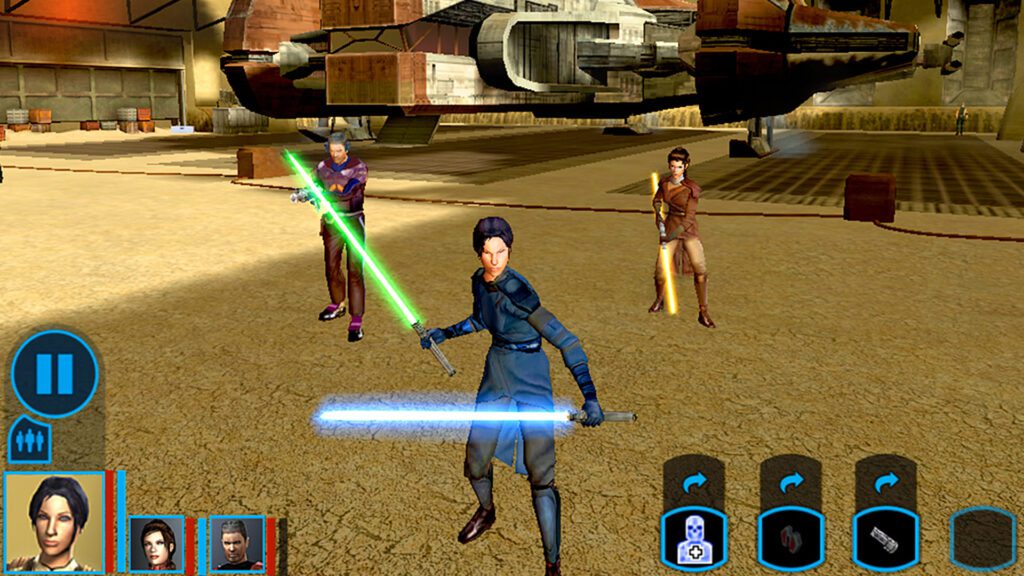
The decisions you make in the quest actually matter as they result in either you taking up the Jedi way or falling into the traps of the dark side by joining the Jedi Killers, a homicidal droid named HK-47, with his dark humour and violent nature causing the unexpected comedy, and Jolee Bindo, a cynical ex-Jedi whose insight is a challenge to the orthodox Jedi Force philosophy. Every world is lived out to the fullest and is wholly present, with the city sprawl of Taris, the rubble of the Jedi academy on Dantooine, the tombs of the Sith on Korriban. The impact of the game was not limited to Star Wars, and set the pattern of the modern BioWare RPG, and demonstrated that licensed games could reach the heights of a critical masterpiece with a 93 Metacritic rating.
2. Star Wars Jedi: Fallen Order (2019)
Platform: PC, PlayStation 4/5, Xbox One/Series X|S
Developer: Respawn Entertainment
The story-driven Star Wars games had not seen success in decades after years of multiplayer-oriented releases that frustrated the supporters of the single-player half of the industry, but Fallen Order was a triumphant move towards restoring the narrative-driven releases. Respawn Entertainment created a Souls-inspired action-adventure game modeled after Cal Kestis, a young Padawan who survived the Order 66 by concealing his Force powers and working as a scrapper in the industrial planet Bracca. In situations where circumstances push him out of his hiding hole, he takes a trip to restore his connection to the Force as he fights through intentional, difficult lightsaber duels that can be won through judiciously chosen timing and pattern recognition rather than by blindly pressing buttons. The rhythm of parrying, dodging, and balancing your Force powers is an enjoyable way to experience that you have deserved all the wins.
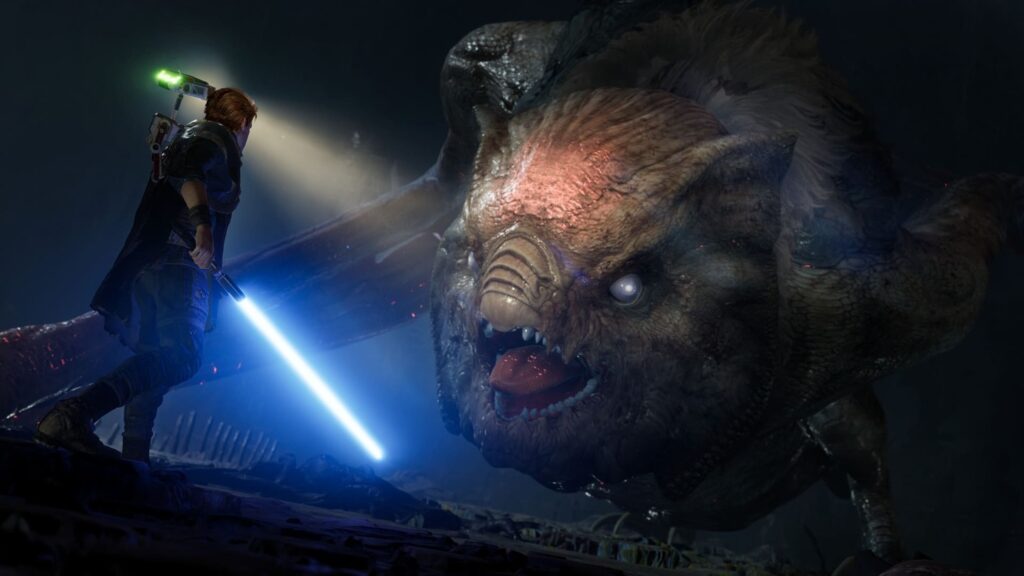
The game embraces a Metroidvania format in which interconnected worlds become unlocked as you acquire more Force powers, and it is backed by very good writing that allows deep into the trauma experienced by Cal, as well as his gradual healing. The game recreates the visual appeal and emotional promise of the movies especially the prequels and the original trilogy and makes it feel like it is a true Star Wars in a way that most games can hardly do. Its 2023 sequel, Jedi: Survivor, builds upon all these features with a larger variety of combat choices, more worlds to explore, greater character customization and RPG mechanics that provide players with more control over the abilities and playstyle of Cal.
3. Star Wars: TIE Fighter (1994)
Platform: PC
Developer: Totally Games
It was revolutionary for its time because TIE Fighter allowed you to fight for the Galactic Empire and actually root for them. Most Star Wars media depicted the Empire as absurdly evil, but in this space combat simulator from Totally Games they were a stabilizing force in a chaotic galaxy, and you played as an accomplished TIE pilot who clawed his way up their ranks fighting terrorism and piracy.
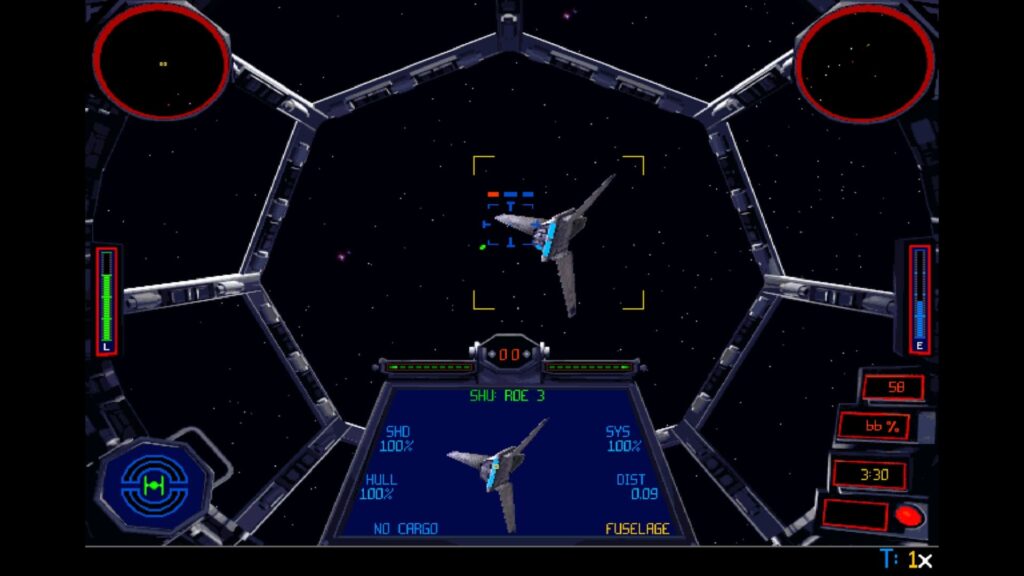
RGameplay was equal parts demanding and satisfying for space dogfights where you had to allocate power between engines, weapons, and shields as you bounced around the PC gaming stratosphere with its physics simulation, graphics that were state of the art at the time. Vessels like the Rebel shield-equipped starfighters allowed for errors; imperfectly flown TIE fighters often flew towards death. The pacing of the missions was also always diverse and interesting – anything from escort missions to attacks on capital ships, to covert tasks – with a story that gradually revealed (once again) backstabbing politics within the Empire.
The game’s moral ambiguity was rare in the ’90s. You weren’t some mustache-twirling villain, you were a loyal decent soldier who believed in the Empire trying to bring stability. This approach was what made the experience challenging in ways that few licensed games were. Today’s space sim fans continue to laud TIE Fighter for its exceptional flight model and strategic depth, elevating it to the status of crowning achievement in the X-Wing series — not to mention one of the best space combat games ever created.
4. Star Wars: Battlefront II (2005)
Platform: PC, PlayStation 2, Xbox, PSP
Developer: Pandemic Studios
EA’s controversial 2017 reboot notwithstanding, the first Battlefront II is still the gold standard for mass-scale Star Wars combat. Pandemic Studios developed a multiplayer-focused shooter that allowed you to battle on all six films then extant, from the Clone Wars over Geonosis to the Galactic Civil War at Hoth and partisan fighting on Endor. The action was unprecedented, as 64-player battles raged creating true havoc experiencing blaster fire, explosions and vehicles in the most iconic star wars scenes.
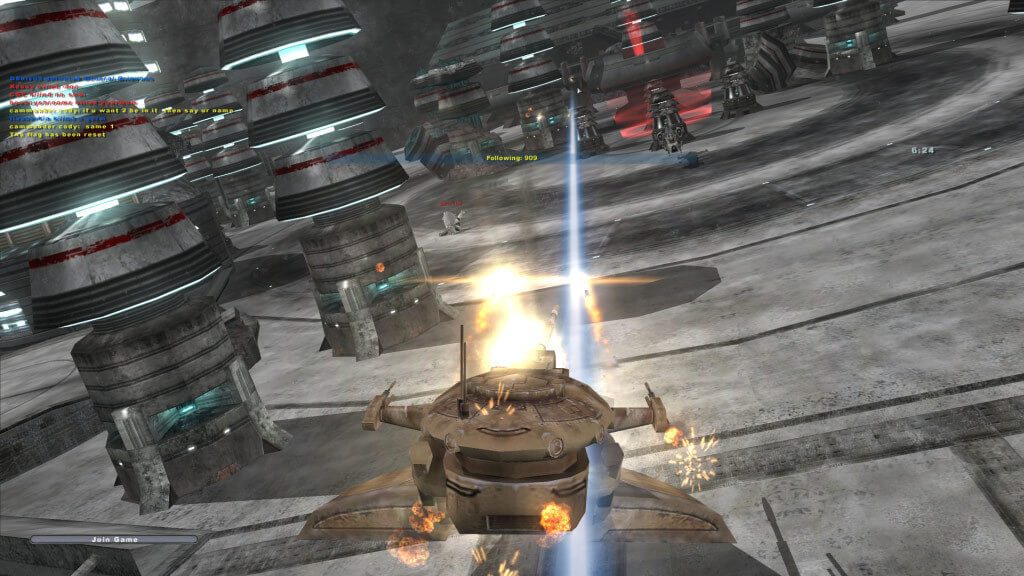
Outside of typical ground-based fighting, you could assume the role of hero characters such as Luke Skywalker, Darth Vader and Yoda, each with special abilities that could swing a fight. The space combat opened up the possibility of seamless transitions, where you could dogfight in starfighters and then land inside enemy capital ships — taking them down from the inside. The Galactic Conquest mode combined strategy with action, allowing you to deploy resources and fleets between engagements.
The highlight was the 501st Journal campaign, which tracked a clone trooper’s view from the Clone Wars to rise of the Empire. This thread, delivered through mission briefings, gave added emotional heft to a mode not often known for its narrative coherence. The voice actor’s lived-in performance let you feel the accumulated weight of years of service and the moral compromises it necessitated. An active modding community still adds new content to the game today, from prequel-era battles to sequel trilogy locations, and the game lives on two decades after it came out.
244Words
The output content seems to be human-written.
5. Star Wars: Republic Commando (2005)
Platform: PC, Xbox, Nintendo Switch
Developer: LucasArts
Played behind the eyes of a Special Operations clone, Republic Commando had taken FPS gaming to a degree of grimy tactical action not yet seen in Star Wars. You were part of Delta Squad, we’re a clone commando team on the ground for the Clone Wars — where wars are gritty, savage and up close, not sanitized like it appears in most Star Wars mediums.
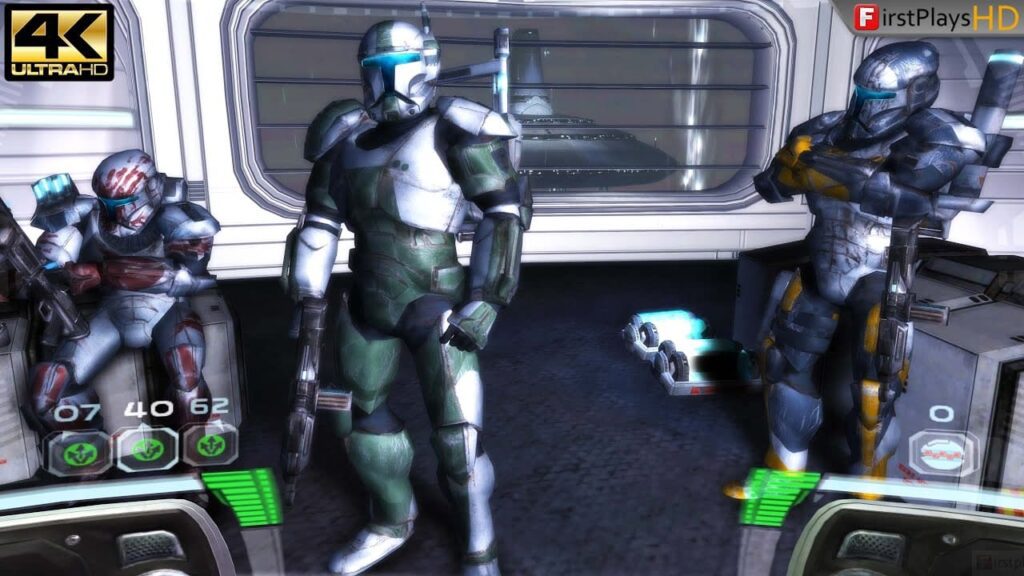
The squad-based mechanics allows you to command (also albeit very shallowly) your team members, each of whom had very different personalities that were expressed through banters and battlefield comments. Scorch was the sarcastic demolitions man, Fixer the by-the-book tech and Sev the twitchy sniper with a love for killing that bordered on unhealthy. Their Deliverance portrayal predates The Clone Wars animated series’ delving into clone trooper individuality and humanity beneath the identical armor.
The environments felt lived in and backgrounds atmospheric, war’s grime tracked through blood-smeared corridors, scorched metal and the detritus of battle. You clawed your way through an abandoned Republic assault ship teaming with scavengers, the jungles of Kashyyyk protecting Wookiee villages, and a Separatist core ship housing factories that birthed droids by the hundreds. The combat had brutal, visceral melee finishers and environmental kills that kept the fight personal and intense, rather than distant.
The game leaves off with a cliffhanger that continues to piss fans off —Sev gets separated while escaping Kashyyyk and you’re told to leave him behind even though Delta Squad supposedly does not leave a man behind. This non-ending has plagued players ever since, with a dream of a sequel failing to materialize despite the game enjoying something of a cult following.
6. LEGO Star Wars: The Complete Saga (2007)
Platform: PC, PlayStation 3, Xbox 360, Wii, DS, Mobile
Developer: Traveller’s Tales
LEGO Star Wars revolutionized the licensed game, showing industry that not only could they be genuinely good games, but not just cheap cash-ins. Traveller’s Tales took all six films that were released at the time and remade them in a charming LEGO style, constructed from physical comedy (and, lest we forget, Star Wars jokes) that spiralled off of entire space operas as it gleefully lampooned familiar material with obvious love but an above-all commitment to slapstick mischief.
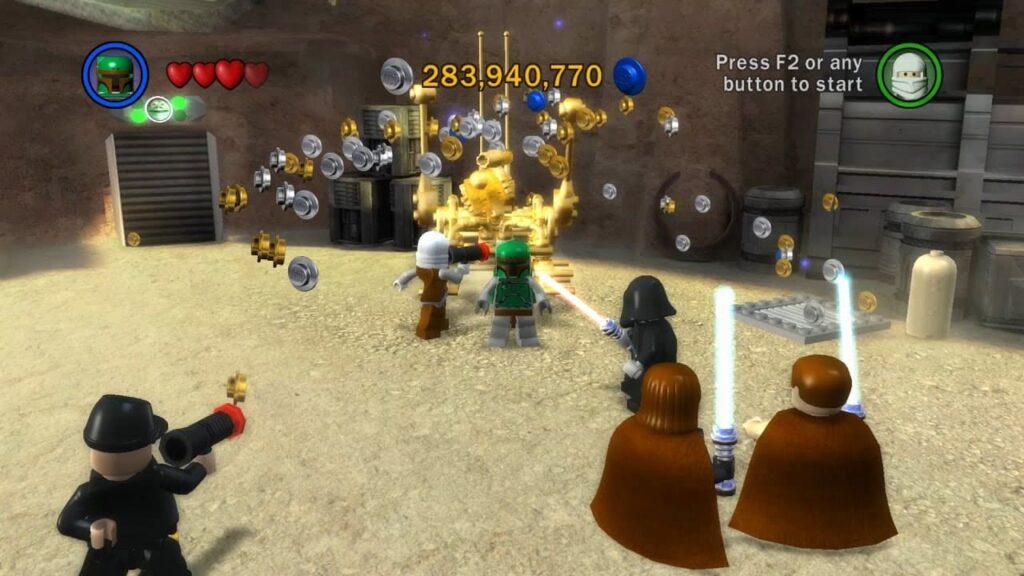
The genius was that the gameplay could be simple enough to be accessible for a young child, while remaining funny, laden with secrets and challenging enough that adults enjoyed it too. Parents and children could play together, and the game was forgiving enough that everybody got to contribute without getting too frustrated. The destryction-and-construction mechanics were satisfying when you tore apart LEGO environments to collect studs, or built new structures to tackle basic puzzles.
It was funny because the jokes were visual instead of verbal: Characters enacted scenes using over-the-top pantomime. The hilarious moments came from it being absolute absurdity such as seeing LEGO Darth Vader Doing a temper tantrum or how LEGO Yoda would use the force to stack objects. The game was also full of collectables, had unlockable characters from across the saga and plenty of hidden areas to explore, which meant this was a completionist’s dream.
This series reinvigorated LEGO games and inspired numerous copycats in other franchises. The 2022 Skywalker Saga remake updates the formula with enhanced graphics, broader combat, open-world planetary exploration and all nine mainline films; some fans still prefer the original’s rustic sensibility.
7. Star Wars: Empire at War (2006)
Platform: PC
Developer: Petroglyph Games
Empire at War brought grand strategy to Star Wars, letting you command entire fleets and armies across galactic campaigns. Petroglyph Games, founded by former Command & Conquer developers, created a thinking fan’s Star Wars game that emphasized planning and resource management over twitch reflexes.
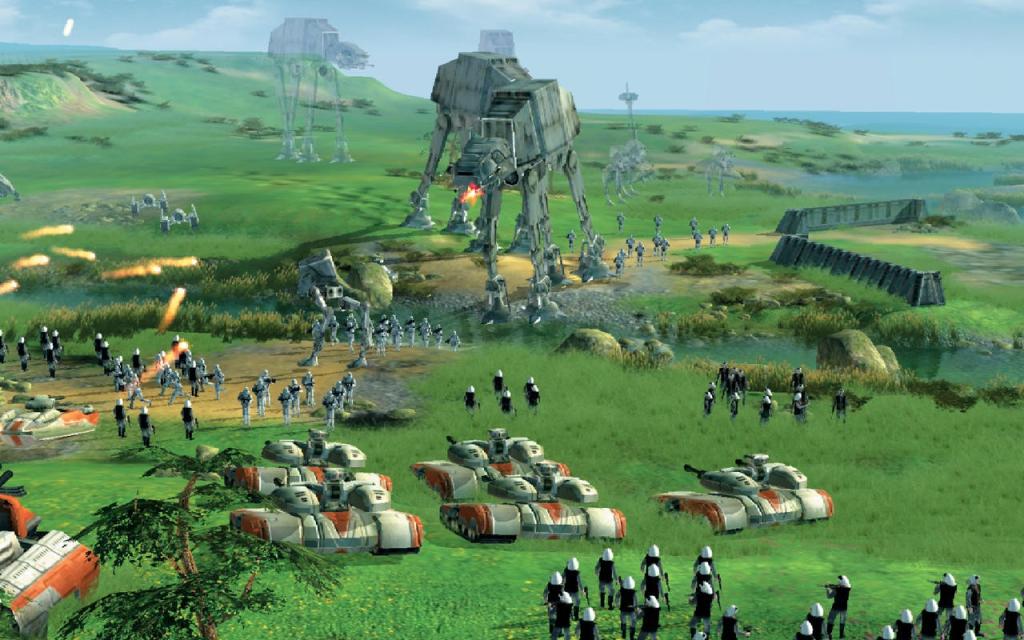
The two-layer strategy system combined galactic conquest with real-time tactical battles. On the galactic map, you managed planets, constructed buildings, recruited units, and positioned fleets, playing a chess match across star systems. When forces clashed, you zoomed into real-time battles commanding capital ships, starfighters, and ground vehicles while heroes like Darth Vader or Han Solo provided powerful but vulnerable advantages.
The Empire and Rebellion played asymmetrically, reflecting their different philosophies and resources. The Empire relied on overwhelming firepower, massive Star Destroyers, and technological superiority, while the Rebellion used hit-and-run tactics, guerrilla warfare, and exploiting the Empire’s overextension. This asymmetry made each faction feel distinct and required different strategies to master.
The Forces of Corruption expansion added the criminal underworld as a third faction, introducing Tyber Zann’s criminal organization with unique corruption mechanics that let you bribe, sabotage, and control planets through illicit means rather than direct military conquest. An active modding community has kept Empire at War alive with total conversions spanning from The Old Republic era to the sequel trilogy, dramatically expanding the game’s content and lifespan.
8. Star Wars: Dark Forces (1995)
Platform: PC, PlayStation, Mac
Developer: LucasArts
Dark Forces brought Doom-style FPS action to Star Wars, introducing Kyle Katarn, who became one of the Expanded Universe’s most beloved characters. You played as a mercenary working for the Rebellion, stealing the Death Star plans years before Rogue One retconned this storyline, then uncovering the Empire’s Dark Trooper project—advanced battle droids that threatened to give the Empire unstoppable ground forces.
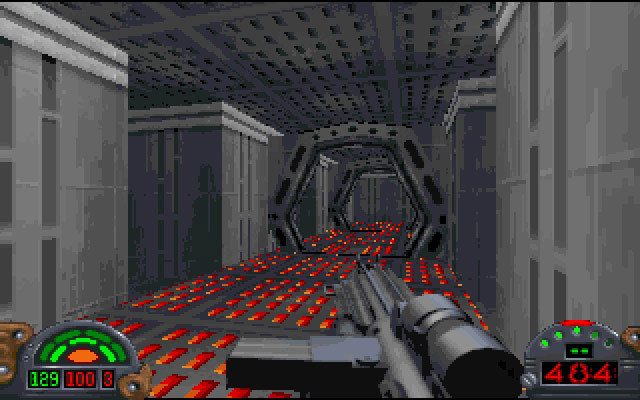
The game advanced beyond Doom’s technical limitations with multi-floor vertical level design, allowing you to explore structures with multiple elevations, stairs, and platforms. This verticality made levels feel more realistic and complex, encouraging exploration beyond simple corridor shooting. The environmental storytelling showed attention to detail, with levels telling stories through design—Imperial facilities felt industrial and oppressive while Rebel bases seemed improvised and resourceful.
The arsenal captured Star Wars authenticity with blasters of varying power and function, thermal detonators, mines, and unique weapons like the Imperial repeater rifle. Each weapon had distinct uses, encouraging tactical variety rather than just using the most powerful gun. The atmosphere successfully captured the industrial, lived-in aesthetic of the original trilogy, making you feel present in that universe.
Dark Forces spawned a beloved sub-series as sequels Jedi Knight, Jedi Outcast, and Jedi Academy added Force powers and lightsaber combat to the FPS formula. These games let you experience Kyle Katarn’s journey from mercenary to Jedi Knight, exploring Force morality and lightsaber dueling mechanics that influenced later Star Wars games.
9. Star Wars: The Old Republic (2011-Present)
Platform: PC
Developer: BioWare
The Old Republic transformed KOTOR’s beloved universe into an MMORPG with eight distinct class stories that functioned as essentially eight separate games. BioWare created a Sith Warrior storyline about rising through Sith ranks, a Jedi Knight story defending the Republic, a Bounty Hunter tale of becoming the galaxy’s deadliest hunter, and five other equally substantial narratives, each offering 30-50 hours of unique content.
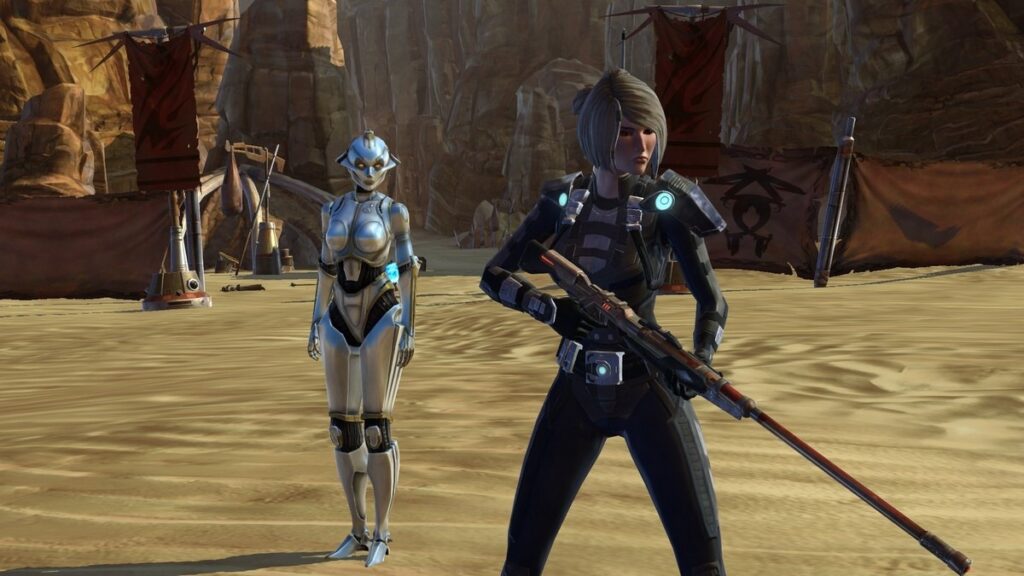
The remarkable aspect was that every conversation featured full voice acting, a rarity in MMORPGs where text dialogue was standard. Thousands of NPCs spoke their lines, making the world feel alive and cinematic in ways competitors couldn’t match. The conversation system retained BioWare’s signature dialogue wheel where choices influenced your alignment and story outcomes, maintaining the single-player RPG feel within an MMO framework.
Originally subscription-based at launch, the game transitioned to free-to-play in 2012 after initial player numbers declined. The free version provides access to all eight class stories and hundreds of hours of content without spending money, though subscriptions unlock additional expansions, remove restrictions on operations and flashpoints, increase credit caps, and provide quality-of-life improvements.
Regular expansions have continued the story through 2025, with narrative arcs like Knights of the Fallen Empire and Onslaught rivaling standalone RPGs in quality. The game’s design allows solo play through most content, focusing on story rather than forcing group activities, making it appealing for players who want narrative-driven experiences without typical MMO obligations. This makes The Old Republic a hidden gem for story-focused players who might normally avoid MMORPGs.
10. Star Wars: Squadrons (2020)
Platform: PC, PlayStation 4/5, Xbox One/Series X|S
Developer: Motive Studios
Squadrons revived the space combat simulator genre that had been dormant since the ’90s, bringing modern graphics, VR support, and competitive multiplayer to starfighter combat. Motive Studios created a spiritual successor to the X-Wing/TIE Fighter series that honored those classics while updating them for contemporary audiences.
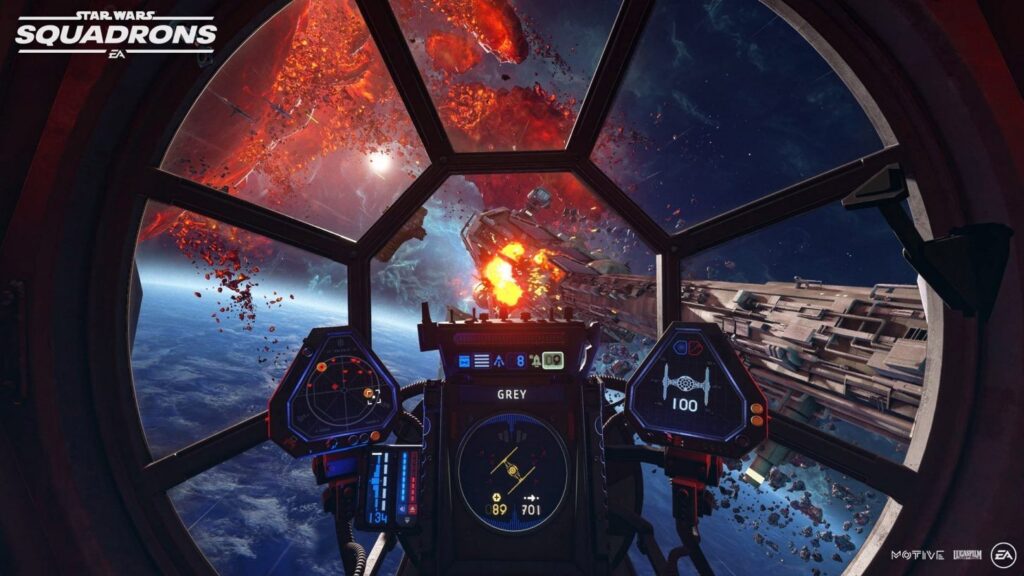
The flight model authentically recreated starfighter combat with power management systems where you redistributed energy between engines, weapons, and shields mid-battle. This tactical depth separated skilled pilots from novices, as managing your systems properly could overcome numerical disadvantages. Different starfighters had distinct handling characteristics, from nimble A-Wings to heavy Y-Wing bombers, requiring you to adapt your playstyle.
Full VR support provided the ultimate starfighter fantasy, letting you sit in authentic cockpits surrounded by switches, targeting displays, and viewport canopies while dogfighting through asteroid fields or capital ship battles. Even without VR, the first-person cockpit perspective created immersion that third-person games couldn’t match.
The 5v5 Fleet Battles offered strategic multiplayer where teams attacked and defended capital ships in phases, requiring coordination and tactical thinking beyond simple deathmatches. The single-player campaign told a focused story bridging Return of the Jedi and The Force Awakens, alternating perspectives between New Republic and Imperial pilots to show both sides of the conflict.
Though EA provided limited post-launch support and didn’t expand the game with additional content that fans wanted, Squadrons delivered a complete, polished experience that satisfied long-time space sim fans who had waited decades for this kind of game to return.
Honorable Mentions
Star Wars Jedi: Survivor (2023) – Expands on Fallen Order with better combat, exploration, and story. Technical issues at launch prevented it from ranking higher, but patches have significantly improved performance.
Star Wars: Rogue Squadron Series – The Nintendo 64 and GameCube trilogy offered arcade-style starfighter action with memorable missions and tight controls.
Star Wars: Knights of the Old Republic II – Obsidian’s darker, more philosophical sequel divides fans. The restored content mod makes it essential playing.
Star Wars: Shadows of the Empire (1996) – A multimedia experiment that gave N64 owners their first true Star Wars game, featuring the iconic Hoth battle sequence.
Star Wars Racer (1999) – Translated podracing from The Phantom Menace into an excellent arcade racer that still holds up.
Games to Avoid
Not every Star Wars game succeeds. Here are some notable disappointments:
Star Wars: Battlefront (2015) & Battlefront II (2017) – EA’s reboots launched with minimal content and aggressive monetization. While Battlefront II improved significantly post-launch through free updates, the initial controversy left lasting damage.
Star Wars: The Force Unleashed II – Despite the original’s success, this rushed sequel frustrated fans with its short length and unsatisfying story.
Star Wars: Masters of Teräs Käsi (1997) – A fighting game that nobody asked for and nobody enjoyed, notorious for clunky controls and poor design.
How to Play These Classics Today
Many older Star Wars games remain accessible:
Steam & GOG – Digital storefronts offer updated versions of classics like KOTOR, Republic Commando, and Empire at War with modern OS compatibility.
Console Backwards Compatibility – Xbox Series X|S supports many original Xbox and Xbox 360 Star Wars games through backwards compatibility, often with enhanced performance.
Nintendo Switch – Ports of Republic Commando, Jedi Knight collections, and various LEGO games bring classic experiences to handheld play.
Mods & Fan Patches – Communities have created patches fixing bugs and adding widescreen support to older games. The KOTOR Restoration Project and various graphics overhauls breathe new life into classics.
The Future of Star Wars Gaming
Several exciting projects are in development:
Star Wars Outlaws (2024) – Ubisoft’s open-world game focusing on the criminal underworld between Empire Strikes Back and Return of the Jedi.
Untitled Respawn FPS – Respawn Entertainment is developing a first-person shooter separate from the Jedi series.
Quantic Dream Star Wars Project – The Heavy Rain and Detroit: Become Human studio is creating a narrative-driven experience.
Star Wars: Hunters – A free-to-play arena combat game for mobile and Switch.
Conclusion: A Legacy of Excellence
The best Star Wars games transcend their license, standing as exemplary titles within their respective genres. Whether you’re seeking narrative depth in KOTOR, competitive challenge in Squadrons, or accessible fun in LEGO Star Wars, the galaxy far, far away offers something for every type of gamer.
These games succeed because they understand what makes Star Wars special—not just lightsabers and blasters, but themes of redemption, the struggle between light and darkness, and the hero’s journey. When developers respect both the source material and their craft, they create experiences that resonate with fans and newcomers alike.
For those new to Star Wars gaming, start with Knights of the Old Republic for RPG fans, Jedi: Fallen Order for action-adventure enthusiasts, or LEGO Star Wars for family-friendly fun. Each serves as a perfect entry point to gaming’s most enduring sci-fi franchise.
May the Force be with you, and happy gaming.
Note: Game availability and platform support may vary by region. Check current digital storefronts for the most up-to-date information on where to purchase and play these titles.
Frequently Asked Questions
What’s considered the best Star Wars game?
Star Wars: Knights of the Old Republic (2003) is widely considered the best Star Wars game of all time. Developed by BioWare, KOTOR earned universal critical acclaim for its deep RPG mechanics, memorable characters, and one of gaming’s most shocking plot twists. It holds a 93 Metacritic score and consistently tops “best Star Wars games” lists across gaming publications.
However, “best” can be subjective based on genre preference:
- Best Action Game: Star Wars Jedi: Fallen Order (2019) or Jedi: Survivor (2023)
- Best Shooter: Star Wars: Battlefront II (2005, classic version)
- Best Space Combat: Star Wars: TIE Fighter (1994) or Squadrons (2020)
- Best Family Game: LEGO Star Wars: The Complete Saga (2007)
Is Jedi 3 confirmed?
As of November 2025, Jedi 3 has not been officially confirmed by EA or Respawn Entertainment. However, there are strong indicators a third game is in development:
- Director Stig Asmussen confirmed the Jedi series was planned as a trilogy before departing Respawn in 2023
- EA executives have stated their commitment to continuing successful Star Wars franchises
- Jedi: Survivor’s ending clearly sets up a sequel with unresolved story threads
- Respawn is currently hiring for unannounced Star Wars projects
While no official announcement or release date exists, industry insiders and the commercial success of both Fallen Order and Survivor make a third installment highly likely. Fans should expect an announcement within the next 1-2 years, with a potential release in 2026-2027.
Which are the best Star Wars games?
The top 10 best Star Wars games are:
- Star Wars: Knights of the Old Republic (2003) – Legendary RPG with an unforgettable story
- Star Wars Jedi: Fallen Order (2019) – Modern action-adventure masterpiece
- Star Wars: TIE Fighter (1994) – Genre-defining space combat simulator
- Star Wars: Battlefront II (2005) – Classic multiplayer shooter with massive battles
- Star Wars: Republic Commando (2005) – Tactical squad-based FPS
- LEGO Star Wars: The Complete Saga (2007) – Perfect family-friendly adventure
- Star Wars: Empire at War (2006) – Strategic galactic conquest
- Star Wars: Dark Forces (1995) – Pioneering FPS that launched the Jedi Knight series
- Star Wars: The Old Republic (2011) – MMORPG with eight unique story campaigns
- Star Wars: Squadrons (2020) – Modern starfighter combat with VR support
Honorable mentions: Jedi: Survivor (2023), Knights of the Old Republic II (2004), Rogue Squadron series, and Star Wars Racer (1999).
The “best” game depends on your preferred genre—RPG fans gravitate toward KOTOR, action gamers prefer the Jedi series, and nostalgia-seekers love the classics like TIE Fighter and Battlefront II.
Is SWTOR still free?
Yes, Star Wars: The Old Republic (SWTOR) is still free-to-play in 2025. BioWare transitioned the game to a free-to-play model in 2012, and it remains accessible without any upfront cost.
What’s included for free:
- All 8 class stories (approximately 300+ hours of content)
- First two expansions: Rise of the Hutt Cartel and Shadow of Reborn
- Full access to planets, flashpoints, and operations (with some restrictions)
- Player vs Player (PvP) and Player vs Environment (PvE) content
- Character creation with some species limitations
Subscription benefits ($14.99/month):
- Access to ALL expansions, including the latest content
- Increased credit cap and inventory space
- No restrictions on flashpoints, operations, or warzones
- Priority login queue access
- Monthly Cartel Coin stipend for cosmetic purchases
- Faster experience gain and other quality-of-life improvements
One-time purchases: Individual expansions can be purchased permanently without subscribing, though an active subscription is often more cost-effective for players wanting the complete experience.
Bottom line: You can enjoy hundreds of hours of story content completely free, making SWTOR one of the best values in Star Wars gaming. The subscription is optional and mainly benefits players who want cutting-edge endgame content or unlimited access to all features.